Wednesday, February 13, 2013

GARBO WAS RIGHT


The great Swedish actress Greta Garbo didn’t like her privacy invaded. She protected it so well that the Hollywood press of her time linked her to a now famous line from the film “Grand Hotel” – “I want to be alone.” Upon her retirement, Garbo claimed she’d actually said, “I want to be let alone.” That one added word, she said, “made a world of difference.”
 
Garbo was absolutely right!
 
A couple of weeks ago I expressed my displeasure with what I see as the dangerous possibility of government bureaucrats electronically snooping around in my house without my permission and without cause. The Attorney General gave them permission to do it, but I didn’t. I believe in the old adage that a man’s home is his castle. I was so frustrated that I penned a couple of complaints to Senator Jerry Moran and Representative Tim Huelskamp. I’m hoping they agree with me.
 
Earlier that same morning I had the opportunity to express my feelings on C-Span’s “Washington Journal.” At about 7:25 I spilled my guts to Jonathan Turley, law professor at George Washington University. I went through my list of complaints, then closed with a crescendo. “I just want my government to leave me alone.”
 
I wasn’t sure how Professor Turley would respond. He’s politically liberal and I had told him that I I’m conservative in my approach to life. I was pleasantly surprised. “You’re quite right to be concerned,” he said. “It’s also interesting that you said that you wanted to be left alone. In the 1928 Olmstead v. United States case, Supreme Court Justice Louis Brandeis said, unequivocally, that you had the right ‘to be left alone.’”
 
Unfortunately, Justice Brandeis was relegated to writing the dissenting opinion in the Olmstead case. But, his dissenting words proved to be prophetic – “The makers of our Constitution undertook to secure conditions favorable to the pursuit of happiness. They recognized the significance of man's spiritual nature, of his feelings and of his intellect. They knew that only part of the pain, pleasure and satisfactions of life are to be found in material things. They sought to protect Americans in their beliefs, their thoughts, their emotions and their sensations. They conferred against the government, the right to be let alone—the most comprehensive of rights and the right most valued by civilized men.” In 1942, Justice Frank Murphy, citing James Madison, John Adams, and Brandeis’s dissent,  took up the mantle and argued that the right of privacy is “second to none in our Bill of Rights.”
 
But, Constitutional rights don’t seem to matter! The snooping is going on. Furthermore, the National Security Agency is building a million square foot facility in Utah to gather and store all the data, yours, mine, our neighbors’. When the facility is completed in September of this year it will have what has been described as a sea of routers and servers capable of storing anything we communicate, including private e-mails, Google searches, cell phone calls, and other sorts of data, like parking receipts, travel itineraries, bookstore purchases, or anything else we either receive or disseminate.
 
The fact the Government is spending at least two billion dollars on this facility underscores the seriousness with which they are approaching this task.
 
I believe we need to express our displeasure with this madness in an equally serious manner.
 
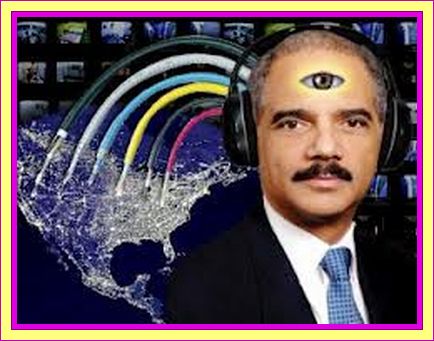
I’m a loyal American. I served in our military for over eight years. I spent a year of that time in harm’s way. I don’t say that to boast. A lot of Americans have done far more than me in their service to the nation. Many have given their lives in defense of freedom and our basic Constitutional rights. None of us, living or dead, served so that a fundamental freedom could be taken away from us with the stroke of the Attorney General’s pen or the all-seeing eye of a massive security apparatus.
 
I understand my obligations as a citizen as well as anyone. I take them seriously. My eyes get moist when I hear our national anthem. I do my best to serve the community where I live. I pay my taxes. I admit that I don’t tap dance up to the County Courthouse when I pay them, but I do pay them. I’m loyal to this country and always will be.
 
I also know we’re living in very dangerous times, but I think our government would do well to spend more time attending to Al Qaeda and less time on you, me, and millions upon millions of loyal citizens. I may be a fool, but I believe our government can deal effectively with our enemies without stripping us of our constitutionally guaranteed freedoms.
 
I hope you feel as strongly about this as I do. If so, express your outrage to our elected leaders.

Wednesday, January 30, 2013

THE ELECTRONIC DRAGNET


A couple of weeks before Christmas, investigative journalist Julia Angwin uncovered a government program that puts millions of innocent American citizens in the cross-hairs of our executive branch’s massive security apparatus. She described it as a “dragnet.”
 
The program was just a proposal in in mid-March.  Once Attorney General Eric Holder approved the proposal, it became a functioning program.
 
Prior to Holder’s approval, a nebulous government group called the “National Counterterrorism Center” was prohibited from storing and analyzing any information about American citizens unless there was sufficient evidence of terrorist activity. Now, with the newly approved rules, our government can gather, store, and analyze data on any American citizen, keep it for up to five years, and see if there are “suspicious patterns of behavior.”
 
What are they sifting through?  Whatever they want! This little known agency has access to flight records, the names of American citizens who have hosted international students, the health records of patients at veterans’ hospitals, the financial records of Americans who have applied for federally backed mortgages, and God knows what else. Further, this secretive agency can share this information with foreign governments.
 
I don’t know where you, the reader, fit into these hit lists. I’m on at least three. Nancy and I have hosted international students from five countries – France, Moldova, China, Vietnam, and South Korea. Over the past six years we’ve racked up lots of frequent flyer miles, including trips to the Middle-East and four former Soviet satellites in Europe. I also include among my friends a citizen of Israel, a Palestinian, and a Pakistani. I even met a cab driver from Afghanistan in Kansas City a few months ago. Every year, like clockwork, I get a physical at a Veterans’ Administration facility. A few months ago I met a friend roaming around the halls at the Eisenhower V.A. Center in Topeka. I wonder if someone in the government catacombs is scouring through our data right now, looking for suspicious activity like eye exams or colonoscopies.
 
I’d be willing to bet Chris Walker’s presses there are some reading this and thinking, “Dillon is a paranoid right-wing fool. Doesn’t he know that we’re the good guys and that our intentions are always the noblest?” Maybe so. But, if I am paranoid I have at least one left-wing ally, the New York Times’ Bill Keller.  Like me, he calls the idea that law-abiding Americans have nothing to fear from government snoopers a myth.  In a January 13th op-ed he cites the following from George Washington University professor Daniel Solove: “That’s exactly what Bush said. And it’s also the same thing that any despot says.”
 
Despotism? Really?
 
Some of our greatest political saints have done despotic things. Abraham Lincoln suspended the constitutional right to habeas corpus during our Civil War. Franklin Roosevelt had loyal Japanese-American citizens rounded up and placed in detention camps during World War II. Recently, Thomas Drake, an analyst at the National Security Agency, was threatened by the Obama administration with prosecution and imprisonment for up to 30 years under the umbrella of the Espionage Act of 1917, which makes it illegal to “utter, print, write, or publish any disloyal, profane, scurrilous, or abusive language about the form of government of the United States.” What had Drake done that made him so dangerous?  He’d become a whistleblower trying to save money being spent on an ineffective government program.  When all was said and done his only out was to agree to a lesser charge of misusing a government computer. He was dead broke and lost his job. That’s a very steep price to pay for doing the right thing.
 
We might be careening over the fiscal cliff in about a month. Given that, the fact that a few government bureaucrats are digging up a bit of dirt might seem unimportant. But I find it very troubling. Poverty is tough; I’ve been there. But, the prospect of government analysts skulking around in my home without my consent is absolutely intolerable. It violates my Fourth Amendment civil right, which guarantees “The right of the people to be secure in their persons, houses, papers, and effects, against unreasonable searches and seizures.”
 
Our Founders understood human nature and built a system of checks and balances to protect “the People” from government ambition and tyranny.  James Madison put it this way (Federalist 51) – “Ambition must be made to counteract ambition.”
 
Unfortunately, I doubt that those sifting through the data are thinking about our Bill of Rights. They’re probably too busy digging.
 
If the Fourth Amendment can’t protect us from this kind of despotism, what can? The best ways to protect ourselves are to turn on the spotlights, scream bloody murder and threaten to vote them out of their tax paid perks! If we do that, they will listen and dismantle this unseemly program.

Friday, January 18, 2013

CRITICS AND CREATORS


I just completed a trifecta. Several years ago I read Victor Hugo’s “Les Miserables,” all 500,000 words worth. In the nineties, Nancy and I saw the Broadway adaptation in New York. Then, over the holidays, we saw the film version.

I loved all three.

Last Sunday, like millions of others, Nancy and I watched the first episode of “Downton Abbey’s” third season. We loved it and are eagerly anticipating the upcoming episodes. I’m a John Bates junkie and I hope when all is said and done he’ll be a free man.

It’s a good thing I didn’t pay attention to the critics beforehand. According to “Rotten Tomatoes,” “Les Miserables” was about as much a miss as it was a hit. New Yorker’s Anthony Lane described it as “inflationary bombast.” The Cleveland Plain Dealer’s Clint O’Connor called it “lumbering and drab.”

Downton Abbey didn’t fare much better with some critics. The Kansas City Star’s Sara Smith had this to say: “Those who accept it for what it is — a funny, manipulative soap that relies on historical upheaval to frame its scarce plots — should be happy to hear that “Downton’s” new season is better than its last.”

Well, silly me. I liked what I saw last season and I’m eagerly anticipating the necessary plot twists it will take to see John Bates breathing the sweet air of freedom by the time this season is done.


Reading the critics’ offerings makes me wonder what might have happened if Victor Hugo or Julian Fellowes had invited Rotten Tomatoes or the Kansas City Star into their creative processes. “Les Miserables” would have been 450,000 words shorter in order to accommodate the modern attention span. It would have been far less esoteric and far more “edgy.” There wouldn’t have been time or space to explore great themes like redemption, forgiveness in the face of fanatical legalism, mercy juxtaposed against cruelty, revolution, or whether or not God is involved and active in a fallen world.  And, I can only imagine what Downton Abbey might look like if Sara Smith had been involved in the creative process. We’d never have to worry about how or if Matthew’s principles and Mary’s worldly ways could produce marital bliss. There would be no room for Maggie Smith’s very entertaining dowager or the intra-servant intrigue and in-fighting going on in the bowels of the castle.

There’s something I find very gratifying in the fact those involved in the creative arts rarely, if ever, consult the critics before they do the creating.  Walt Disney didn’t build his entertainment empire on a foundation built by critics. He once said, “We’re not trying to entertain the critics. We’ll take our chances with the public.” Brendan Behan’s thinking was a bit spicier – “Critics are like eunuchs in a harem. They know how it’s done, they’ve seen it done every day, but they’re unable to do it themselves.”

I suspect if one were to dig into the heart of a critic he or she would find an unrequited soul. Think of it. How would you like to spend your days hopping from theatre to theatre, then dashing back to the office to grind out review after endless review. Where’s the social utility in that? It’s not being a trash-man riding on the back of a garbage truck, a nurse in an intensive care unit, a brain surgeon, a cop on the beat protecting the public, a teacher, a librarian, a cowboy, a ditch digger, a lawyer, or an accountant. About the only kindred spirits that come to mind when I think of critics are politicians taking bribes on the side or world renowned food critics pretending they can detect exotic spices in the food they review.

I’m also glad the public doesn’t pay much attention to the critics.

Yesterday I listened to a rendition of the old American classic “Shenandoah,” sung by Tom Waits and Keith Richards. Now, I know what you’re probably thinking right now. “No way!” Well, they did it and I really loved it. They were perfect together. There’s something magical about hearing Waits singing like his mouth is full of garbanzo beans, accompanied by an old rocker who moans like he’s been hit by a freight train. Some critics may not like them, but I don’t care. I love ‘em and that’s good enough for me.

I guess that critics will always maintain their habit of looking for nuance while the public keeps looking for a good laugh or a cry. There’s just a gap between the two that’s all but impossible to bridge. The critics’ view of things is from 30,000 feet. The public’s is more down to earth. I think that probably explains why “Les Miserables” is making millions, Downton Abbey is all the rage, and the critics are frustrated.

Wednesday, January 02, 2013

THE MINORITY REPORT


Another new year. I’m amazed. When I think back on my profligate youth I can’t figure out how I made it to fifty, much less seventy. It must have something to do with the way the grace of God intercepted me back in ‘67.
 
In a Gazette op-ed a few days ago Bonnie Erbe hammered a nail or two through the lid of contemporary Christianity’s coffin. Citing research polls indicating that more and more Americans are abandoning religious affiliation (20% of us, according to a Pew Research poll). Erbe triumphantly concluded, “One day, Christian leaders will wake up and recognize that their era is crumbling.” If the trends continue, she believes America will eventually free itself from the shackles of “oppressive Christianity.” Thus, Christianity will become irrelevant and powerless. Erbe sees this as reason to celebrate.
 
Should I, as a Christian, be troubled? Absolutely not! If my faith meant nothing more to me than cultural relevance or political power it would be utterly meaningless. I gave no thought to those things when I embraced faith in Jesus. In fact, I was powerless, not powerful. I was an outsider looking in, not an insider looking out. I was weak. I was lost! No amount of cultural relevance or political power could fix what was ailing me.
 
Nothing that I’ve seen on the political or social scene over the past fifty years has changed my thinking. Political power shifts over time. So do society’s trends. The powerful one day become the downtrodden the next. Yesterday’s chic and trendy becomes laughable as soon as the latest fashions are displayed on the runways in Paris.
 
There’s one thing, though, that doesn’t change with time – our search for meaning in life.
 
Nancy and I have seen this played out over and over again. We moved to New Jersey in the late eighties. Once we found a place to live we started looking for a church, a particular type of church. It wasn’t easy, since the prevailing religions on the east coast are humanism and mammon, and sometimes a marriage of the two. But we found it in a place called Jockey Hollow. It wasn’t a glorious place. There were no flying buttresses; there was no massive pipe organ. In fact, the roof leaked and the chairs creaked. But, over the years we found ourselves bound together in a pilgrimage with a small, eclectic band of societal castaways, nuclear and design engineers, musicians, poets, vagabonds, and a PhD chemist thrown in for good measure. We had none of the trappings one normally associates with power. We had very little money, and the little we had flowed through us. I remember a business meeting when we deferred plugging the leaky roof and gave every penny we had to missionaries in India, the Philippines, Afghanistan, Mali, and other mission posts along the world’s 10-30 corridor. I can still hear the cheers erupting as the last dollar was given.
 
The church in Jockey Hollow was never relevant or powerful in worldly terms, but Nancy and I experienced quiet, transcendent power in that seemingly insignificant place. The relationships and bonds of affection we developed there will last our lifetime, and beyond.
 
We’ve seen that transcendent power displayed in the most unlikely of places. We’ve even seen it on Memphis’s Highland Strip, in a small generation X church sandwiched between a psychic advisor and Rocky’s Tattoo Parlor. 
 
We occasionally reminisce about a Sunday morning years ago when we toured Paris’s Notre Dame Cathedral. Like most that morning, we were tourists caught up in gargoyles and the gold-laden altar. We made our way around the nave, taking pictures as we did. As we moved close to the altar we noticed a small group of worshippers singing a’ Capella. They didn’t seem to take any notice of the tourists like us skulking around. My words can’t adequately describe the beauty of the polyphony. It was a transcendent moment. The twenty or so songs gathered together, became one, then rose gently heavenward, past the massive columns and statuary. The power of the experience brought me to my knees.
 
I often hear that Christianity has become meaningless in Europe. My experience that morning taught me that Christianity’s European presence, while small, is alive and powerful.
 
It’s sad, but true. Religion almost always loses its way when it becomes big, socially relevant, or politically powerful. So, Erbe may be at least half-right. Institutional Christianity may be on the wane. But, whatever happens, there will always be small bands of pilgrims searching for absolution and meaning. We may become the minority report, but we’ll still be there. As Bob Dylan put it:

 “All my loyal and much-loved companions
They approve of me and share my code
I practice a faith that’s long been abandoned
Ain’t no altars on this long and lonesome road.”

Monday, December 17, 2012

REFLECTIONS ALONG THE RIVER


When Nancy and I left for a ten day river cruise on the Danube a few weeks ago we were hoping to get away from the pervasive violence and political tension in the world and the increasing commercialism and emptiness of the American Christmas season. We succeeded, but only in part.
 
The Danube was every bit as beautiful as we’d imagined it to be. From the 6th, when we arrived in Budapest, to the 15th, when we left Passau, the Viking Njord, our floating hotel, slipped effortlessly from city to city.
 
In Budapest we were treated to the incredible food and wine, a spectacular view of the Chain Bridge between Buda and Pest at night, the galleries of the Fine Arts Museum, and the sights and sounds of the Great Central Market.
 
The ship then meandered from Budapest to Bratislava, Slovakia, then to Vienna, then on to the small villages of Durnstein and Melk in Austria’s spectacular Wachau Valley. Each stop brought new and pleasant experiences. The mulled honey wine we sampled at the Christmas Market in Bratislava was to die for. We brought a bottle home as protective insulation against Kansas’s cold winter winds. In Vienna we rode the subway, visited the modern art and Jewish museums, and sampled mini sandwiches and tiny mugs of Austrian beer at a local deli whose name now escapes me. In Durnstein we were graciously given the gift of a pipe organ concert at the town’s beautiful cathedral. In Melk we toured the Benedictine abbey and cathedral. I’ve never seen so much gold in one place in my life.
 
We spent our last two days in Linz, Austria and Passau, Germany. The day in Linz was particularly pleasant. We took a leisurely stroll along an outdoor pedestrian mall and Christmas market, occasionally stopping to make a purchase or two. By the time we got back to the ship we had a small bag of clothing, a hand painted Christmas ornament, a pair of mittens and a wooden Nutcracker doll for a little girl Nancy knows, and a small straw hedgehog that I suspect will keep our cats amused. In Passau we spent a couple of hours touring the city, including a gingerbread making demonstration, our last sips of mulled wine, and a tour of one of the city’s most spectacular cathedrals. As with the cathedral in Melk, the gold leaf was everywhere. In addition, the frescoes on the ceiling were mind boggling. It took a father and son over fifty years to create them.
 
We’re home now and I’m reflecting on the trip. More often than not along the way we felt a warm, peaceful feeling. I think Europe transmits that sense quite well. But, we never could quite escape the world’s realities. A few days into the cruise we got word of a mall shooting on Oregon. Then on Friday we heard the news from Connecticut. We were stunned.
 
It’s now Monday and I’m hearing the explanations. Few of them seem satisfactory to me. There’s more to it than mental illness and misunderstood young people. Will more mental health counseling fix things? I’m not so sure. Will eliminating guns solve the problem? I don’t own one so they can take all 300 million of them away as far as I’m concerned, but it won’t solve the problem.
 
Why?
 
 It’s written that evil is always “crouching at the door.” It seeps through society’s cracks. We don’t like to admit it, but it’s there, often hiding in the most unlikely places. Nancy and I saw this quite clearly in Budapest. There’s a very simple memorial on the banks of the Danube, not far from one of Budapest’s beautiful cathedrals. There, fifty or sixty pairs of shoes once worn by Budapest’s Jews stand as stark witnesses to the evil man is all too often willing to inflict on his fellow man. In late 1944, thousands of Jews were marched to the riverbank and shot to death. Before their bodies were dumped in the river the Nazis took their shoes. The logic was as grisly as it was impeccable. Leather was a very valuable commodity and couldn’t be wasted.
 
In Budapest, guns were the transmitters. But, evil doesn’t need just a gun. Zyklon-B was a gas. In the Ukraine, depriving Kulaks of food was the tool. In Cambodia’s killing fields all it took was plastic bags to suffocate millions to death.
 
In the end, I think any solutions to our violence problems lie in the human heart. We can work against it, but I suspect evil will be crouching at the door as long as there are men. As Alexander Solzhenitsyn observed, “The line dividing good and evil cuts through the heart of every human being. And who is willing to destroy a piece of his own heart?”

Tuesday, December 04, 2012

"MUCH IS REQUIRED"


“When I give food to the poor, they call me a saint. When I ask why the poor have no food, they call me a communist.”
-          Helder Camara, Archbishop of Recife (1909-1999)


I’m often taken to task by city and county officials. They say I tend to focus too much on what’s wrong and not enough on what’s right. I suspect they feel singled out when I write about our 27% poverty rate, slum lords, high taxes, neglected properties, or the great social and economic gulf  between our haves and have-nots.
 
They may or may not believe it, but I have some measure of understanding of what they’re going through. I don’t believe they like our 27% poverty rate, nor are they in the business of finding ways to make things worse. I’m sure they’d like nothing better than to see our household incomes above the national average, our poverty rate at zero, and a community of well-maintained homes with wrap around porches that are the envy of the nation.
 
Isn’t that what we all want?
 
If that’s true, and I believe it is, how have we gotten so far off track? And, how do we solve the problem?
 
With that in mind, I think it’s time to shine the light in another direction – toward our churches. In doing so I realize I risk incurring the wrath of many people I share a common faith with. But, I believe it’s time for people of faith to reclaim their God-given responsibility to share more generously from the wealth and grace they’ve been given.
 
Since the days of the Great Depression there’s been a tremendous shift in how we Americans allocate our financial resources, particularly when it comes to solving problems like poverty. Up until that time the Church was the nation’s primary instrument for support of the poor and downtrodden. That changed in one very dramatic way with the advent of New Deal programs like Social Security, the W.P.A., the Civil Works Administration, etc. The primary burden bearer for the poor, the elderly, and the unemployed became the government.
 
Over time, right to the present, the government’s role as the nation’s primary social benefactor has grown and the Church’s role has diminished. Today, if you were to ask someone from within or outside the Community of Faith whose responsibility it is to solve the problem of poverty, well over half would say, “The government needs to fix things.” The Church is now seen as a backstop.
 
The reality of the shift begs three questions. Can the Church solve the problem? Isn’t the Church being generous enough already?  Does the Church have the resources equal to the massive task?
 
The answer to the first question is obvious. Of course! The Church is a community of faith. It’s not a static faith, but an animated faith that not only believes, but also acts.
 
There are two answers to the second question. First, government hasn’t solved the problem. In fact, the problem has gotten worse over time.  Statistics like Emporia’s 27% poverty rate aren’t figments of overactive imaginations. Second, it depends on the measuring stick that’s used to measure generosity. During the height of the Great Depression the average church goer gave 3.3% of his or her income to charity. These days that number has declined to 2.6% (John L. Ronsvalle, “The State of Church Giving”) If one were to judge solely by that standard it could be argued that Christians today are about as generous today as they were a few generations ago.
 
But, the Church has, or should have, a far different standard of measurement. As it’s written, “To whom much is given, much is required.” When seen in that light the trends are troubling. The Francis Schaeffer Institute of Christian Leadership has reported that 17% of adult Christians claim to tithe (give 10% of their income), while 3% actually do. According to statistician George Barna, Protestant Christians give, on average, $17 per week to their church or other charities.
 
When giving is measured against that standard, it’s clear that there is plenty of room for growth.
 
Does the level of current giving reflect a lack of resources? Far from it. In 2000, according to David Barrett and Todd Johnson (“Interpreting the Annual Christian Megacensus”), the United States’ total Christian income was $5.2 trillion. Today that number is well over $7 trillion. And, that number doesn’t include the trillions invested in facilities or the billions held in endowments.
 
The truth is, if the Church would move from its current level of giving to the standard/ideal, hundreds of billions of dollars could be freed up to find meaningful solutions to the problem of poverty. It’s not a matter of whether or not the problem can be solved. It’s simply a matter of willingness to solve the problem.

Tuesday, November 20, 2012

ALL IS WELL


I see that Wal-Mart has decided to turn Black Friday into Black Thursday. Competitors are following suit.

Given the state of world affairs right now, the diversion to the aisles of discount stores seems to be the thing to do. There’s no need for sack-cloth and ashes. As Solomon observed long ago, in a seemingly meaningless world where “the righteous get what the wicked deserve,” it may be better to just, “eat, drink, and be glad.” Had there been discount retailers back in his time the wise king probably would have included shopping.

I’m amazed at how quickly things can change. A week or so ago we were breathing a collective sigh of relief. The election season was finally over. The pundits were wrong; it wasn’t that close. Compared to 2000, it was a breath of fresh air. No lawyers had to get themselves involved, much less the Supreme Court. It didn’t linger into the Christmas season. We didn’t have to endure the spectacle of Democrats or Republicans desperately trying to sell baby Jesus to the highest bidder in exchange for Florida’s electoral votes.

Unfortunately, it didn’t take long for the wheels to come off the wagon this year. I just read that the Eurozone is once again, “officially,” in recession. The Germans and the French are hanging on by a fingernail. Even the industrious Dutch are in the tank. Then I read that the Middle-East is on the brink of all-out war. Fire is raining down from the heavens. The people of Gaza City and Ashdod are in hiding. The Syrians are creeping ever closer to the Golan Heights. The Iranians are conducting massive military maneuvers. The Egyptians are waiting in the wings.

I opened my e-mail, hoping for some relief. I was greeted by a message from the American Red Cross in response to one I’d sent them yesterday when I found out that they’d spent a couple of hundred thousand dollars housing Red Cross relief workers at a luxury hotel in Soho. Their answer? It wasn’t really too many people at all. And besides, they had to stay somewhere.

There’s not much in the way of good news on the home front. I drove down Industrial Road last night. As I passed by the Flint Hills Mall I saw the picketers protesting lost wages and a disappearing pension. By the time I got home I’d heard the news that Hostess would “liquidate” if the strikers didn’t come back to work by 4:00 today. If the worst happens, our poverty rate, which is already obscene at 27%, will almost certainly go even higher.

Liquidate! What a terrible word. You were solid, but you're liquid now It’s like adding insult to injury. The refrain is cold, clinical, and eerily familiar, reminiscent of the days of Enron. “Shred your dignity, concede, and come back or we’ll ‘liquidate’ you and pour you down the drain!”

After that there wasn’t much need to read about Benghazi or the unemployment claims report.

There’s a part of me that wants to explode, but, thanks to Nancy, I’m at peace. I think there’s a gentle, prophetic strain that runs through her veins. About a week and half ago she had me listen to a song she’ll be singing as a member of the Community Chorus. It’s Michael W. Smith’s “All is Well,” a simple piece about the birth of Jesus. By the time the last note was struck we were in tears, clinging to one another.

It was one of those overwhelming moments in life when one senses power and peace embracing in a marriage that the temporal events of life can’t “liquidate.” The only appropriate response is to be reduced to tears.

We sat quietly for a few minutes, then I shared about a time when that same overwhelming sense of power and peace invaded my life. It was during the Christmas season, 1965, in Vietnam. For months the hard shell of unbelief I’d clothed myself in for years was slowly cracking. I didn’t know what to make of it at the time, but I think that shell broke when I attended the Bob Hope Christmas show. As the show closed, Anita Bryant led us in singing “Silent Night.” Somehow, as it did a few days ago here in Emporia, a sense of peace and power overwhelmed me in spite of the conflict all around. I found myself hoping for the first time in my adult life. “Could it be true?” “Wouldn’t it be wonderful if it were?”

I don’t fully understand why the world works the way it does. It’s enough for me to say it’s fallen. But I do know that humble birth we’ll be celebrating in a few weeks shifted the world’s power paradigm. Human events ebb and flow, but the message from that stable is timeless. Whatever else may happen, “all is well.”

Thursday, October 25, 2012

NO!


In 2009 the people of Lyon County passed a one cent sales tax. The strategic aim of the increase was property tax relief, with a five year sunset.

Today, many of us are facing property tax increases instead of relief. Emporia and Lyon County are caught in a downward spiral of low wages, population decreases, and high poverty rates. Our local labor situation is in a state of dangerous limbo, with the prospects of 450 of our fellow citizens hanging by a thread.

Ten years ago the unemployment rate in Lyon County was 5%. In July of this year the county’s unemployment rate stood at 6.3%. In 2002 Emporia’s population was 26,666. Today it’s 24,971, and the labor force reductions at Tyson can’t account for all the people who are leaving. For the past ten years inflation has been rising. Goods or services that cost a hundred dollars back then now cost a hundred and twenty-seven. Have our wages kept up with inflation? In 2002, our average annual household income was $30,809. Today, it’s $32, 179. Inflation’s up by 27%. Incomes have increased by 4.4%. It’s a recipe for disaster.   In 2002, the property tax mill levy for an Emporia resident was 147.62. With the recent increase approved by the county commissioners, it will soon be a bit north of 166 mills, a double digit increase.  Our poverty rate in 2002 was 17.9%. That was bad, but nothing compared to the 26.9% rate we’re at today. Think of it. About three in ten of our fellow citizens are living at or below the poverty line.

In the face of this grim news, our leaders are asking us to approve a ten year sales tax. They talk about a never-ending stream of tax dollars for infrastructure projects and quality of life. All around the county, the politicians and bureaucrats are marching in lock step, with their hats in their hands, telling us we must do with less so they can have more.  Commissioners talk about pull factor (ours is actually 7% below the average for first class Kansas cities) as if were a silver bullet. They can’t seem to see, or refuse to see, how hard it is for those living on low or fixed incomes to pull their respective loads in this environment. They threaten us with even higher property taxes if we vote the sales tax down. When those of us who are against the tax increase make recommendations, we’re told our proposals won’t make much of a dent or that they’re not reasonable. We’re honestly mystified. If a judge can rule that an 8% wage cut for 450 Lyon Countians is reasonable, we believe that pay cuts for high dollar city and county  managers are every bit as reasonable. When we bring up the RDA, the golf course, Humvees, overtime, the possibility of eliminating layers of management with self-managed workgroups, they dig their heels in and say, “No!” We’re really mystified. We believe a few dents are in order. They tell us we’re cutting off our noses to spite our faces. We say they’re cutting the legs of their neediest constituents off at the knees.

 Our leaders tell us they’re listening, but they’re not. They labor under the false assumption that we can tax our way out of the hole we’ve been digging for years.

 Well, we can’t! The record is clear on that.

Those of us who oppose the sales tax have good, factual reasons for our opposition. First, it’s regressive. It hurts those who can afford it least. There are no exemptions in this measure for food, prescription drugs, or clothing that those living on low or fixed incomes must pay a greater share of their income on. Second, in tough times government also needs to learn how to make do with a lot less. If 450 of us must face the prospect of 8% less, why shouldn’t our government? Third, lower tax rates stimulate economic growth. The City of Dalton, GA, for example, came upon hard times a few years back. They lowered their sales tax rate from 7% to 5%. A year later sales tax revenues increased by 9.3%! Fourth, we’re told that government is tightening its belt. Really? The City of Emporia’s general ledger expenses have increased by about 10% since 2009. They’re projected to increase by another 11% above the 2012 levels in 2013. The county’s total expenses increased by 7% between 2011 and 2012. Do they really want us to believe that’s belt tightening?
 
Finally, we intend to keep the attention of our political leaders riveted on the people after the votes are counted. We will not go away. We will do everything in our power to see that our government responds to the brutal realities so many of us must face every day!

Thursday, October 11, 2012

IRISH ADVENTURES


Our Irish adventure is now history. It was a whirlwind week.
 
We arrived in Dublin early on Saturday morning, the 29th. We got to Corraquill at about 12:30 and picked up our boat, The Dutch Courage.  Our great adventure was about to begin.
 
When Nancy and I looked at the brochures piloting a 50 foot barge didn’t seem too difficult. Once we were on the water, however, it was a different story. We spent most of our time lurching starboard, then over-correcting to our port side. The first leg of our journey takes about 3 hours for an experienced canal pilot. We made it to Ballyconnell in five and a half.
 
Our first night was pretty uneventful – dinner at a pub called the Angler’s Rest and a night of much needed rest. On Sunday morning we were on our way again. This leg took us from Ballyconnell to Ballinamore, another three hour journey. After a couple of hours we began to feel like seasoned pros. We made our way through the locks with relative ease. One of us would steer the barge, one would man the ropes, and another would take care of the electronics of the locks, letting water in or out as the situation dictated, etc.  But, then we had an encounter with a bridge that shattered our illusions of professional competence. Thankfully, we only sheared off a “wee bit” of the port side of the cabin.
 
We tied up at Ballinamore at about 6 P.M.  By 6:30 we were enjoying a pint of Guinness and some good Irish beef at the Commercial Hotel. Our waitress was a woman who appeared to be in her mid-sixties, about five feet tall and all of about 90 pounds. What she lacked in youth and size, she more than made up for in zest and courage. At some point during the evening a surly soccer fan came into the pub side of the establishment and sucker punched one of the regular patrons. That’s when the diminutive waitress took over. “Not in my baaahhhr!” she shouted. “It’s out with ya’ and don’t ya’ come back.” A few minutes later he tried to test her resolve by stumbling back into the bar. It was a mistake. I couldn’t see what happened, but I heard it. There was the sound of a solid left hook to the jaw, followed by a thump as something or someone hit the floor. When she came back to our side of the hotel I asked her what had happened. She smiled. “Oh, I gave ‘im a bit of a pop and that was that.”
 
Before we left, Steve Corbin told me he’s been looking for a bouncer. I believe I found her.
 
The next night we were back in Ballyconnell, with the Dutch Courage no worse for the wear. We took a day trip by car to Athlone to visit Dillon’s Castle, which my kids have wanted to see for some time. Then it was back to Ballyconnell for what turned out to be a very entertaining jam session. Four or five of the local patrons, knowing we were leaving the next day for Dublin, gathered up a guitar, a boudran (a native Irish drum), and a couple of teaspoons, an off-key American (me), and the fun began. Nancy got several videos of the merrymaking. I’m hoping, for dignity’s sake, they never make it to the big screen.
 
We spent two memorable days in Dublin. We went to the library of Trinity College and saw the historic Book of Kells and the massive collection of old vellum manuscripts. Incredible! Nancy and I did a pub crawl which included the obligatory Guinness and readings from the works of great Irish writers like James Joyce, Samuel Beckett, Oscar Wilde, and Brendan Behan. The performers also gave us interesting little tidbits about the authors. Behan, for example, was a roaring alcoholic from the age of eight. He was once asked by a reporter if he had a drinking problem. His response was brilliant. “I’m a drinker with a writing problem!” When asked what “Waiting for Godot” was about, in keeping with his existentialist philosophy, Samuel Beckett said it was about “absolutely nothing.”
 
On Friday we toured Kilmainham Gaol, the infamous British prison of the mid nineteenth and early 20th centuries. During the great Potato Famine young Irish children were incarcerated there for stealing bread. The leaders of the 1916 Easter Rising were held there until they were executed in the exercise yard.  One of them, poet Joseph Plunkett, was allowed to marry his sweetheart, Grace Gifford, a few hours before he faced the firing squad.
 
That’s Ireland. It’s a mix of tragic history, vibrant culture, toe-tapping music, lively conversation, and, of course, a good pint of the bitters.
 
Hopefully I’ve done it a bit of justice in 800 words.

Thursday, September 27, 2012

VACATIONING THE IRISH WAY


Nancy and I, along with my daughter, her husband, and my two sons, are leaving for Ireland tomorrow morning. It's time to leave politics aside for a week or so. 
 
This will be our third trip to the Emerald Isle. The seeds of this trip were born during our annual Christmas get-together last December. Somehow, in the give and take of family conversation, we all agreed that a family trip to the old sod was in order. Once we made that decision, Nancy did the rest - the web searches, the reservations, and so forth.
 
It's been a long time in the making. During the spring months, in the heat of political battle, I almost lost sight of the pubs, the traditional music, the conversation, all blanketed in Irish wit and charm.
 
But that will change tomorrow.
 
We'll arrive in Dublin about 7:00 A.M. on Saturday. Our host, Sean Drumm, will pick us up and take us to a dock along the Shannon-Erne Waterway. From there, we'll climb aboard a "luxurious" 50 foot traditional barge (I believe our reservation is for the "Dutch Courage") and launch our way into what we're sure will be a great adventure. For the next week we'll be making our way from town to town, with stops in Enniskillen, Ballyconnell, Ballinamore, Leitrim, Carrick-on-Shannon, and other small towns and villages whose names are every bit as lilting as those I've mentioned.
 
Lately the kids have been asking us what we're going to see. I suppose I could have told them about Fenagh Abbey in Ballinamore, the good fishing at Carrick-on-Shannon, or the six story clock tower in Enniskillen, the Abbey Theatre or Bewley's Cafe in Dublin, but I don't think it would have helped. The rest of Europe is about places - the Louvre, Piccadilly Circus, Westminster Abbey, the Tower of London, Schoenbrunn Palace, or Versailles. Ireland is all about the people.
 
Nancy and I occasionally reminisce about our previous visits. I find myself cringing about the car keys left at a hotel in Dublin or the backpack containing our passports, money, and other valuables left at the site of the Battle of the Boyne. But, the empty feeling, if it can even be called that, is fleeting. The memories of the warmth of the Irish people overtake me.
 
I remember the wry humor of the agent at the rental car company at Dublin Airport. When Nancy expressed concerns about driving on the left side of the road he told her not to worry. "After all," he said. "There are a lot of Americans driving around in Ireland this week. Someone's bound to make it through. It could quite easily be you."
 
With our fears relieved, we set out. It didn't take us long to get lost. We stopped at a post office and asked for help. I explained our predicament. "We're trying to get on the road to Dillon's Castle at Athlone." I don't think the patrons could resist the urge to have a bit of fun at the expense of a confused tourist. And older gentleman, whose face and nose appeared to be permanently red from his two or three daily pints of Guinness, smiled and said, "Oh, then, young man, you're hopelessly lost; you can't possibly get there from here."
 
When we arrived at Maeve Fitzgerald's bed and breakfast in Doolin later that day, Maeve greeted us with a thick brogue. "Ah, look what the cat dragged in.  T'bee sure, 'tis the Dillons...And late they are, but 'tis better late than never."
 
Once we settled in, Maeve recommended a nearby pub where we could listen to some really good traditional Irish music. She didn't steer us wrong. We sat there for a few hours, nursing our pints and listening to pub songs like "Johnson's Motor Car," "Arthur McBride," "The Night Paddy Murphy Died," and "Finnegan's Wake," performed by a one legged guitarist and a young woman who had the uncanny ability to smoke a cigarette and play the flute simultaneously. The memory of music and smoke emanating from the five-holed flute still makes Nancy's heart dance with laughter. And me? I remember the "groupie," a toothless old man dressed in a navy blue pea coat and stocking cap, who sat smiling on a stool next to the performers, embracing pint after pint of Guinness.
 
As we walked back to Maeve's that night in the moonlight we were joined by a Guernsey cow. In Ireland, it seems, hospitality has even spilled over to the genes of the livestock.   
 
So, we're on our way to Ireland, with more memories in store.  We'll be back in a week or so. Then it will be back to the joy of skewering politicians, which is impossible for an Irishman to resist. As George Bernard Shaw once observed, "telling the truth is the funniest joke of all."

Wednesday, September 19, 2012

BLAME IT ON THE BLOGGERS


“I learned that our Government must be strong; it’s always right and never wrong;
Our leaders are the finest men and we elect them again and again.”

   Pete Seeger- “What Did You Learn in School Today?”

I arrived at a recent meeting of our county commission too late to know what was going on, but I found after the meeting adjourned that blame for the budget shortfall and the so-called funding cuts being floated rested squarely on the shoulders of me and my fellow “bloggers.” As one of the attendees put it, “I want to thank you and the Gazette’s bloggers for this mess!”
What had we done? If our critics are to be believed, we’re the ones who created the 22% county wide poverty rate and the 27% poverty rate that afflicts the city of Emporia. We’re the architects of the failed economic development policy that has us stuck in the economic mud. We’re the idle dreamers who conjured up welcome rocks and Astroturf.
Are we responsible for any of those things? Are we the ones who put the blinders on our political leaders? No, but desperation sometimes becomes the surrogate mother of invention. All it takes is the turn of a phrase to divert the public’s attention away from the real culprits. Hence, it’s blame it on the bloggers.
Who are we, really? Collectively, we’re that small community band that’s had a Damascus Road experience. We’ve seen the light and have discovered that the light we see isn’t the train bound for Glory Land. It’s a speeding locomotive named big government and it’s bearing down on us like a Cruise missile.
We’re the unruly malcontents who refuse to continue accepting the flawed axiom that whatever politicians say or claim, be they federal, state, or municipal, must be treated as infallible and unassailable. Time and bitter experience have taught us that the relationship between the governed and those who govern has become a zero sum game, with the governed being on the losing side of the equation.
We have little or no political power. We don’t make the rules. We don’t appropriate the money. We don’t set the mill levies. There are only two things we do have. It’s the keen eye of the observer and the frustration our words convey.
As I said, we’ve seen the light. We know what we’re up against.
A year or so ago I read P.J. O’Rourke’s “Don’t Vote – It Just Encourages the Bastards.”  On page 71 he describes the politician’s personality better than almost anyone I’ve ever read. Citing the American Psychiatric Association’s Diagnostic and Statistical Manual of Medical Disorders, he lays out the diagnostic basis for Narcissistic Personality Disorder. Here it is, verbatim: (1) “A pervasive pattern of grandiosity or need for admiration indicated by (a) A grandiose sense of self-importance (e.g., expects to be recognized as superior without commensurate achievements) (b) Preoccupation with fantasies of unlimited success, power, brilliance (c) Believes that he or she is special and unique and can only be understood by, or should associate with, other special or high-status people (d) Is interpersonally exploitative (e) Lacks empathy: is unwilling to recognize or identify with the feelings and needs of others.”
The diagnosis explains it all. No wonder they love to go into executive session. No wonder they love tightening that tax vice on us. No wonder they pretend they can’t hear us when we scream bloody murder.
Yet, strangely, they now seem to be worried about us. The complaints about “anonymous know-nothings” are mounting. I think we’ve hit a really raw nerve, which tells me we must be doing something right.
It’s taken a while, but we’ve gathered up the pitchforks and we’ve made our way down to the windmill where the man-made monster lives. He was amusing and harmless for a time. He liked to puff cigars and listen to the violin. But now he’s decided to tax the life out of us and it’s time to fight back. And that, I suspect, is why they want to silence or marginalize us. As F.A. Hayek once observed, “It is not difficult to deprive the great majority of independent thought. But the minority who will retain an inclination to criticize must also be silenced....Public criticism or even expressions of doubt must be suppressed because they tend to weaken pubic support....When the doubt or fear expressed concerns not the success of a particular enterprise but of the whole social plan, it must be treated even more as sabotage.”
 
Are we really that dangerous to the status quo? I’d like to think so, but I have my doubts. Rhetoric is our only weapon, and words, even if they’re as sharp and pointed as the prongs of a pitchfork, are no match for a speeding train.

Friday, August 31, 2012

A CRAFT FOR THE CARING


When I was in my early twenties I gave serious thought to becoming a war correspondent. I was especially keen on the idea in 1965. I’d been in Vietnam for a couple of months, learning to deal with the long periods of boredom punctuated by moments of sheer terror. During those boring times we’d spend our off-duty hours doing the things GI’s do – complain. And why not? We had a lot to complain about. One of our buddies, a guy we knew affectionately as Foo the Farmer (his real name was Charlie Bock), would plunk away on a beat up guitar and sing, “And the money makers are makin’ more money all the time” over and over and over. We never tired of it. We’d sit in the glow of the parachute flares and the tracers from the AC47s’ miniguns that lit up the sky to our north and listen to Foo weave his magic spell. It didn’t matter that the guitar was out of tune or that Foo sang like the proverbial tone deaf organ grinder. He was telling the truth from our perspective and that’s what mattered. LBJ’s brain trust had their own reasons for our being there – the domino theory, alliances honored, right versus wrong. But, as we sat there listening to Foo, we felt a bit of strange comfort. Vietnam really was a huge sausage machine and the money makers were making a lot of money. But we had each other.
There were quite a few journalists covering the war.  Most of them concentrated on the geopolitics of Southeast Asia, but there were some who took an interest in what it was like to be a living, breathing expression of what bad political policy can do to a human being. One of them was a guy named Tom Tiede. Tom wrote field dispatches for Stars and Stripes. We loved him for it. He told our story.
The more I read, the more I wanted to become like him. He embodied everything I believe was noble about journalism.
That was years ago. I came back home, got married, had three kids, and everything changed. Being a war correspondent, no matter how noble, wasn’t conducive to the family life. So, I moved on. I occasionally wonder what might have happened if I’d pursued my dream. Would I have won an Ernie Pyle award like Tom Tiede did in 1965? I’ll never know.
What made Tom so special to us who served? A couple of his post-Vietnam dispatches will help you understand the depth of feeling he put into his craft:
“I recall walking through a U.S. mortuary at the Saigon airport, in tow of an officer who lifted the sheets on bodies without arms, arms without bodies, and wiped away the roaches that had drowned in drippings of blood on the gurneys.”
“So what is the rub of all this? Apart from the dishonesty of selective reporting, the sanitizing of warfare contributes to the array of forces that perpetuate warfare, one of which is public delusion. American wars are displayed as smart bombs and snappy colonels speaking of benevolent liberation. They are in fact men, women, and children dying like beasts, shrieking in horror. Were the latter the message, and not the former, peace might prosper more than it does.”
I think of Tom Tiede and draw the inevitable comparison between him and today’s crop of journalists. It’s not a pretty picture.
I suppose it’s always been that way. Thomas Jefferson once lamented, “The man who reads nothing at all is better educated than the man who reads nothing but newspapers.” Lyndon Johnson complained, “If one morning I walked on top of the water across the Potomac River, the headline that afternoon would read: "President Can't Swim.”
I’m not alone in my concern about the state of modern journalism. A just released Pew Research poll found that the public’s trust in news media has suffered serious declines since the beginning of the new millennium. In 2002, the New York Times was considered credible by 62% of us. In 2012, only 49% of us believe what the Grey Lady tells us. The same trend holds true for Fox, MSNBC, CNN, CBS, NBC, etc.
I think the survey is telling us two things. The public is longing for Tom Tiede’s, but they’re being bulldozed by celebrity journalists with even bigger agendas.
But, there is one sign of hope. Small outlets, those Pew described as “the daily paper you know best” are now deemed more credible than their giant counterparts.
Here in Emporia that means the Gazette. There’s a message in this for the Gazette’s young cubs. Journalism is a noble profession. It’s at its noblest when its practitioners put on the mantle of men like Tom Tiede. That’s what the public is hungry for.