Thursday, June 22, 2006

The Democrat's Strategic Position on Iraq - Shhhh, Go Back to Sleep!


“My good friends, for the second time in our history, a British Prime Minister has returned from Germany bringing peace with honour. I believe it is peace for our time...Go home and get a nice quiet sleep.”

-
Neville Chamberlain - 1938

North Korea is on the verge of launching an intercontinental ballistic missile, one capable of hitting the west coast of the United States. Two days ago Secretary of State Condoleezza Rice said that if the missile were to be launched it would be “a very serious matter and, indeed, a provocative act should North Korea decide to launch that missile.” Then, to further reassure our nervous allies in Asia she declared, “I can assure everyone that it (a missile launch) would be taken with utmost seriousness.”

The language sounds all too familiar. Back in 1998 when North Korea was expanding its nuclear capability and developing long range missiles capable of delivering nuclear warheads, Secretary of State Madeline Albright rattled the saber on Bill Clinton’s behalf:

“We are at a critical juncture in our relations with Pyongyang. The choice is for the North to behave in a way that allows for a positive direction in our relations.”

Apparently all the saber rattling didn’t put the fear of God into Kim Jong-il. The Taepo dong 1 of 1998 has now become the Taepo dong 2 of 2006. All that eight years of talking did was buy Kim the time he so desperately wanted. Well, he got it and now we’ve got one helluva’ crisis on our hands.

Of course, back then Bill Clinton had a lot on his mind. Angry Republicans were eagerly roasting him on a political spit. While he may have wanted to focus on Kim, he was stuck with Monica Lewinsky and impeachment like Brer Rabbit to tar. Given that, the security of the American people and the free world must have seemed a trifle.

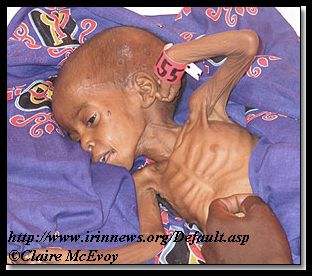
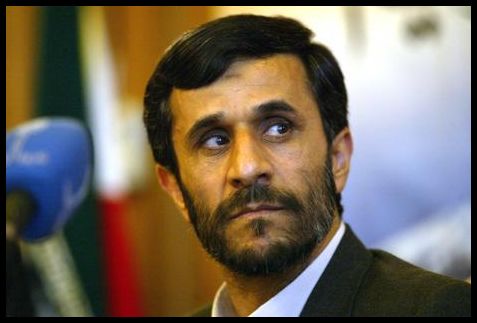
This morning I listened with great interest to a C-Span interview with Representative Adam Schiff as he pitched some sort of diplomatic settlement with Iran over their nuclear weapons program. His approach, it seemed to me, was reasonable. After all, it is better to talk than fight. But, as it reasonable as it may have sounded, the approach does have its gaps in reasoning. First and foremost among them is the notion that Mahmoud Ahmadinejad and the mullahs in Tehran are going to negotiate in good faith. Second is the notion that Iran’s leadership is concerned with world opinion, which is decidedly against them. They’re no more worried about what the United States, NATO, the European Union, Israel, or the United Nations think than Kim is worried about whether or not his people eat grass and starve while he builds nuclear and missile programs.

There are two bottom lines converging here. The overwhelming majority of us want peace in the Korean peninsula and the Middle East and we’re willing to negotiate for it. Kim, Admadinejad, and the mullahs want to buy time.

And, they’re getting it!

How long do you suppose it will be till our satellite reconnaissance discovers some hybrid of the Taepo dong 2 sitting on a launch pad somewhere in Iran? How much time do we have until the Iranians have nuclear capability and the means to deliver a lethal blow to their enemies in the Middle East? And worst of all, how long do you think it would be until al Qaeda in Iraq would have the same capability if we abandoned Iraq now? How long do you think it would be until Osama bin Laden was the de facto head of Iraq as a failed, then a rogue state? What do you suppose al Qaeda in Iraq would do with nuclear, chemical, and biological weapons if they had them? Do you think they’d be inclined to negotiate? Or do you think they just might use them?

Back in 1938 we had a great ocean protecting us from the dangers of national socialism. But, as Lance Morrow noted in 2003:

“Distance once helped dampen the effects of human wickedness; and of course, weapons once had limited range. But evil has burst into a new dimension. The globalization, democratization, and miniaturization of the instruments of destruction (nuclear weapons or their diabolical chemical-biological step-brothers) mean a quantum leap in the delivery systems of evil. This levels the playing field, so to speak – and the level field has fungus on it. Every tinhorn with a chemistry set becomes a potential world-historical force with more discretionary destructive power at hand than the great monsters from Caligula to Hitler ever had. In the new dimension, micro-evil (the dark impulse to rape or murder, say) and macro-evil (the urge to genocide) achieve an ominous reunion in any bid for the apocalyptic gesture.”

While all of this frightening enough to contemplate, some Democrats are calling for our retreat from the Middle East. Last week on Meet the Press Representative John Murtha recommended that we take our troops from Iraq and stage them in Okinawa. That’s right – Okinawa! As the boys who market Guinness often say, “Brilliant!” And, John Kerry is now advocating a pullout of American troops in Iraq by the end of the year. Thankfully, his amendment attempting to codify that position was defeated in the Senate today.

Murtha’s and Kerry’s positions are tantamount to turning the Middle East over to “tinhorns with chemistry sets.” Brilliant!

It’s hard for me to fathom what’s on their minds. I’d like to think the best, but I can’t. Their positions have much more to do with power than they do with principle. Murtha seems to relish the notion of being majority leader if the Democrats win in the 2006 mid-term elections. John Kerry still has his sights set on the Oval Office.

Finally, and most frighteningly, Kerry and Murtha may get their wishes granted. The Democrats may win the mid-terms. If they do they could then bog the President down in impeachment hearings and find the necessary votes to cut off funding for the work in Iraq. We could find ourselves beating a hasty retreat to Okinawa. Then, just before the fires begin to rain down upon us from the heavens, they can comfort us with the age old words of appeasement – “Go home and get a nice quiet sleep!”

Technorati tags for this post:

Mahmoud Ahmadinejad

Osama bin Laden

Neville Chamberlain

Kim Jong-il

John Kerry

Tuesday, June 20, 2006

Blame It On the Pentecostals


“These are the days when the Christian is expected to praise every creed except his own.”
- G. K. Chesterton

I’ve been plodding my way through Kevin Phillips’ “American Theocracy” for about a month now. I first got interested in the book when I saw the author on a C-Span interview. At the same time, I’m also reading Amos Yong’s “The Spirit Poured Out on All Flesh – Pentecostalism and the Possibility of Global Theology.”

After reading the seventh chapter of Phillips’ work yesterday I realized just how dangerous religious folk, particularly Southern Baptists, Pentecostals, and “fundamentalists” really are. Permit me to explain.

Phillips’s thesis is that a convergence of greedy oil men, “fundamentalist pulpiteers,” and an enormous load of debt are converging, in conspiratorial fashion, to bring about religious rule in the United States and war in the Middle East. All of this is being done to hasten Armageddon and the Parousia.

In his early chapters he takes a swipe or two at the fundamentalists:

“In 1983 James Watt, Ronald Reagan’s secretary of the interior, was forced to resign because of pressure from environmentalists who regarded him as hostile to their cause. Part of the suspicion lay in Watt’s conservative religion – he was the first cabinet secretary to belong to the Pentecostal Assemblies of God – and in suppositions that he was preoccupied with waiting for Christ’s second coming rather than with environmental stewardship. This was an early instance of a connection that has since become more controversial, and interest in Watt rekindled in 2001 when his protégée, Coloradan Gale Norton, was named secretary of the interior by George W. Bush. Norton had worked for Watt at the Mountain States Legal Foundation in 1979-1981 and again at the Interior Department. Like Watt, she was seen by the environmental movement as a foe.”

While Phillips did (graciously I assume) note that several major print media did apologize to Watt in 2005 for having misquoted him twenty-three years earlier, he didn’t make it clear what Norton’s critics were troubled by. Association? Her views on Armageddon?

Phillips launches into the deep in chapter seven (“Church, State, and National Decline”). It begins with a prominent epigraph from a 2004 statement by journalist Bill Moyers:

“One of the biggest changes in politics in my lifetime is that the delusional is no longer marginal. It has come in from the fringe, to sit in the seat of power in the Oval Office and in Congress. For the first time in our history, ideology and theology hold a monopoly of power in Washington.”

From there he goes on to cite, chronologically, how Christianity was responsible for just about everything from the fall of Rome to World War I. In the United States, he claims, the movement away from the mainline denominations to the fringes of fundamentalism and Pentecostalism began early in the twentieth century and has now grown to the point it has gathered substantial political power. In one light-hearted jab at the Bush administration he cited a piece from the Washington Post:

“At the General Services Administration, the office-maintenance arm of the federal government, Bush appointees held lunch-hour revival meetings in the front hall, making it seem, in the words of the Washington Post, “more like the foyer of a Pentecostal storefront church.”

I can only assume from what I’ve read to this point that Mr. Phillips would prefer something less controversial to be happening in the halls of government than religious ecstasy. Oral sex and interns perhaps?

To his credit, Mr. Phillips does try to tackle a very big subject – what he sees as the convergence of radical American religion, big oil, and borrowed money. He cites our war in Iraq as the cornerstone of his argument. Greedy oil men want Iraq’s oil. Radical fundamentalist and Pentecostal Christians want to make Armageddon happen. And, it’s all being funded by a mountain of debt.

Now I can’t speak for the oil men, but I can speak as a Pentecostal. One of the things I believe in as a matter of fundamentals is that Jesus is going to one day return to the earth. You may think of me as you like, but I really believe that. Something else I believe along with millions of other Pentecostal Christians is that when He does return it will be in God’s sovereign time. I cannot make it happen. George Bush cannot make it happen. Kevin Phillips cannot make it happen. As Bob Dylan said back in seventy-nine:

“Of every earthly plan that be known to man,
He is unconcerned
He’s got plans of His own to set up His throne
When He returns”

Further, I believe the same things that Christians have believed for almost two thousand years. I believe in the fundamentals of the Nicene Creed:


“We believe in one God the Father Almighty, Maker of heaven and earth, and of all things visible and invisible.”

“And in one Lord Jesus Christ, the only-begotten Son of God, begotten of the Father before all worlds, God of God, Light of Light, Very God of Very God, begotten, not made, being of one substance with the Father by whom all things were made; who for us men, and for our salvation, came down from heaven, and was incarnate by the Holy Spirit of the Virgin Mary, and was made man, and was crucified also for us under Pontius Pilate. He suffered and was buried, and the third day he rose again according to the Scriptures, and ascended into heaven, and sitteth on the right hand of the Father. And he shall come again with glory to judge both the quick and the dead, whose kingdom shall have no end.”

“And we believe in the Holy Ghost, the Lord and Giver of Life, who proceedeth from the Father
and the Son, who with the Father and the Son together is worshipped and glorified, who spoke by the prophets. And we believe one holy catholic and apostolic Church. We acknowledge one baptism for the remission of sins. And we look for the resurrection of the dead, and the life of the world to come. Amen.

That statement forms, for me and millions of other Christians, the foundation of our belief. I can even be bold enough to state categorically that this is normative Christianity. I would hope that mainline Christians, Lutherans, Episcopalians, Methodists, Presbyterians, Disciples of Christ, and others believe that statement. To Phillips these fundamentals may seem to be disturbing, but I a millions of my fellows take great comfort in them.

I think what’s really got the burr under his saddle is that religious folk are getting involved in politics. Or, to put it better, the wrong types of religious folk are getting involved. It’s those delusional fundamentalists and Pentecostals who are causing the problems.

If it will help any I’ll reassure him that all we want to do is participate, not rule. As Amos Yong said on our behalf:

“If the genius of Pentecostalism is its yearning to experience afresh the power of the Holy Spirit manifest in the first-century church and if Luke is the author most concerned with, and interested in, the operations of the Spirit, then this convergence should not be surprising. This Pentecostal vision of original Christianity is animated by the conviction that the accounts in the book of Acts (especially) are not merely of historical interest but an invitation to participate in the ongoing work of the Holy Spirit.”

In other words, many of us want to practice a faith that has meaning. We want to live it out.

Finally, I can assure Mr. Phillips that I’m no conspirator. My views on the current situation in the Middle East are informed as much by my politics as they are by my faith. I’m a Woodrow Wilson Democrat. I’m a John F. Kennedy Democrat. I served in harm’s way back in the sixties because I believed that I had an obligation to the world and the people of Vietnam. Today, as a matter of politics I believe we were, and are still, right to have stopped the brutality of the Taliban in Afghanistan and Saddam’s carnage in Iraq. My views have nothing to do with oil or Armageddon. It had, as I see it, everything to do with right and wrong. I supported what we started out to do. I support it now. And, I’ll support it till the issue is resolved. As a matter of faith I see our work in the Middle East as a noble work. The Christian humanist Erasmus once noted that we are “citizens of the world.” I believe those words. I believed them when Bill Clinton ordered America’s sons and daughters to stop the genocide in the Balkans back in the nineties. I believed them on September 11, 2001 and the days of liberation that followed for the people of Afghanistan and Iraq.

While I realize that the United States cannot fix every world problem, I also believe that we cannot ignore them. We are citizens of the world! If this is the type of thinking that makes me see irrational or fanatical to men like Kevin Phillips, I gladly accept the epithet.

Technorati tags for this post:

Fundamentalism

Kevin Phillips

Pentecostalism

The Nicene Creed

Sunday, June 18, 2006

The Night Shift Saint


Philippians 2:1-7 (New Living Translation)

“Is there any encouragement from belonging to Christ? Any comfort from his love? Any fellowship together in the Spirit? Are your hearts tender and sympathetic? Then make me truly happy by agreeing wholeheartedly with each other, loving one another, and working together with one heart and purpose.
Don't be selfish; don't live to make a good impression on others. Be humble, thinking of others as better than yourself. Don't think only about your own affairs, but be interested in others, too, and what they are doing.
Your attitude should be the same that Christ Jesus had. Though he was God, he did not demand and cling to his rights as God. He made himself nothing; he took the humble position of a slave and appeared in human form.”

It happened sometime during the roaring nineties. The Dow was up and political morality was down. While the giddiness of profits was moving into the economic stratosphere, politics was descending into the gutter. It was, as Dickens once said, “the best of times and the worst of times.”

Nancy and I were working at FedEx’s Eastern Region headquarters in Parsippany, New Jersey. This placed us in a perfect position to not only work productively for a great company, but also to see all the culture and history of the eastern seaboard. It was during these times that we took one of our three or four vacations to Washington, D.C., ostensibly to see as much of the city’s history and culture that we could absorb. We spent part of one day watching a Senate debate about the North American Free Trade Act between Fritz Hollings and Ted Kennedy, which Hollings, surprisingly, won. The good senator from Massachusetts didn’t comport himself well at all. He appeared to me to be in desperate need of the hair of the dog. Seeing him in such a state reminded me of the times back in the sixties when I often woke up in the morning looking for the tomato juice and beer to relieve the results of the previous night’s merry-making. As I recall we also spent about a half an hour at the Supreme Court building. Nancy had often told me that there was a not-so famous Catron who had served as an Associate Justice on the Great Court. The evidence of her claim, a portrait of Associate Justice John Catron, hangs in the basement of the building along with the other mug shots. I say “mug shots” because I suspect a lot of Americans have famous relatives they’d rather not claim. Justice Catron was the famous black sheep of the Catron family for his unfathomable vote in the Dred Scott decision of 1858. Since that time, very few, if any, Catrons have had much use for lawyers.

There were also lighter moments. On our visit to the White House some knucklehead decided to test the rule against taking photos during the tour. As soon as his camera flashed three Secret Servicemen pounced on him, confiscated the camera, and had him in handcuffs. I’ve heard that Muhammad Ali claimed he could turn off the light switch and be in bed before the room went dark. Upon seeing the handiwork of the Secret Service, I think they’d give the champ a real run for his money. It was, if you’ll pardon the pun, over in a flash.

By the time the day was over, we’d also seen Hsing-Hsing the panda at the national zoo and Archie Bunker’s chair at one of the Smithsonian museums. All in all, it was a very rewarding, interesting day.

After dinner we made our way back to our room at the Lombardy, a very nice hotel in Foggy Bottom, about three our four blocks from the White House and all the other halls of America’s national power. My last fleeting memory as sleep began to envelop my body was being impressed with it all. There’s a lot of powerful stuff going on in our nation’s capitol. There are great debates and decisions, some good and some bad. There are monuments to great men. There’s the original copy of our Declaration of Independence. Little did I realize as I fell asleep that I was going to learn an even greater lesson about power from the night shift saint.

At about two or so in the morning Nancy nudged me. “Do you smell smoke?” she asked. I groaned and told her to go back to sleep. She nudged me again. “Slick, I think I smell smoke.” I sat up in bed, rubbed my eyes and took a deep breath. Nothing. “Go back to sleep, everything’s fine,” I reassured her. She nudged me again. “I’m telling you, I smell smoke. Let’s get up and go downstairs.” The third nudge told me that Nancy wasn’t going to be denied. We got up and made our way down to the lobby. By the time we got there Nancy told her story. Years earlier she’d lived in an apartment building that had caught fire. It was a devastating event. While she came out of it all okay, two or three people who lived in apartments close to hers died in the fire. Since that time she’s had a deathly fear of fire. I remember feeling badly for having taken her nudges so lightly and suggested we might find a place to get a cup of coffee. The desk clerk told us there was an all-night Burger King next door and we walked, hand in hand, over to an encounter like few we’ve ever had together.

I didn’t notice much when we first got there. One Burger King in Washington, D.C. is pretty much the same as any Burger King anywhere in the world. A Whopper in Washington, D.C. is pretty much the same as a Whopper in Tokyo. It’s the kind of familiarity that’s supposed to bring comfort. I like to think of it as the “hold the pickles, hold the lettuce, special orders don’t upset us” syndrome. But, as we sat down at a table with our coffee, my stereotypes were about to be shattered. My first glimpse of the new reality came when I noticed several homeless people shuffle in. As they did, I made sure my wallet was secure and kept a watchful eye on them. They were ragged, dirty, and hungry, as is the custom of the homeless. They made their way slowly to front counter, eyeing the food being prepared. As they did a tall African-American man came out of the kitchen. He was tall, about six feet three, well muscled. His face was round and cherubic, giving the appearance of peace and grace under fire. I’m sure he’d seen it all on the night shift and there was little that appeared to faze him. He leaned over and asked one of the homeless men, “Whatchya’ want?” There was no answer. “Hungry?” he asked. They nodded in the affirmative. The man, who I now assumed was the manager, went back into the kitchen. A few minutes later he came back with mops and buckets in tow. “Here,” he said. “Mop up a bit and I’ll give you something to eat.” The homeless men complied and did what I’d call a creditable job. When their work was done the manager inspected it and gave them each a Whopper, fries and a Coke. They thanked him profusely, wolfed down the food, and left. As they did the manager waved and said, “See you guys tomorrow night.” Nancy and I sat watching, transfixed. “Did you see that?” I asked. She nodded. “Amazing, wasn’t it.” It was, as we were to find out later, only the beginning of the lesson.

As we sipped our coffee, Nancy called my attention to a man sitting at a table behind me and catty-corner to the right. The first thing I noticed was the navy blue beret perched on his head. As I made my way down I gazed at his long, thin face. It was weathered and worn. Then I was caught up in a blaze of white. It seemed that everything, down to his shoes, was painted white. It was as though he’d gone wild with a gallon or two of Sherwin Williams primer. There was a sketchbook on the floor propped up against his right leg. On the table in front of him sat a tin of what appeared to be a set of Woolworth’s water colors and a large piece of paper with some sort of avant-garde work in progress. Occasionally, the man would hold his right thumb up about a foot in front of his face and survey the restaurant. I assumed as I watched that he was doing some sort of abstract imitation of “The Potato Eaters.” After a while the manager made his way over to the man and leaned over. “Whatchya’ workin’ on? There was no response. The manager put his right hand on the man’s shoulder. “Can I see your sketches?” A trace of a smile came up on the man’s face as he picked up the sketchbook and handed it to the manager. After a minute or so of browsing, the manager declared the works to be masterpieces, patted the man on the back, and continued on his rounds. The man’s smile got broader. He arched his back and sat up straight. His thumb moved in front of his face once more as he proudly surveyed his living canvas.

At a table directly behind Nancy he stopped and began to talk to a fiftiesh man who appeared to be very troubled. There laid out on the table in front of him was a stack of papers. The manager pulled up a chair and sat down with the man. “You doin’ okay?” he asked. The man placed his face into his cupped hands. “Damned V.A.” he answered. “I don’t understand what they want from me.” After a few minutes of going over the paperwork with the man the manager determined that the V.A. was trying to get some answers about his disability claim. “I’ll help you with it,” the manager offered. “I’ll call them in the morning when I get off if you’ll trust me with the paperwork.” The man happily agreed. As he got up to go back into the kitchen, the manager offered a small prayer for the man. “Bless him lord, give him comfort and help.” It wasn’t one of those great prayers prayed by the booming baritones over at the National Cathedral. There was no mention of “The Ground of All Being.” It was, however, a prayer akin to the widow’s two mites, seemingly unnoticed, but heard loudly in the Halls of Heaven.

By about three-thirty Nancy was ready to go back to the Lombardy. As we made our way, our conversation was filled with a deep sense of gratefulness for what we’d seen and learned. We’d seen the night shift saint, laboring in obscurity, just a few blocks from the seats of our nation’s temporal power. While bills were being debated and billions spent, a tall African-American man with the face of a cherub and a heart close to God was doing the things most often unseen or recognized. A Whopper for a few minutes work. A kind word to a mentally challenged “artist.” A helping hand to a needy veteran.

I’ve heard it said that there are a lot of powerful people in Washington, D.C. After our encounter at the all night Burger King I’m sure there’s at least one. It’s the night shift saint.

Technorati tags for this post

Burger King

Ernest Hollings

Homelessness

Ted Kennedy

Vincent Van Gogh

Saturday, June 17, 2006

The Toxic Effects of Fame


Luke 20:46 (New Living Translation)

“Beware of these teachers of religious law! For they love to parade in flowing robes and to have everyone bow to them as they walk in the marketplaces. And how they love the seats of honor in the synagogues and at banquets.”

Anonymity can often be a great gift. I realize this flies in the face of the tenor of our times. We’re a culture obsessed with celebrity and fame. Laboring in obscurity is most often seen as the unproductive, ordinary life. On one side of our social equations we have superstars and megastars. One the other we have “ordinary” people. It’s our culture’s way of proclaiming that some lives are more worthy of living than others.

It’s not that fame and notoriety are necessarily bad things. Some of us handle it responsibly. Mother Theresa and Billy Graham come to mind. So does the Irish rocker Bono. They have, by God’s grace, found causes in life that transcend their fame and they use that fame to further those causes, not focus attention on themselves. For Mother Theresa it was the plight of India’s dying poor and the un-born. For Billy Graham it’s the gospel. For Bono it’s the needs of Africa’s desperate peasants.

Most of our superstars, however, don’t handle the fame they’ve been given very well at all. Million dollar newscasters, whose only gift is the ability to read a teleprompter, come to mind. So does Madonna. At the heart of their celebrity there’s an overgrown messianic complex at work. They’ve come to believe that their fame has made them much better than the “ordinary” people who heap adoration upon them. Like Nebuchadnezzar of old, they love to hear the words “O king, live forever.” What’s even worse is that their megalomania is so highly developed they actually believe what they hear about themselves.

The Christian Church is far from guiltless when it comes to this cult of celebrity. We’ve divided ourselves along social, political, and theological fault lines, left and right. On one hand we have the disciples of men like Tony Campolo. On the other we have the followers of men like Don Wildmon. The more I see it, the more I realize that it’s all orchestrated to gain fame and notoriety. What they do is done not to further a cause, but to focus public attention on themselves or lob rhetorical mortar shells at their enemies. The aim isn’t reconciliation. It’s fame and the destruction of an enemy. It’s a twenty-first century version of the old contest in which observers noted, “Saul has killed his thousands, and David his ten thousands.”

Who’s going to win? It’s hard to say since the wheel’s still in spin. One thing is certain, though. There will be a lot of casualties by the time it’s all over.

What the world needs now is less fame and more anonymity. The Church, particularly, needs to step back from the limelight and move gently into the glorious shadows of ordinariness. More of my thoughts on that will come tomorrow with “The Night Shift Saint.”

Technorati tags for this post

Wednesday, May 31, 2006

News From the Home Front


“Their minds are filled with big ideas, images and distorted facts.”

- Bob Dylan – “Idiot Wind” (1975)

Nancy and I got back from our getaway in Kansas City just in time to get ourselves in the middle of one of those one in a hundred years events. At about five o’clock the skies opened and the waters descended. By five-fifteen the city was inundated with water. In that short time at least three inches of rain fell. The water ran about a foot or a foot and half deep in the downtown area and just about every intersection in town, particularly those in low lying areas, was swamped. Fortunately for us, the sump pump in our basement was up to the task. This morning as I made my morning rounds I saw the results of the flash flooding. Downtown merchants were busy cleaning up, pushing the debris, mud, and water from their businesses. Some streets were still blocked off. One of the fortunate by-products of the flood was that the usual array of fast food and candy wrappers, beer bottles, and the assorted trash that usually litters Emporia’s downtown streets after a night of merry-making had been swept away in all the water. About all that was left on the streets and sidewalks were bits of gravel, twigs, and leaves. It may not have looked especially pretty, but at least the stuff left by the storm was bio-degradable.

Far from Emporia, in Washington D.C., there has been a torrent of indignation lately. It seems that one congressman, William Jefferson, got caught with his hand in a mighty big cookie jar. Sometime last year the good congressman appears to have taken a sizeable bribe for legislative services rendered. The FBI, in a search authorized by warrant, found ninety thousand big ones in his home, on ice. Unlike those of us living in small towns who lack social and political sophistication, Jefferson had wrapped the incriminating dough in tin foil and tucked away in his freezer. Even for us red-staters it looked more than a bit suspicious. If it had been me doing the searching I’d have been wondering what all that money was doing next to the leg of lamb or the broccoli florets. Hadn’t Jefferson heard? Out here we put that kind of incriminating stuff in mattresses until the heat blows over, then deposit it into our savings accounts at four percent. If only he’d sought our counsel.

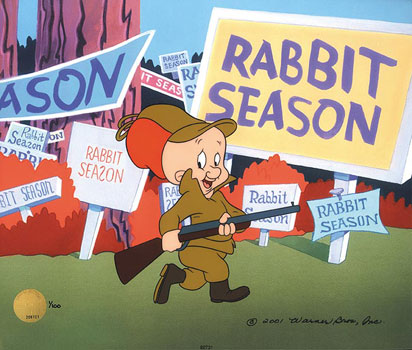
Not content to let a good deed go unpunished, Dennis Hastert and Nancy Pelosi came to the good congressman’s rescue, claiming that the FBI had overstepped its bounds. “Congressional privilege,” they screamed. “We congress-folks have our rights.” It was all rather cartoonish, with Hastert and Pelosi becoming central figures. Hastert’s been looking like Elmer Fudd on the hunt ever since the whole thing started (“Dern FBI”) and Pelosi’s been just perfectly typecast as Cruella DeVille.

Is there something they’ve put in the water? Do Americans outside the Beltway have “kick me hard signs” planted on their backs? Do they really think we’re so stupid that we’d all come to the aid of this den of thieves? The answer to the first question is “I hope not.” The answer to the second is “No!” The answer to the third is, “Apparently Cruella and Elmer think so.”

The more they’ve protested, the more suspicious I’ve gotten. In fact, I think I like the idea of the FBI rooting around. Maybe it’ll keep them on their toes. Maybe they’ll find more than a few rutabagas in Hastert’s or Pelosi’s fridges.

Speaking of privacy and crackpot theories, back here on the home front Rita Stark, Emporia’s citizen extraordinaire, is at it again. She sent a letter to the Gazette last week, complete with a list of recommended summer reading for Emporia’s Neanderthals. I’d already read two, am currently reading a third, but am steadfastly refusing to read her highest recommendation – Thierry Meyssan’s “9-11- The Big Lie.” I’d read a review of the book in Spiegel ONLINE a long time ago and decided to forego it, in the same way I resist the temptation to read the National Enquirer when I’m checking out at the grocery store. I don’t need to worry myself with stories of alien babies or sightings of Elvis in Missoula. And, I don’t need to trouble myself when fruitcakes like Meyssan claim that 9-11 was actually a huge U.S. government conspiracy. I’ve heard it all before, haven’t you? Jews were told not to report to work on September 11, 2001. It was U.S. missiles, and not hijacked passenger planes, that hit the Pentagon that day. It was all a government plot to keep the rest of us in line. It all makes me wonder, in hindsight, whether or not Rita and Thierry work on the staffs of Hastert or Pelosi.

A day or so after I read Stark’s letter I fired off the following response to the Gazette:

I’m almost two-thirds of the way though Rita Stark’s summer reading list. I’ve already completed Orwell’s “1984” and Shirer’s “The Rise and Fall of the Third Reich.” Right now I’m working on “American Theocracy.”

I was quite impressed with Orwell’s and Shirer’s work. I can’t say the same for Phillips’. While it claims to be factual, so far it reads more like pulp fiction. The notion that a cabal of Texas oil men and Christian fundamentalists is trying to take over the world is more than a bit hackneyed.

I don’t intend to put Meyssan’s “9-11 – The Big Lie” on my must read list, especially after having read Spiegel ONLINE’s September, 2003 cover story (“The Panoply of the Absurd”) about Messyan and his fellow 9-11 conspiracy theorists. To be honest, Ms. Stark, I’m really tired of hearing how New York’s Jews were told to stay home on September 11th, 2001. I’m tired of hearing it was all a Jewish conspiracy. I’m tired of hearing it was a government plot. And, I’m tired of hearing that it was actually U.S. missiles, and not hijacked passenger planes, which took down the World Trade Center towers.

To paraphrase the Immortal Bard, Ms. Stark, “Methinks thou doth protest too much.” While tales of Texas oil men, Christian fundamentalists, government assassins, or Jewish conspiracies can make fiction seem like fact, they can also divert our attention from the high road we all ought to be taking these days.

These are serious times and the issues that face us all are momentous. They deserve better than to be trivialized. They merit our attention, discussion, and national consensus, not sensationalism. We can, and should, do better!


So there you have it. Emporia got caught up in a flash flood last night. Denny and Nancy got themselves caught up in a flood of stupidity last week, as did Rita Stark. Seeing it all played out, I wonder where and when the next bucket of rain’s gonna’ fall. A gullywasher over the Capitol wouldn’t be a bad place to start. We need something to clean the place out.

Technorati tags for this post:

Cruella DeVille

Elmer Fudd

Dennis Hastert

William Jefferson

Nancy Pelosi

Monday, May 22, 2006

Caught on the Fringes of Lazy Populism and Ruthless Capitalism


“Now there’s spiritual warfare and flesh and blood breaking down.
Ya either got faith or ya got unbelief and there ain’t no neutral ground.”

- Bob Dylan – “Precious Angel” (1979)

I’ve attended two high school graduations so far this season. One was a technical marvel, with a long video presentation of baby pictures morphing into the high school seniors seated before their adoring parents and friends. The graphics were slick and the message a bit subtle, but after a few minutes of reading and watching the tea leaves I got it. The educational system had done its job. We’d given it our children and it had turned them into young adults, ready to tackle the world. In keeping with the tenor of the video presentation, the two young valedictorians strung together a series of clichés worthy of a good politician or a Calvinist convinced he’s doing the will of God.

The second, which we attended last night, had less pizzazz, but matched the earlier event cliché for cliché. The valedictory addresses were short, with about half the time taken up with muted complaints about three years of school food and the other half with cuddly Winnie the Pooh quotes. Rural Kansas had done its job. Twenty-nine young adults from Olpe, Kansas had, as the saying goes, made the grade.

On the way home last night I mentioned to Nancy that graduation ceremonies had changed quite a bit since 1960 when I made my way into the world of adults. The tone of everything back then was serious. We were being confronted with the fact that we were now to be full participants in a troubled world. It was going to be, we were told, our job to build upon the foundation our parents and grandparents had laid for us. While they hadn’t secured every liberty or solved every problem, we recognized they had advanced noble causes. Now it was our time to shine, to make the world a better place. The clichés offered were far from being cuddly. The words of Lincoln and Walt Whitman, rather than Winnie the Pooh, were the rhetorical launching pads for our adult lives.

As I watched last night I had to remind myself to be gracious to the class of 2006. Most of them had entered the high school doors as open slates, ready to be educated. Unfortunately, most had left as budding nihilists. They’d come in empty and left empty, with only a few clever catch phrases to show for the time they spent in the lower levels of academia. A few years of college education will, for the vast majority, make their nihilism complete and socially acceptable. What else would, or should, we expect of the class of 2006? All they really did was cooperate with the indoctrination. It wasn’t all their fault.

What’s in store for this year’s graduates? Troubles, I fear. Have they been prepared to confront them? No!

I gave a lot of thought to this as I made my rounds this morning. The more I thought about it all, the worse it got. In the end, near the University, I came to the conclusion that this is a generation caught on the fringes of lazy populism and ruthless capitalism.

What do I mean by that? It means that this generation of graduates is armed only for self-aggrandizement. On the one hand there is a “whatever floats your boat” philosophy that allows them to be untroubled while the vultures gather. The peril is all around and this generation’s response is almost always the same. Osama’s still hiding in a cave near Tora Bora. “Whatever.” Kim Jong-il is drinking expensive cognac while his people desperately forage for grass to eat. “Whatever.” Musa Hilal and the Janjaweed are murdering hundreds of thousands in Darfur. “Whatever.” Mahmoud Ahmadinejad is close to having his finger on the nuclear trigger. “Whatever.”

On the other end of the fringe is the economics of this generation, which is an odd combination of greed and retreat from responsibility. The more this generation has been given, it seems, the more it wants. The operative language of America two generations ago was about responsibilities and earning one’s way in the world. Today, the language of the class of 2006 is about rights and entitlements. This is a generation with little interest in earning anything. It’s a generation that feels, rather, that it is owed.

Yes, the vultures are gathering. And, the class of 2006 refuses to see them sitting on the fence posts of the world. Most of this year’s graduates don’t even know where Iran is, or North Korea, or Darfur. If you were to ask most of them who or what they Janjaweed is they’d probably say something clever like, “It’s the next generation of marijuana, Dude.”

I wonder how close the fence posts will have to be to their homes and “stuff” to make them notice. Not long ago Mahmoud Ahmadinejad sent a scathing letter to George Bush, scolding him and proponents of liberal democracy. It was eerily reminiscent of Nikita Khrushchev’s “we will bury you speech” of my generation. In his analysis of the letter, Hillel Franken, senior fellow at the Hudson Institute, noted that:

“All of this can be seen partially but still somewhat dimly in Ahmadinejad's emphasis on Christian hypocrisy, which may in this context mean two things: violations by self-professed Christians of the standards and teachings of historic Christianity, or the violation by historic Christianity of the true teachings of the Prophet Jesus. The latter is a traditional Islamic view of the defect and even crime of historic Christians. In calling upon Bush, as Ahmadinejad does emphatically, to embrace the “teachings of the prophets,” he is calling upon him not only to abandon liberal democracy but Christianity as well--to embrace Islam, to which all the world must ultimately submit, and which is gathering momentum in our time.”

This is only one of the vultures the class of 2006 will have to face. When the time for confrontations with him and others inevitably comes, will they be ready to face up to them? When the time comes and the sound of the rattling of sabers is heard will their response be little more than a few cuddly quotes from Winnie the Pooh? If so, the vulture’s response will be sardonic laughter as the sword is raised. Or, when the devil’s at their doors, beating his way inside, will “Whatever” be the last words we hear from this generation? Based on what I heard over the past few weeks it just might be.

Technorati tags for this post:

Christianity

Good versus Evil

Islam

The Class of 2006

Wednesday, May 10, 2006

Who is Our Neighbor


Luke 10:25-29 (New Living Translation)

The Most Important Commandment

“One day an expert in religious law stood up to test Jesus by asking him this question: “Teacher, what must I do to receive eternal life?”
Jesus replied, “What does the law of Moses say? How do you read it?”
The man answered “You must love the Lord your God with all your heart, all your soul, all your strength, and all your mind.” And, “Love your neighbor as yourself.”
“Right!” Jesus told him. “Do this and you will live!”
The man wanted to justify his actions, so he asked Jesus, “And who is my neighbor?”

I occasionally read The New Republic On-line. For the past few days I’ve been digesting their essays on Darfur. While I often disagree with TNR’s political and philosophical views, I find myself in lock step with them when it comes to the genocide being committed in Darfur while the world watches, debates, postures, and proposes.

As the debates and posturing continue with increasing ferocity, the genocide also continues. Oh, there has been a signing of a peace treaty of sorts, but I don’t believe it amounts to much. Musa Hilal and the murderers, thugs, and rapists who’ve been carrying out his order to “change the demography of Darfur and empty it of African tribes,” like their forbearers in evil, are simply using the signed paper to buy themselves more time. Like the oft turned phrase of “blood for oil,” Hilal and the Janjawiid are simply exchanging blood for paper, international neglect, and inaction.

The latest estimate on the death toll in Darfur is 400,000. While the methodology of the genocide is, by modern standards, primitive, it’s also extremely efficient, terror-filled, and effective:

“The Janjawiid [sic] spread out across Darfur, attacking defenseless communities. Villagers were ... shot, stabbed, burned alive, and butchered. Bodies were mutilated and left in the open, there to be seen by anyone who might consider returning. In one village, sixty-six villagers were tortured in the local dispensary before being killed--some hanged by their feet, others decapitated. In another, schoolgirls were chained together and burned alive. ... Government and Janjawiid forces destroyed everything that made life possible.”

Other than the recent peace treaty, the only significant action from the international community came in the form of cuts in funding for relief to the millions in need. The U.S. has cut its funding for the effort from $113,000,000 in 2005 to $40,000,000 this year. Even more startling, the United Nations, which gave $53,000,000 to Darfur relief last year, has given a paltry $1,890,000 so far in 2006. The tragic end result is that the refugees of Darfur have had their food rations cut in half. (source) How humanitarian of us!

For close to a generation now the international community has responded to a series of epic crises with the mantra “never again.” The editors of TNR, seeing through the diplomatic and political charade, called it what it really is – Nonsense!

“Never again? What nonsense. Again and again is more like it. In Darfur, we are witnessing genocide again, and we are witnessing ourselves doing nothing to stop it. Even people who wish to know about the problem do not wish to know about the solution. They prefer the raising of consciousnesses to the raising of troops. Just as Rwanda made a bleak mockery of the lessons of Bosnia, Darfur is making a bleak mockery of the lessons of Rwanda. Some lessons, it seems, are gladly and regularly unlearned. Except, of course, by the perpetrators of this evil, who learn the only really enduring lessons about genocide in our time: that the Western response to it is late in coming, or is not coming at all.”

It seems to me that the editors of TNR are absolutely right. There are two central realities converging here. First, there is, as there always has been, the willingness of evil men to use the most despicable means – murder, rape, torture, terror, and extermination - to enforce their will. In the past twenty years it’s been men like Saddam in Iraq, the Hutu nationalists of Rwanda, Milosevic in the Balkans, and Musa Hilal and the Janjiwiid in Sudan who’ve vividly displayed this doctrine of terror for all the world to see. The other reality being played out over and over is the willingness of the world to talk, posture, and threaten, but not act in the face of genocide after genocide. Each side in this twisted diplomatic dance plays its role to the hilt. The purveyors of terror lead, ordering the terror for home consumption while advocating peaceful solutions to the problem on the international stage. The civilized world follows, threatening action, but never following through. When the music’s done, so is the killing. The despots’ blood lust has been satisfied temporarily. Body counts number in the hundreds of thousands, if not millions. Then, the cameras role and the recriminations begin. I remember well, for example, watching as the Clinton administration spent months floundering, trying to flesh out the definition of genocide. And, while the U.S. administration agonized over the definition of what they were seeing, the agony of Rwanda went on and on. When the carnage was complete, the time for apologies came. In 1998, Bill Clinton visited Rwanda and issued this weak statement:

“We come here today partly in recognition of the fact that we in the United States and the world community did not do as much as we could have and should have done to try to limit what occurred” in Rwanda.”

The United States did nothing, but only took responsibility for “not doing enough.” It was Bill Clinton at his very best.

Even worse, the United Nations said absolutely nothing in he aftermath the carnage. There weren’t even any recriminations. It was just international business as usual. It had a name – “Oil for Food.”

TNR’s editors advocate action in Darfur, even unilateral American action if necessary. I agree!

But, that isn’t going to happen. First, it won’t happen because the United Nations has shown an alarming unwillingness to act in accord with the principles of its charter. Unlike Bill Clinton and his administration, the U.N. bureaucrats didn’t have the problem of defining genocide to wrestle with. They’d already done that in 1948 when they declared:

“In the present Convention, genocide means any of the following acts committed with the intent to destroy, in whole or in part, a national, ethnical, racial, or religious group, such as (a) killing members of the group; (b) causing serious bodily or mental harm to members of the group; (c) deliberately inflicting on the group conditions of life calculated to bring about its physical destruction in whole or in part; (d) imposing measures intended to prevent births within the group; (e) forcibly transferring children of the group to another group.”

Further, in a 2001 commission report prepared for Y.N. Secretary General Kofi Anan, the following guideline for military intervention in cases of genocide was outlined:

“4.13 Yet there are exceptional circumstances in which the very interest that all states have in maintaining a stable international order requires them to react when all order within a state has broken down or when civil conflict and repression are so violent that civilians are threatened with massacre, genocide or ethnic cleansing on a large scale. The Commission found in its consultations that even in states where there was the strongest opposition to infringements on sovereignty, there was general acceptance that there must be limited exceptions to the non-intervention rule for certain kinds of emergencies. Generally expressed, the view was that these exceptional circumstances must be cases of violence which so genuinely “shock the conscience of mankind,” or which present such a clear and present danger to international security, that they require coercive military intervention.

Apparently, the plight of the Shia, Kurds, and Marsh Arabs of Iraq weren’t enough to shock the conscience of the United Nations. Nor was the plight of the Croats in the Balkans or the Tutsis in Rwanda. Nor, is the plight of Black Africans in Darfur today.

The crisis screams out for forceful intervention, but one thing is certain. The United Nations will not be the one to act.

The United States? We could, and we should, but I doubt we will. The Bush administration, weakened by its conduct of the war in Iraq and the subsequent troubles with nation building there, has little or no appetite for foreign entanglements right now. There is, I believe, a moral imperative to act, in the same way there was a moral imperative in the Balkans, Rwanda, and even Iraq, but political reality will overshadow that imperative. Political opponents would make political hay of Darfur in the same way they did when Republicans castigated Bill Clinton for finally intervening unilaterally in the Balkans. The refugees of Darfur would become political capital for power hungry Democrats in the same way post Saddam Iraq has become their pathway to seats in Congress and the Senate. Further, while the political left would support intervention today, that support would sour in the face the inevitable casualties. Remember Mogadishu?

Action is needed in Darfur, not words. And, the United States is the only nation on earth with the power to act. We Americans may not like that reality, but we cannot change history as it is. The rest of the world community isn’t going to act; that much is clear. It’s up to us.

On my morning walk yesterday I took a bit of a detour. As I got to the corner of 10th and Elm an elderly woman opened her front door and asked me, “Is the electricity out here in town?” “No, ma’am,” I said. The lights are on over at my place and they were at the school a couple of blocks from here.”
“I can’t get any help,” she pleaded. “Will you help me?”
What could I say? “I’ve got better things to do.” “I don’t know anything about electricity.” Of course not. I had to help her. It turned out to be nothing more than a couple of problem breakers on the electrical panel in back of her house. It was easy enough to fix. A minute or so after I’d agreed to help I was on my way. A couple of blocks later I wondered what I might have done if that same woman was being robbed. I didn’t have my cell phone with me, so I wouldn’t have been able to call the police. Maybe I could have just waited until someone else responded. Maybe I could have shown up in the aftermath, hoping that she would still be alive. Or, I could have acted to help her, in the same way I had with the faulty breaker switch. I submit to you there was only one difference between the help I provided with her electricity and the hypothetical situation I thought of afterward. It was just a difference in the level of risk. One was safe and the other might have cost me something, including my life. The moral imperative to act in each case was the same. Something had to be done and I was there. That was the moral mathematics of the situation.
I believe the same moral imperative holds true for Darfur!

The United Nations is powerless to act in Darfur. The United States is, tragically, unwilling. The refugees, who should be the center of the world’s attention, are being ignored. Why? As TNR observed:

“Their plight interferes with the anti-imperialist integrity of liberals in the only country in the world with the power and the authority (yes, still) to help them. The Democrats in Washington are now clamoring for the appointment of a special envoy to Sudan. (No mention so far of Brent Scowcroft.) That is to say, they are searching for reasons to deflect the responsibility of refusing to let crimes against humanity stand.”

As with any moral dilemma, there are different courses we can take. We can act or we can ignore the genocide in Darfur. I believe it’s time for America to act, even if it means acting unilaterally. It’s time to put the politics of electoral advantage aside and act. That’s the moral course I’m convinced Divine Providence has placed in our national path. If we fail to act, there will be consequences. The blood of Darfur’s refugees will be as much on our hands as it is on the hands of Musa Hilal and the Janjawiid.

Technorati tags for this post

George Bush

Bill Clinton

Darfur

Genocide

Rwanda

The New Republic

Sunday, May 07, 2006

Dandelions


I'm not afraid of storms, for I'm learning to sail my ship.

- Louisa May Alcott

Yesterday afternoon I spent my time judging in the Kansas High school state forensic tournament. In the final round I was one of three judges responsible for deciding who would be the state champion in the “Informative Speech” category. There were six participants, and each one was absolutely wonderful.

One of the things that judges in these types of competitions are told is that the judge is to always keep in mind that the exercise, while competitive in nature, is to be first and foremost a learning experience. I suspect most of us who do the judging make the assumption that it is the student/participant who is to do the learning. After judging the finals of the “Informative” category I found that the admonition also applied to the judges. Permit me to explain.

While all the participants made wonderful presentations, there was one that has, and will for some time, stay with me. In less than seven minutes, a young student named Paula (participant number 18A), taught me an incredibly valuable lesson in seeing the value of things we most often don’t consider to be valuable at all. It was the lesson of the dandelion, or as she titled her presentation, “The Dandy Lion.”

Each spring I spend an inordinate amount of time and money trying, like millions of other Americans, to do away with this pesky “weed.” I spend hours either pulling or spraying, and for the most part my work is effective. But, the dandelion is a hearty “weed.” No matter how much I spray or pull, one or two or three or ten or fifty or so always manage to spring up from the cracks in my chemical defenses. It’s as if they have a will to overcome, to survive the onslaught of humanity.

Yesterday, however, I learned that the dandelion is hardly the useless “weed” that Ortho and the other chemical companies would have us believe it to be. I learned, for example, that the dandelion is actually in the sunflower family, and that it came to America as a transplant from Europe. No, it didn’t get here by having the people of Europe blow the seeds borne in the feathery white of the early spring dandelion. It was brought here by early settlers, very deliberately, because of its curative powers. It seems that, back in those primitive times, the dandelion was known to be a diuretic and an antibiotic. As early as the fifteenth century, the Europeans and the Chinese used dandelion as a blood cleanser. So much for the dandelion being nothing more than a noxious weed.

Today, the dandelion is used for many of the same reasons. It has curative powers for not only bacterial, but also viral infections. It’s rich in vitamins A, B, D, and G, and we use it in wine, tea, or salads. Modern medicine is also discovering that it is also useful in the lowering cholesterol. Even more amazing, some of its properties are now being used in the treatment of liver problems and even some forms of cancer, particularly breast cancer.

As I think about it now, I’m somewhat startled to think that I spend as much time and money destroying dandelions as I do. Why? The only reason I can think of is that it pops up where I don’t want it; usually in the middle of a lawn I’ve worked to keep meticulously green, a emblem to my neighbors of my diligence and hard work.

But, there was more to the lesson that participant 18A brought yesterday. This morning at church I spent some time considering Jesus’ words from the Sermon on the Mount. Most reading this post know them, even those who don’t consider themselves people of faith or belief. The reason they are so well known is that they’re timeless, filled with what Jesus called “blessings.” There are nine of them outlined in the fifth chapter of Matthew:

Matthew 5:3-11 (King James Version)

“Blessed are the poor in spirit: for theirs is the kingdom of heaven.”
“Blessed are they that mourn: for they shall be comforted.”
“Blessed are the meek: for they shall inherit the earth.”
“Blessed are they which do hunger and thirst after righteousness: for they shall be filled.”
“Blessed are the merciful: for they shall obtain mercy.”
“Blessed are the pure in heart: for they shall see God.”
“Blessed are the peacemakers: for they shall be called the children of God.”
“Blessed are they which are persecuted for righteousness' sake: for theirs is the kingdom of heaven.”
“Blessed are ye, when men shall revile you, and persecute you, and shall say all manner of evil against you falsely, for my sake.”

As I considered those words I began to see the parallel to the lesson of the dandelion I’d learned yesterday. Sometimes, the things that are meant for our benefit and healing are the things we desperately try to kill. More often than we should, we consider the things Jesus defined as blessings to be dandelions. We read and consider the words and they seem so upside down to us. After all, what’s so great about being persecuted or mourning? What’s possible value can there be in meekness? I mean, aren’t prospective employers looking for “aggressive self-starters?” And, they’re not looking for people who consider poverty, in any form, a virtue. They’re looking for people who are motivated by money, aren’t they? Some blessings, eh?

Yet, this is exactly what Jesus called them. And, with each blessing there is a promise. For those who mourn, there will be comfort. For the poor in spirit and the persecuted, there is the kingdom of heaven. For those who are merciful, they will obtain mercy in return. The hungry and thirsty will be filled. The pure in heart will see God; the peacemakers will be called the children of God.

Why is it, then, we spend so much time and effort trying to avoid the very things Jesus said are meant for our benefit? Why is it that we spend so much time fending off these blessings? Some of us who are Pentecostals, in our vibrant, lively settings, rebuke them. Some of us who are from more contemplative Christian backgrounds have assigned them to memory, but we’ve found more intellectual ways to fend them off. We consider them for a fleeting moment, but the reality of life “as it is takes over” and we toss them aside or rip them from our consideration like the dandelions that try to despoil the perfection of our lawns and lives. Some of us don’t consider them at all. We all may have different approaches, but the net effect is the same. In the same way we kill the dandelions that spoil the rich green lawns we’ve spent endless hours on, we kill out the blessings Jesus outlined with weed killers of our own making.

Contestant 18A shared a valuable lesson yesterday. The things we often think have little or no benefit to us are often the things that are more beneficial than we can imagine. So it is with the “blessings” Jesus offers us in the Sermon on the Mount. It’s adversity, difficulty, and trial that are the true paths to blessing in our lives.

Technorati tags for this post:

Dandelions

The Sermon on the Mount

Friday, May 05, 2006

Of Broken Eggs and Omelettes


I’m in a reflective mood today. I browsed through my archives a while ago and found a piece that best expresses what I’m feeling. It follows for your edification

Psalm 137:1-6 (New Living Translation)

1 “Beside the rivers of Babylon, we sat and wept as we thought of Jerusalem.[a]
2 We put away our lyres, hanging them on the branches of the willow trees.
3 For there our captors demanded a song of us. Our tormentors requested a joyful hymn: “Sing us one of those songs of Jerusalem!”
4 But how can we sing the songs of the LORD while in a foreign land?
5 If I forget you, O Jerusalem, let my right hand forget its skill upon the harp.
6 May my tongue stick to the roof of my mouth if I fail to remember you, if I don't make Jerusalem my highest joy.”

Isn’t it funny how some memories linger, waiting in the recesses of our minds and hearts, waiting for what seem appointed times to surface? I often wonder when they come if they’re just products of dated bitterness of events long since past, memories of trying times in my life. Or, I also wonder, “Are they gifts from God, given to bring an opportunity for healing?” They’re so wispy, so difficult to describe or express in words that I’m puzzled when they rise up. And, they come accompanied by a strange mix of inner music, part martial, part sweet lullaby. Perhaps there’s a middle ground, a place where God’s healing and the bitter memories collide. Perhaps there’s a cosmic battle going on here and I’m ground zero. I can’t say for sure and leave those issues as matters of faith, to be sorted out somewhere further down the road.

But I feel compelled to express what I’m feeling. It’s an imperative.

These are really good days for me. That’s part of this odd mix. For the past week or so I’ve sensed that I’m really blessed. I see that blessing in a myriad of ways. I see it in Nancy most of all, in her gentle way, in her unswerving commitment to God and to me. I see it in the little things, in the chorus of birds who have protected a wayward blue jay chick in our back yard for the past few days. I heard it in the aviary quartet singing a cappella as I worked on my masterpiece on the grille last night. Off to my right I could hear the purple martins twittering. To my left came the chipping of a wren, responding in his own inimitable way. Not to be outdone, the redbirds chirped and the mourning doves cooed, adding the perfect touch to this glad little song. As I listened I was reminded of an old tune sung by Liam Clancy and Tommy Makem, a brief sample of which follows:

“All God’s creatures got a place in the choir
Some sing low and some sing higher
Some sing out loud on the telephone wire
Some just clap their hands our paws or anything they’ve got now.”

“Listen to the bass it’s the one at the bottom
Where the bullfrog croaks and hippopotamus
Moans and groans in the big tattoo
And the old cow just goes “moo”

“The dogs and the cats they take up the middle
Where the honey bee hums and the cricket fiddles
The donkey brays and pony neighs
And the old grey badger sighs”

“All God’s creatures got a place in the choir
Some sing low and some sing higher
Some sing out loud on the telephone wire
Some just clap their hands our paws or anything they’ve got now.”


Yes, I see God’s grace extended to me at every turn. I see it in the friends who visit, like the friends who came yesterday. I hear it in the conversations that wash gently through our house on these wonderful days. I can hear Nancy in the background, proclaiming most proudly, “Phil did this, isn’t he something, isn’t he wonderful?” as I try to focus on Doctor Mac’s animated discussion of politics, religion, the state of Emporia. I’m still amused by Gerald Clock’s tongue –in-cheek description of how he sneaks up on wild turkeys, which he revealed to us as we ate. “You’ve got to disguise the rifle and make them belief it’s a rake or some other garden implement,” he declared. I can still see the bemused look on his wife Ruth’s face as he revealed his secret. I can tell that she’s heard this story, and many like it. I ask and she tells me, “Oh yes, for thirty-eight years now.”

I’m grateful for all these little signposts of God’s goodness. They’re treasures for the keeping.

Yet, even with these blessings, there are still old memories that linger, and as I said earlier, spring up in the midst of these blessed times. This weekend, in the throes of the Memorial Day festivities, was such a time.

It all started when I reread Thomas Sowell’s “The Quest for Cosmic Justice.” There, on page one thirty-eight, was the trigger, in words:

“While many opponents of the Vietnam war on humanitarian grounds (myself included) were also horrified by the vast and traumatic exodus of the “boat people” fleeing the new regime in Vietnam, and still more so by the genocide carried out by the victorious Communist regime in Cambodia, those who opposed the war from the perspective of an ideological vision created no such uproar over the sufferings of the peoples of Vietnam, Cambodia, or Laos after the Communist victories in Indochina. As with so many other issues, the fate of the ostensible beneficiaries was never an over-riding consideration, if it was a consideration at all. Long before the Vietnam war, the fates of other ostensible beneficiaries had been repeatedly brushed aside with phrases about “the growing pains of a new society” or “You can’t make omelettes without breaking eggs.” It was the vision that mattered, not the flesh-and-blood human beings who were viewed as incidental casualties in the vision.”

As I read those words, the memories came. There was my arrival in Saigon. I remember the smell of death that lingered in the air as I stepped onto the tarmac at Tan son Nhut as vividly as I remember the sounds of the birds singing in my back yard last night. I remember the daily memorials, part of a tradition, of GI’s saluting as trucks filled with empty boots, reminders of the deadly cost of what later became a futile conflict. I remember the processions of metal caskets that often followed them. The coffins were going back home filled with the “remains,” while the empty boots headed to some warehouse somewhere back in the “world.” I remember!

I remember my first brush with the protest movement that was gathering steam back stateside. It was in a setting somewhat removed from the daily grind of the war, sitting at the U.S.O in Saigon, speaking with some Quakers who had come to protest. They said they’d come because they “cared.” To this day, with all due respect, those words ring hollow to me. I remember!

I remember the fall of Saigon in April of seventy-five. The memories of that day are very fresh to me today. I remember the genteel language of the media. When parsed it really meant that you really can’t “make omelettes without breaking eggs.” I remember!

The memories of broken eggs bring on fresh remembrances, memories that tell me even now who really cared and who didn’t. I remember induction day in 1961. At the end of the ceremony, in which I swore to defend my country against all enemies and to do my duty as an American soldier, a Salvation Army chaplain prayed for us and gave us pocket New Testaments. I never understood the value of that brief moment until years later. Who really cared back then? Well, there were no policy makers there wishing me well. There was no contingent of college students thanking me and the others who were leaving for our willingness to serve so that they could enjoy the luxury of an education. There was only a Salvation Army chaplain. Who really cared? I know the answer.

The memories go back even further now. I remember being, as the sociologists and the politically liberated left described me in my youth. “Look at this poor kid. His father’s a drunk and his mother’s a dolt. There’s no hope for him.” I think about it now and see that, from their ideological position, they were just describing another “broken egg.”

And so the memories come. The bitter mix with the sweet. They come and I wonder once more – “Is this just bitterness, old wounds, resurfacing for no reason or is this an opportunity to forgive.” “Or,” I wonder. “Is it something else?” I feel conflicted by it all, yet not abandoned. I feel anger, but I’m not overwhelmed by it. As the bitter mixes with the sweet I sense that God’s grace finds its way even to the “broken eggs” of this world. For that I am very, very grateful.

The thought now strikes me – should I just forget about all that’s passed? As I ponder that thought, the psalmist’s words come to me once more:

Psalm 137:5-6 (New Living Translation)

5 “If I forget you, O Jerusalem, let my right hand forget its skill upon the harp.
6 May my tongue stick to the roof of my mouth if I fail to remember you, if I don't make Jerusalem my highest joy.”

No, I cannot forget, nor should I. These bitter memories, along with the sweet, are part of me. They’ve shaped me. They’ve informed my politics, my religion, my life. I’m sure the advice will come. “Forget.” “Let go.” “Live and let live.”

Perhaps some day, but not today. Today, I’m left with the temporal reality. I am what I am; I am who I am. I am only left with the words of the poet to describe what I’m now feeling:

“I gaze into the doorway of temptation’s angry flame
And every time I pass that way I always hear my name.
Then onward in my journey I come to understand
That every hair is numbered like every grain of sand.”

“I have gone from rags to riches in the sorrow of the night.
In the violence of a summer’s dream, in the chill of a wintry light,
In the bitter dance of loneliness fading into space
In the broken mirror of innocence on each forgotten face.”

“I hear the ancient footsteps like the motion of the sea
Sometimes I turn, there’s someone there, other times it’s only me.
I am hanging in the balance of the reality of man
Like every sparrow falling, like very grain of sand.”


In the end I see that I, “broken egg” that I am, am also like the sparrow that falls. I’m known and remembered, even treasured. The thought overwhelms me now and I offer a prayer for those other “broken eggs,” those failed social experiments conducted by the uncaring ideologues. In the rush of experimentation and “ideas,” they’ve been forgotten. But the psalmist’s words remind me that, like Jerusalem, I cannot forget Saigon or those broken in its aftermath.

I remember!

Technorati tags for this post:

The Bible

The Salvation Army

The Vietnam War

Thursday, May 04, 2006

Rights, Rights, Rights!

“Our current American rights talk is but one dialect in a universal language that has developed during the extraordinary era of attention to civil and human rights in the wake of World War II. It is set apart from rights discourse in other liberal democracies by its starkness and simplicity, its prodigality in bestowing the rights label, its legalistic character, its exaggerated absoluteness, its hyperindividualism, its insularity, and its silence with respect to personal, civic, and collective responsibilities.”

- Mary Ann Glendon – “Rights Talk: The Impoverishment of Political Discourse” (1991)

Things in America have changed since Mary Ann Glendon wrote those words in 1991. Sadly, they haven’t gotten better; they’ve actually gotten much worse. While some of the age-old divisions built and nurtured along the fault lines of “rights” are still here – white versus black, left versus right, man versus woman, rich versus poor, more and more are emerging as new interest groups are born. In the last generation or so we’ve witnessed the birth of the animal rights movement, the gay rights movement, the abortion rights movement, and, most recently, the immigrant rights movement, pitting Anglo against Hispanic.

Perhaps it’s been an inevitable evolution of our national history. After all, our birth as a nation came because our forefathers believed that their mother country had infringed upon their unalienable right(s) to Life, Liberty, and the pursuit of Happiness. When our victory over the tyranny of George III was complete, we drafted a Constitution and a Bill of Rights. Among those rights codified, and still cherished today, were the rights of free exercise of religious belief, speech, press, assembly, and petition.

I’m grateful to be an heir to the sacrifices America’s founders made on behalf of all who followed them. I believe in the nobility and rightness of what they did. But, I’m not at all sure that if our Founding Fathers could see us today they would be happy with America’s political and philosophical landscape. On every hand, it seems, our national conversations and debates are about rights. It’s become so pervasive that it’s now trivial. We demand the right to cheap gasoline. We demand the right to die. We demand the uninhibited right to privacy. Pedophiles demand the right to freely abuse innocent children. We demand the rights of citizenship even when we aren’t citizens. We march for rights. We carry banners and flags. “You’re violating my rights.” “It’s my right.” Twenty-first century America is without a doubt awash in talk of rights. It’s rights…..rights…..rights…..rights!

But, was this all supposed to be so inevitable? Is America today, with its fixation on individual rights, the America our founders sacrificed to create? Professor Walter Berns wrestled with those questions and made the following observation:

“Of course, when properly understood, the Declaration is not merely a catechism of individual rights. In fact, it claims to be the act, not of isolated individuals, but of “one people,” a people with the “Right” to abolish one government and to “institute” another, and an entity in which individuals are bound to each other, contractually if not naturally. Accordingly, it was signed by men who pledged to each other their lives, their fortunes, and their sacred honor. Except hypocritically, and the Founders were not hypocrites, such a pledge cannot be made by selfish or simply self-interested individuals. Yet, on the face of the document, the rights are inherent, whereas the duties have to be acquired.”

Our founders were willing to accept tremendous personal and collective responsibility in order to secure the rights they believed were unalienable. They sealed the words of their Declaration with action, a willingness to lose everything they held dear in life if necessary to create a just and lasting society. They saw, so much more clearly than we, that the foundation of the rights they sought to secure was responsible citizenship. They saw, so much more clearly than we, that the surest path to tyranny was almost inevitably found in the despot’s demand for rights without responsibilities. Alexander Hamilton, in Federalist 1, put it this way:

“On the other hand, it will be equally forgotten that the vigor of government is essential to the security of liberty; that, in the contemplation of a sound and well-informed judgment, their interests can never be separated; and that a dangerous ambition more often lurks behind the specious mask of zeal for the rights of the people than under the forbidding appearance of zeal for the firmness and efficiency of government. History will teach us that the former has been found a much more certain road to the introduction of despotism than the latter, and that of those men who have overturned the liberties of republics, the greatest number have begun their career by paying an obsequious court to the people, commencing demagogues and ending tyrants.”

As I read the words of Berns and Hamilton my concern for the fate of America today almost overwhelms me. Are we on the brink of an era of the despotism of the individual?

I had an interesting conversation earlier this week with Binna, the South Korean exchange student who’s living with us. We were on our way back home from track practice and passed by our local version of the “Day without Immigrants” demonstration at the fairgrounds. I told her that I supported the rights they were trying to secure, that I believed in the American principle that those who would embrace the principles of our founding should have a path to responsible citizenship made available to them. “But,” I said, “I cannot in good conscience support the notion that the rights of citizenship come without any responsibilities.” I asked her a question. “America has enemies,” I said. “There are some who are hiding in caves somewhere in northeast Afghanistan or northwest Pakistan. What do you suppose many of those who now demand the rights of Americans would say if I asked them to join the hunt for these despicable terrorists?” She answered without hesitating. “They would say, “I’m not an American citizen. I won’t go.” That, I submit to you, is not in keeping with American principles. In fact, it’s un-American! You see, it’s one thing to march and demand rights (the rights I support). But, the real proof of citizenship comes when one is asked to belly up to the bar, to place one’s life, fortune, and sacred honor on the line. Sadly, Binna was right. Many of those, particularly young people, who demonstrated on Monday wanted everything to do with rights and nothing at all to do with responsibilities.

While what I saw frustrated me, I also understood it. It didn’t surprise me. Those who marched were just doing what so many Americans have taught them to do. Interest groups clamoring for rights taught them. Teachers in the schools taught them. Politicians taught them. Journalists taught them. They’ve somehow come to believe that a stake in America means claiming rights without accepting responsibilities.

The other day I said that on September 11th, 2001, America was faced with a new reality, a new national challenge. On that day we were confronted with an enemy who hated us and our free way of life so much that they were (and are still) willing to kill us all and ravage the founding principles of this great national experiment in liberty. We all seemed to grasp back then that our great challenge was to invest our lives, fortunes, and sacred honor to ensure that liberty and righteousness would win, whatever the sacrifice. It’s been less than five years since those days of “resolve.” It’s now 2006 and the talk of pledging our lives and sacred honor has vanished, like words lost in the mist of history. Now, the talk is of rights…..rights…..rights!

As I observe the goings on I’m not so confident that we are up to the task that was set before us. Five years ago the despots attacked and then fled into caves. Today, the despotism of the individual has sprung up from within, like a weed bent on destroying everything but its self-interest. America is on the brink of explosion, and, tragically, in all the talk of rights today, I’m not even sure we care.

Technorati tags for this post:

The Bill of Rights

The Constitution

The Declaration of Independence

Monday, May 01, 2006

Taking Moral Inventory


“In the city’s melted furnace, unexpectedly we watched
With faces hidden while the walls were tightening
As the echo of the wedding bells before the blowin’ rain
Dissolved into the bells of the lightning
Tolling for the rebel, tolling for the rake
Tolling for the luckless, the abandoned an’ forsaked
Tolling for the outcast, burnin’ constantly at the stake
An’ we gazed upon the chimes of freedom flashing.”

-
Bob Dylan – “Chimes of Freedom” (1964)

I’ve been back from the Carolinas for about a week now, taking some time to conduct inventory. Me? I’m fine. I’m just trying to make sense of what’s going on in America these days. I haven’t completed it yet, but what I have done so far makes me conclude that it’s somewhat like adding two plus two over and over in order to come up with a sum of five.

When we left a couple of weeks ago gasoline was about three bucks a gallon. That’s about what it is today. Somewhere during our travels I heard the hard-luck story of a man who had to pawn an antique gold watch, a family heirloom, in order to buy gas for his car. He was a real media darling. How heart-wrenching it was to think that a fellow American had to make a choice between a family heirloom and fuel for his beloved Jaguar XK. It didn’t add up.

Last week Bill Frist cavorted before the cameras, offering every American a hundred bucks to cover the cost of vacation gas this summer. The Democrats did their own cavorting in turn, calling for investigations of oil company executives, their kin, and anyone who had every associated with them. How many investigations in the past two generations does that make? Ten, I think, maybe more. Both political parties are advocating increased fuel efficiency requirements, something on the order of two more miles per gallon in the next ten years. Meanwhile, any time Nancy and I find ourselves on the road between Topeka and Lawrence we see the construction going on. The highway is being widened from four lanes to eight. We saw the same thing on our trip east and back. The construction is everywhere, with highways being widened and added. It doesn’t add up.

Just about everyone’s complaining about gas prices. Many are like that “poor soul” and his Jaguar, with painful choices to make. I read today that March consumer spending was up by six-tenths of a percent and incomes were up by eight-tenths. It doesn’t add up.

Here in Emporia today Tyson has shut down for the day. On one side of town there’s going to be a pro-immigration demonstration, on the other a counter demonstration. A lot of anti-immigrant folks here now seem willing to cut the cows they would never have considered cutting a month ago. And a lot of the illegal immigrants here seem less willing to cut ‘em than they did a month ago. It doesn’t add up.

Half a world away, in Darfur, Black Africans by the thousands are being murdered, raped, and starved into submission by their Muslim countrymen. Leftists in America are calling for international action. The U.N. response so far has been to either ignore the mayhem or extend peace-talk deadlines. The numerical threshold for genocide apparently hasn’t been reached yet. Besides, the last thing Kofi Anan needs right now is to offend the Chinese and the Russians, whose diplomatic language seems to be saying that genocide is okay. And, why not. They’ve got lots of first hand experience and expertise with it. It’s in the character of their political genes. On the other hand, conservatives have been, for the most part, eerily silent about it all. I think they’ve gotten the message. The minute some conservative would dare to advocate unilateral action to stop the bloodshed and horror, the left-wing bloggers and politicians would rise up in unison against any action that would offend our “allies.” The preference for “dialogue” would win out. So, in the end, Darfur will almost certainly be ignored and become another Rwanda or Sudan. It doesn’t add up.

Less than half a year from now America will be five years removed from the attacks of September 11th. I remember those days well. My heart ached. And, so did the hearts of almost all Americans. With few, if any, exceptions we were united as a nation. I didn’t matter that the economy was in tatters. I didn’t matter that the stock market plunged and plunged and plunged. We were together in our adversity; we were Americans to the core, and we were going to find the way to win. We sensed in those days that we could lose something very, very valuable and we decided to pull together so that we could preserve the things we cherish. Today, the Dow is up and national unity is down. Division is in. It’s the order of the day. Was it only five years ago we were “one nation under God?” It seems so much longer, maybe generations ago, maybe even a time relegated to ancient history. It doesn’t add up.

About the only thing that seems to make sense is the work of our enemies. Every four months or so since that fateful day Osama or one of his cohorts crawls out of the sewer like a cockroach, threatens us, and says we’re doomed. We turn the lights on for a minute, then crawl back into the darkness, and we turn the lights off. It’s a deadly dance. I think maybe they believe they can win this thing by just allowing us to defeat ourselves. And, I think they may be succeeding beyond their wildest dreams. We’re about ready to implode. We’re richer than we’ve ever been. We’ve got bigger houses than we’ve ever had. We’ve got two, three, or four cars per family. We eat out almost every night of the week. We spend more for pet food than a lot of countries spend on food for people. Our stores are jammed with inventory. Our closets are filled to overflowing. We own so much we now have to rent storage space for what won’t fit into our houses. And yet, we’re splintered and dissatisfied. It doesn’t add up.

I can’t help but wonder where America is going. I fear we’re somewhere between having sown the wind and reaping the whirlwind. While our wallets are full, our hearts are close to empty. I can almost hear the sound of hissing as what little there is left of our national morality oozes slowly from our bankrupt souls.

Jesus once illustrated this type of emptiness. What he had to say was stark, very pertinent to America today:

“Then he said, “Beware! Don't be greedy for what you don’t have. Real life is not measured by how much we own.”
And he gave an illustration: “A rich man had a fertile farm that produced fine crops. In fact, his barns were full to overflowing. So he said, ‘I know! I’ll tear down my barns and build bigger ones. Then I'll have room enough to store everything. And I’ll sit back and say to myself, my friend, you have enough stored away for years to come. Now take it easy! Eat, drink, and be merry!’
“But God said to him, ‘You fool! You will die this very night. Then who will get it all?’
“Yes, a person is a fool to store up earthly wealth but not have a rich relationship with God.”

It’s a message that’s needed, but I fear it will go unheeded. We’re on the brink, at the edge of the precipice and our wealth and self-centeredness are pushing us over the edge. The cockroaches are crawling all around us and we’re too afraid of losing our wealth to turn the lights on. It doesn’t add up.

Technorati tags for this post:

Darfur

Gasoline prices

Illegal immigration

Osama bin Laden

9-11