Wednesday, April 12, 2006

Butting Heads Without Being Butt-Heads


Photo courtesy of The Ragens.com


Philippians 1:15-17 (New King James Version)

“Some indeed preach Christ even from envy and strife, and some also from goodwill: The former preach Christ from selfish ambition, not sincerely, supposing to add affliction to my chains; but the latter out of love, knowing that I am appointed for the defense of the gospel.”

Last Saturday the Gazette published the following letter from Rita Stark, a fellow Emporian:

“I hate to write letters to the editor. I really do. They do nothing to endear me to this community of conservatives, but you know what? Somebody has to do it.”

“There has been some terminology bandied about of late regarding the “Christian war” on people who don’t see things 100 percent their way. These people also say that America is a “Christian nation.” Now this runs contrary to what I learned in Mrs. Follett’s class back in 1963. Mrs. Follett said this is a nation of many faiths, and that everyone’s ideas are welcome here.”

“Now Mrs. Follett was a pretty good Christian, but she didn’t make a big deal about it. She got along with everybody, and like most people back in those days, she figured school was a place to learn and church was a place to pray. I don’t know this for a fact, but I imagine she said “Merry Christmas” to Christians and “Happy Hanukah” to Jewish people.”

“Now I realize that 75 percent of the people in this nation are Christian, and that many of you thing that makes this a Christian nation. Like it or not, however, we have that darn Constitution, which prohibits the establishment of a national religion. If I remember right, Mrs. Follett venerated that Constitution right up there with her Bible and the “board of education” on her desk.”

“There is a movement in this country right now that a lot of people are unfamiliar with, led by Pat Robertson, Tim LaHaye and others, some of its les well-known goals are to bring about Armageddon and a return to Biblical law, including stoning for women who have had abortions, homosexuals, and, presumably anyone who sasses back in any way. Sermon-on-the-mount Christians like Mrs. Follett need to educate themselves about the Dominionist movement, because unfortunately, they have the full support of the Bush administration and most of the conservative media. Do not be misled into aiding the establishment of an American Taliban. Educate yourself.”

“I am certain that Mrs. Follett would have wanted nothing to do with the Dominionists, and neither should any good American.”


After I read the letter I was tempted to respond in haste, to respond in kind. I figured that if Ms. Stark could engage in logical fallacy (taking the part for the whole), I could do likewise. If she could paint conservative Christianity with the broad brush of “dominionism”, I figured I could use my brush to paint Ms. Stark as a member of a sinister cabal of “distortionists.”

After a few days of breathing and living, however, I decided, as much as I possibly could, to take the high road. I started by agreeing with some of what she’d written and used that as my springboard in an attempt to butt heads without being a butthead. Last night I sent my response to the Gazette. I hope I succeeded in what I was attempting to do. My response follows. Let me know if I did:

Mrs. Follett taught Rita Stark some very valuable lessons back in 1963. I’m conservative and I agree that this is a land of many faiths. While I don’t agree that all ideas are welcome, or equal (sedition, advocating infanticide, etc.), I do believe there is plenty of room for public expressions of faith and philosophy, including some that are unpopular. As Roman Catholic scholar Richard John Neuhaus once observed “In a democracy that is free and robust, an opinion is no more disqualified for being “religious” than for being atheistic, or psychoanalytic, or Marxist, or just plain dumb.”

Like Mrs. Follett, I also have a deep and abiding respect for our Constitution. I too oppose the establishment of a national religion. That respect, however, does not mean that I accept the notion that government can mandate where, when, or how “we the people” express our religious sentiments. In other words, our government can no more mandate religious neutrality than it can mandate national religion, stoning, or Armageddon.

Eighteenth century statesman Edmund Burke greatly admired our Revolution, principally because it made room for Divine Providence in the affairs of men. In so doing, he believed, America had overcome the error of Europe, which was “
blindness to the effulgence of the burning bush, deafness to the thunder above Sinai.”

I believe that Mrs. Follett would agree with me that the right to express one’s faith is our national cornerstone. I support that right for Muslims, Buddhists, Hindus, Zoroastrians, and atheists. I believe Mr. Follett would also support my right as a conservative, Pentecostal Christian to express mine in the public square.

In keeping with that wisdom, I intend to continue doing so. To do otherwise would only encourage a secularized version of the Taliban to take that right from me.

Phil Dillon
Emporia, Kansas

Technorati tags for this post:

Christianity

Dominionism

Edmund Burke

Religion

Saturday, April 08, 2006

Finding a Way


“We will work with each other, we will work side by side.
We will work with each other, we will work side by side.
And we’ll guard each man’s dignity and save each man’s pride.

And they’ll know we are Christians by our love, by our love,
Yes, they’ll know we are Christians by our love.”

- From “We Are One in the Spirit” by Peter Scholte (1966)

Yesterday brought more of the continuing stream of good news on the economic front:

“Employers added 211,000 jobs in a springtime hiring burst that benefited almost all sectors of the economy and lowered the national unemployment rate to 4.7 percent.”

The numbers are very good indeed. They reflect an economy that has just about reached what economists call “full employment.”

Another positive development was the rise in wages reported by the Labor Department. March numbers revealed that American workers are now making an average of $16.49 per hour in return for their sweat and toil, a three and a half percent increase over March, 2005.

In the light of those numbers I find myself perplexed at all the rhetoric about jobs that illegal immigrants are taking from able-bodied American citizens.

Now, as I’ve said before, I understand the need to fix the problem we have. What I don’t understand, though, is some of the solutions offered, especially the most draconian:

“The three major components of immigration control--deterrence, apprehension and removal (my emphasis added)--need to be strengthened by Congress and the Executive Branch if effective control is ever to be reestablished.”

Earlier in the week it appeared that a compromise on immigration policy had been worked out. Unfortunately, politics at its ugliest took over and the spirit of cooperation was doused by suspicion and partisanship:

“Democrats fear that although Senate Republicans have been offering centrist compromises, they will tilt the bill sharply to the right when it reaches a conference with the House.”
“Conversely, Republicans fear that Senate Democrats, while appearing conciliatory, at heart want to block passage of a Senate bill so that the GOP will be forced in this year's congressional campaigns to defend the much more conservative bill that the House approved in December.”
”The suspicion over motives suggests that in the difficult and emotional immigration debate, the most impassable border might be the space between two parties bruised by years of partisan conflict.”

The real problem I have with this “let’s get ‘em outta’ here solution” is that it won’t work. Mexicans and other Latin Americans are coming across out southern border, not because they are criminals, but because they are desperate, as Spiegel ONLINE recently reported:

“Our government thought a place like this was a natural obstacle, and that no one would be so desperate as to try to make their way through here,” Mayer says. “Now they're finding out that Latino refugees have no other choice.” Mayer once found a baby carriage in the desert. Another time, a woman came stumbling towards him in high-heeled shoes.”

“Mayer leaves water bottles in the scorching sand and arranges for maps to be handed out on the Mexican side of the border. The maps tell refugees where the water bottles have been deposited. It's their only survival aid in the relentless heat. According to official statistics, 473 people died making the border crossing last year, a record number.”

I cannot, and will not, find myself supporting any policy that criminalizes desperation. As I’ve said before, it’s un-American and un-Christian.

Yesterday I read a piece of astounding news, again from Spiegel ONLINE:

“A United States official on Wednesday said that Europe's inability to integrate its sizeable Muslim minority represented a risk to American security. Europe, meanwhile, is desperately searching for a strategy to confront the problem.”

“The alienation and isolation of Europe's substantial Muslim minority does not just present a potentially explosive problem for the continent, a United States State Department official said on Wednesday. Europe's inability to integrate its immigrant population (my emphasis added) also represents a threat to US security, he warned. US Assistant Secretary of State for European Affairs Daniel Fried told the Senate Foreign Relations Committee in Washington that high unemployment among Muslims in European countries combined with widespread discrimination and integration problems have created fertile ground for Muslim extremism.”

Talk about chutzpah. The United States is browbeating Europe over its failure to integrate its Muslim minority into the mainstream of European life. We’re telling Europe to solve its immigration problem while we refuse to find the way to solve ours. If things stay on the course they’re headed, in a week or so we’ll be recommending that Europe ship its Muslim immigrants back across the Mediterranean.

For me, this has also become as much a matter of faith as it is politics. Many of those desperately trying to enter the United States are brothers and sisters of mine. They are fellow members of the “household of faith.” Latin America is home to approximately twenty-seven percent of the world’s Pentecostal Christians. They constitute half of the entire population of our southern neighbors. In fact, there are more Pentecostals in Latin America than there are in the United States. (Source). They come armed with a theology that I find quite appealing. While they hold firmly to the essentials of Christianity, they also bring something very distinctive:

“Yet it is also undeniable that Pentecostal experience, like all religious experience, is also inherently political.”

As author Rowan Ireland has noted, that theology includes “fervent moralism, a conviction that God punishes the unjust in this world as well as the next.”

Beyond the theology and critical thought, though, this issue is also deeply personal to me. In one of the most recent issues on Christianity Today on line, Daniel Goody tells the story of a Guatemalan woman named Maria:

“I remember meeting Maria, who came north from Guatemala and wanted to work in the United States for only two years, then return home to her family. I met her on the Mexican side of the border just before her third attempt. In the previous 10 days, she had tried twice to cross the border through a remote route in southern Arizona. On her first attempt, she was mugged at the border by bandito gangs. Though bruised and beaten, she continued her journey through the desert and ran out of food. Just before she reached the road, she was apprehended by the U.S. Border Patrol and put in an immigration detention center. A few days later she tried again. This time, her coyote smuggler tried to rape her, but she managed to free herself and push her way through the desert once again. After four days of walking, she ran out of food, water, and even strength. The border patrol found her, helped her, and then sent her back to Mexico.”

At the end of his interview with her, Goody asked her a question and got a very revealing answer:

“I was curious about how Maria dealt with these trials before God. ‘If you had 15 minutes to speak to God,’ I asked her, ‘what would you say?’ I thought she would give him a long litany of complaints. Instead, she told me, ‘I do not have 15 minutes to speak to God. I am always conversing with him, and I feel his presence with me always. Yet if I saw God face to face, the first thing I would do is thank him, because God has been so good to me and has blessed me so abundantly.’”

I am as committed as any American to securing our borders. But, I’m also committed to finding an avenue that lifts the burden of fellow pilgrims like Maria. There are millions of them. I do not believe that citing the law and shipping them back across the border is an American, or a Christian solution.

Technorati tags for this post:

Christianity

Christianity Today

Immigration

Pentecostalism

Monday, April 03, 2006

Crossways


“I pity the poor immigrant
Who tramples through the mud,
Who fills his mouth with laughing
And who builds his town with blood,
Whose visions in the final end
Must shatter like the glass.
I pity the poor immigrant
When his gladness comes to pass.”

- Bob Dylan – “I Pity the Poor Immigrant” (1967)

I’m finding myself at cross purposes with some readers over the immigration issue. Last Thursday, for example, I got the following comment:

“The real heart of immigration is a low wage work force, keeping all wages depressed. If you can keep the bottom of the work force impoverished through fear and exploitation, you can keep the excess profits for the very top.”

While the commenter never said it directly, the implication was that, in supporting the U.S. Senate’s approach to immigration, I really support fear and exploitation. Nothing could be further from the truth. What I support is opportunity.

What’s happening on our southern border is a validation of the law of supply and demand. There is work available here in the United States. Mexican workers, whose wages for the available jobs in Mexico, take the risks they do because the wages offered, which by American standards are very low, are still far better than the wages offered in Mexico. That reality does not mean that I support fear and exploitation. It means that I believe we need to find the mechanisms to improve the lot of those coming north.

While things aren’t now where they need to be, it simply isn’t true that illegal immigrants are depressing wages here in the United States. Just the other day columnist Tony Snow observed that:

“On the work front, Hispanic unemployment has tumbled to 5.5 percent, only slightly above the national average of 4.7 percent.”

Snow then went on to cite some very startling economic data:

“According to 2002 Census Bureau data, Hispanics are opening businesses at a rate three times faster than the national average. In addition, there were almost 1.6 million Hispanic-owned businesses generating $222 billion in revenue in 2002.”

The long and the short of the report is that Hispanics are taking advantage of the opportunity America offers. A million and a half businesses created and a quarter of a trillion dollar contribution to our GDP by this community hardly seem to be the result of fear and oppression. Hispanics have taken the opportunity and run with it. The result is that they are flourishing in America.

I’ve also heard some claim that illegals don’t pay taxes or contribute to Social Security. Some even go so far as to claim they’re clogging up the social welfare system in this country. Are the claims valid? Princeton University sociologist Douglas Massey recently reported that:

“62 percent of illegal immigrants pay income taxes (via withholding) and 66 percent contribute to Social Security.”

For close to two years now I’ve been receiving a Social Security check. Come July of this year my wife, Nancy, will be too. I’m grateful for the contribution the 66% are contributing to our welfare.

As to the claim that illegals are clogging up the social welfare system, Forbes magazine recently noted:

“Mexican illegals aren't clogging up the social-services system: only 5 percent receive food stamps or unemployment assistance; 10 percent send kids to public schools.”

What the numbers seem to reflect to me is that those coming do so to seize an opportunity. They come with a strong work ethic, family values, and pride. I admire them for that and I want them to find a way to flourish and succeed here in America. That’s one of the things this country is all about.

It’s interesting how it all works. This morning I read a short piece in the Kansas City Star about current labor crunch in China. Apparently the Chinese are beginning to pay the price of having a superheated economy:

“The shortage of workers is pushing up wages and swelling the ranks of the middle class, and it could make Chinese-made products less of a bargain worldwide. International manufacturers are talking about moving factories to lower-cost countries such as Vietnam.”

Interesting. The laws of supply and demand really do work.

In the same way, finding a legal way to solve our current immigration/supply-demand problem here in America will go a long way toward bringing wages and benefits for those here illegally in line with those of America’s workers. That’s not fear and exploitation in action. It’s fairness and decency. If our legislators allow for it, programs and laws drafted under the Senate provisions will work.

My views on immigration seem to have also set me crossways with a large number of my fellow Christians. Last week I got the following two question survey from the American Family Association:

The first step in dealing with the illegal immigration problem is to seal the borders and keep additional illegal immigrants out.
I agree.
I disagree.
How strong is your feeling on sealing our borders?
Very Strong
Strong
Not Strong

The survey results to this point indicate that 95% of those surveyed believe that “sealing our borders should be the first step in stopping illegal immigration.”

I’m in the five percent minority. It’s not that I believe that protecting our borders isn’t important. I do. But the questions were obviously loaded, meant to provoke fear and emotional response to the issue.

That’s really unfortunate. Christians, of all communities, should be thinking clearly about this. As Snow noted, the problem needs to be solved, but the solution must be in keeping with our national values:

“The United States somehow has managed to absorb 10 million to 20 million illegal immigrants not only without turning into Animal Farm, but while cranking up the most impressive economic recovery in two decades and the most prolonged period of declining crime in a century -- all in the teeth of the post-9/11 recession, wars in Afghanistan and Iraq, and the double-whammy hurricane season of 2005.”

“Rather than panicking, the political class might want to take a deep breath and attempt a little common sense. Virtually everyone agrees that we need to secure our borders, deport lawbreakers and slackers among the illegal-immigrant population, and revitalize the notion of citizenship by insisting that prospective citizens master the English language and the fundaments of American history and culture.”

Finally, the solution to the problem must also be in keeping with the Christian value of grace. I believe we Christians should take the time-honored approach of Christian memory and apply it to what’s happening today:

Ephesians 2:12-13 (New International Version)

“Remember that at that time you were separate from Christ, excluded from citizenship in Israel and foreigners to the covenants of the promise, without hope and without God in the world. But now in Christ Jesus you who once were far away have been brought near through the blood of Christ.”

If we apply Snow’s common sense and the Christian virtue of grace to this problem, I’m convinced we can, and will, solve it.

Technorati tags for this post

Bob Dylan

Christianity

Immigration

Sunday, April 02, 2006

Thinking My Way Out of Writer's Block


I’m in the throes of a bout of writer’s block. Like anyone who enjoys the craft, I’m in a bit of a dry spell. It will pass. One of the tools I’m employing to move the process along is something I wrote last fall, a reminder of what it takes to keep the fires of inspiration burning.

That post, originally titled – “Inspiration – Lessons Learned on the Rubber Chicken Circuit” – now follows. Perhaps it will also help some fellow writer going through his or her creative valley:

“Use what talents you possess. The woods would be very silent if no birds sang there except those that sang the best.”

- Henry Van Dyke

We’ve been back from Glorietta close to a week now. The afterglow of the creative fires we shared there travelled home with us. While the coals are no longer white hot, the embers still remain.

Over the past few days the question of how to keep those fires burning has crossed my mind. How does one stay inspired?

There are times I’m able to sit for hours, with words flowing like the milk and honey of the Promised Land. I can sense heaven above my head opened wide, revealing rooms filled with words, there for the taking. I find nouns, pronouns, verbs, adverbs, adjectives, prepositions, gerunds, clever catch phrases, sonnets, sermons, stump speeches, treatises on the nature and shape of illusion, grocery lists, or letters to the editor. Most often, though, I sit like Jeremiah, agonizing in the darkness of a well. I look up, casting prayers heavenward, only to have them ricochet back down to the subterranean depths. Each time this happens I try again, often with the same result. The heavens seem to be like brass, a dome above me preventing me from laying hold to the treasures I so desire. There are times in this painful process I wonder why I even try. “It’s too hard, too frustrating, there are too few immediate rewards,” I often murmur.

Years ago I went on a revival tour of the Ozarks, tugging on the coattails of a revival preacher who considered what he was doing as much a job as it was a calling. As we wound our way south from Kansas City he talked proudly about it. “This is my job, Phil,” he said over and over, as if there was a message I needed to hear in all the repetition. “This is my job, Phil.” “This is my job.”

Once we got to our first stop the day to day logistics of making things happen seemed to drown out the four words I’d heard over and over as wed come down the highway. We were on the rubber chicken circuit and now we were going to get down to business. There would be no more talk of this being nothing more than a job. We were called men, on a mission for God, and early indications said as much. We sat, eating fried chicken, corn on the cob, country gravy, a few “praise the Lords” and “amen brothers,” the stuff that makes the rubber chicken circuit what it is. It was, as I saw it, the essence of being called.

Breakfast the next morning re-confirmed the message. The early morning was jump-started with eggs, biscuits, sausage, white gravy, and a few leftover “praise the Lords” and “amen brothers” from the night before. At about quarter to eight, Earl, the revivalist, told me it was time for us to go over to the church. “It’s time to go to work, Phil,” he said. I secretly wanted to protest. “The meeting doesn’t even start till seven tonight. Why are we going this early? I mean, there’s a lot of rubber chickening left in me.” But I went along with Earl, thinking and hoping that we’d be back sitting around the table “amening” within an hour or so.

We got to the church at about eight. As soon as we entered, Earl told me to start praying at one end of the sanctuary and he’d start praying at the other. A confused look came over my face. It must have been very transparent. “Pray for revival here.” “Pray for the fire to come down.” “Read your Bible.” “Listen for what the Almighty has to say.” Earl’s instructions came, in rat-a-tat-tat fashion, much like his words repeated over and over again on the highway the night before. “This is my job, Phil.” “This is my job.”

And so we prayed, read, and listened. At about noon Earl decided that his belly was hungry. At one we returned from lunch and went right back to work. The hamburger and fries seemed to energize Earl. “Oh, Lord,” he prayed over and over again as he walked up and down the aisles of the sanctuary. “I can’t make any of this happen. I need you to bring down your fire. Bring revival tonight, Lord. Touch hearts. Touch souls. Touch spirits.”

While my manner wasn’t as animated as Earl’s, I also prayed, quietly, much in keeping with my Episcopal roots.

At five-thirty we left the sanctuary. I thought we were going back over to the preacher’s house for more chicken, but Earl had decided to have dinner out at a small cafeteria he’d seen on our way to the church. “How come we’re not going back over to the preacher’s place? I asked as we pulled into the parking lot. Earl smiled. “Don’t wanna’ get caught up in table talk right now,” he said. “I’ve got a job to do and I need to focus on that.” We sat, silently eating for about twenty minutes. My curiosity made those minutes seem like hours. I couldn’t stand it. I had to ask. “Earl, is it like this every time you go somewhere to preach a revival?” “Like what?” he asked in return.
“You know. Eight hours in the sanctuary praying and listening. That sort of thing.”
“Yes. I wouldn’t have it any other way. It’s my job, Phil.”
“What about your calling?”
“What about it?”
“I guess it’s the connotation of a job that’s bothering me.”
“Why?”
“A calling seems a lot higher to me than a job, that’s all.”
“Really.” Earl paused, then leaned over the table and looked directly at me. “Would you have anything to do with a doctor who only worked an hour or so a day and didn’t practice his craft? Would you trust a surgeon who did nothing but sit around with friends all day to cut you wide open? “
He’d made his point. The only correct answer to both questions was “No!”
“Besides,” he went on. “I’m working out my calling, Phil. You see, I’m called to work. To me, that means that there’s more to what I do than sitting around eatin’ chicken and swillin’ down iced tea.”
Earl’s words sunk in. “It’s your job,” I said knowingly.

What does all of this have to do with writing, and craft? I think there are a lot of times I stumble over the same things I did in the Ozarks so long ago. I can’t treat what I’m doing now like the rubber chicken circuit. Writing must be as much my job as it is my calling. I’ve heard it said that inspiration is at least two thirds perspiration. I need to remember that at those times when the heavens seem like brass, when the words won’t come or the prayers for inspiration seem to just keep ricocheting back at me.

A while ago I read a short passage from Luke, the gentile physician who recorded, in striking prose, two books of the Christian bible. The words that follow are a bit more polished than the words Earl spoke long ago, but the message they convey is the same:

Luke 11:9 (King James Version)

9 “And I say unto you, Ask, and it shall be given you; seek, and ye shall find; knock, and it shall be opened unto you.”

Technorati tags for this post

Christianity

Friday, March 31, 2006

I'm Shocked


1 Peter 2:11-12 (New Living Translation)

“Dear brothers and sisters, you are foreigners and aliens here. So I warn you to keep away from evil desires because they fight against your very souls. Be careful how you live among your unbelieving neighbors. Even if they accuse you of doing wrong, they will see your honorable behavior, and they will believe and give honor to God when he comes to judge the world.”

I’ve gotten a couple of interesting e-mails from the American Family Association in the past week. The first was a request to add my name to those complaining to the Federal Communications Commission about Fox Television for having allowed the “s” word on the airwaves. Like millions of Americans I missed it, but apparently the dastardly deed didn’t escape the notice of the AFA:

“Tired of all the profanity on TV? Want to do something about it? Here is your opportunity.”
“File a complaint with the FCC against Fox Network for using the “s” word. “This past Sunday afternoon, Fox Television broadcast the NASCAR “Food City 500” race. During the course of the race, driver Martin Truex, Jr. crashed his car after being bumped by another driver.”

“Fox network aired a conversation between Truex and his crew chief, Kevin Manion. During the course of the conversation, Manion told his driver, "We missed the set-up today. It (the car) was a piece of s**t.”
“Fox had been warned about allowing the "s" word on the air. The network could have used a delay and bleeped the profanity. But they chose not to. The network chose to air the segment live. Millions of viewers, including children, were offended by the crude profanity.”

I don’t know whether to be amused or embarrassed. To me, this silly episode reminds me a bit of a scene from the movie classic Casablanca. At a critical point in the story, Nazi authorities tell Louie, the Vichy police captain, to shut down Rick’s place. It’s a payback for Rick having allowed French patrons to sing the Marseillaise. Louie cleverly finds a way to comply with the order. In a fit of mock outrage he orders the place closed. When he’s asked why, he declares, “I’m shocked. There’s gambling going on in this place. I’m absolutely shocked.” He then whispers discreetly to one of the dealers, “Be sure to get my winnings to me.”

At the risk of alienating myself from some of my fellow Christians, let me say that this is about as silly as it gets. There are a lot of roles I believe we can play in this society, but being its language monitors is not one of them. Besides, this word, which so shocks AFA, has been used by great writers throughout literary history, among them William Shakespeare and Jonathan Swift.

What’s next? Given the level of shock, the AFA might next censure the King James Version of the Bible. In one of six places where the word is used, King David, who is described as a man after God’s heart, expresses his outrage at Israel’s enemies in the following manner:

1 Samuel 25:22 (King James Version)

“So and more also do God unto the enemies of David, if I leave of all that pertain to him by the morning light any that pisseth against the wall.”

Does this mean that, by AFA standards, that we should shield or children from Holy Writ? Come on guys, get a grip.

Look, I’m no champion of this country’s media, particularly television, but this is much ado about nothing. To be honest, it’s silly, petty, and unbecoming of a Christian organization. I recommend that the good folks at the AFA do a bit of remedial reading. They could start with the Sermon on the Mount. There’s enough good stuff there to keep them away from the airwaves for years.

Technorati tags for this post

The American Family Association

Casablanca

Fox Television

The King James Bible

Wednesday, March 29, 2006

An Open Field and a Fair Chance


“Not like the brazen giant of Greek fame
With conquering limbs astride from land to land;
Here at our sea-washed, sunset gates shall stand
A mighty woman with a torch, whose flame
Is the imprisoned lightning, and her name
Mother of Exiles. From her beacon-hand
Glows world-wide welcome; her mild eyes command
The air-bridged harbor that twin cities frame,
Keep, ancient lands, your storied pomp!” cries she
With silent lips. “Give me your tired, your poor,
Your huddled masses yearning to breathe free,
The wretched refuse of your teeming shore,
Send these, the homeless, tempest-tossed to me,
I lift my lamp beside the golden door!”

Emma Lazarus, New York City (1883)

I’m not sure how the country’s issue with illegal immigration is going to be resolved. I do, however, know where I stand. I support the recommendations hammered out by the Senate Judiciary Committee.

I do so, first, because I don’t believe the provisions of H.R. 4437 are practical, nor are they in keeping with American ideals. The provisions aren’t practical logistically. Yesterday, George Will noted that “It would take more than 200,000 buses, extending in a line 1,700 miles from San Diego to Alaska to deport 11 million people…Seventy percent of the illegal immigrants here have been here at least five years. They have roots in the community. Many of them have children born in America who are therefore American citizens. Not ripe for deportation, it seems to me.”

Mort Kondracke, commenting on the split between conservative and moderate Republicans on the issue, made the following observation:

“Now the GOP is split between fellow moderates, led by Senator John McCain, and “reconstructionists” led by Colorado Representative Tom Tancredo. If the reconstructionists “prevail, the nation will be treated to the spectacle of mass roundups of illegal immigrants.” And these “deportations will split families and produce tales of arbitrary interrogations of Hispanics.”

Today, Senator Ted Kennedy, a man I rarely agree with, told his colleagues that the cost of building the sixty miles or so of walls/fences already completed along our southern border cost U.S. taxpayers twenty billion dollars. With another 1,800 miles or so yet to be done, the cost of walling ourselves off against Mexico would be too astronomical to be taken seriously.

While I believe strongly that we need to fix the problem, I don’t believe that the House provision for fixing it is practical. It doesn’t make good economic sense.

Nor do I believe it’s in keeping with our ideals. When Nancy and I lived in New Jersey we took several day trips to see the Statue of Liberty. Seeing that Grand Lady watching over New York Harbor was always a vivid reminder to me that America is indeed a land of opportunity. Nancy’s family came here from Switzerland and Germany and carved out a good life. My mother came from Newfoundland, and while she struggled to realize the great ideals, she taught us to love and embrace them. I believe that one of this nation’s manifest destinies is to embrace its principles by embracing the “tired, the poor, the huddled masses, the wretched refuse.”

I suppose it can be argued that the 11 million immigrants now here are here illegally and shouldn’t be included among the “tired, poor, the huddled masses, the wretched refuse.” True enough. But I don’t believe the solution to the situation is to criminalize them, deport them, and then build an eighteen hundred mile wall from Texas to California.

One of the things I believe many are missing in this debate is grace. I cannot in good conscience bring myself to the place where I deem someone a criminal for trying put bread on his or her family’s table. I suppose our legislators, with enough public support, may do so. They may be able to establish the legal parameters, but they cannot, in my mind, establish the moral parameters for doing so.

I’m a bit astonished and a bit angry. Some of those crying most loudly for deportations and walls seem to have forgotten some of the acts of grace that have been bestowed upon them in their American journeys. Do they believe they got where they are without help? Do they believe that Providence had no role in the blessings they’ve received in life? Why, if so much grace has been extended to them, can’t they find grace in their hearts for those who really want to be contributing members of our society?

This morning I was reminded of one of the noblest characters in classic literature. Myriel, a Bishop, has had some of his material blessing stolen from him by Jan Valjean, a man who has just been released from nineteen years in prison for having once stolen a loaf of bread. Valjean is caught by the police and then brought before the man whose silverware he’s stolen. Valjean pleads that the silverware he’s stolen was actually given to him by the Bishop. Now, Valjean is not only guilty of theft, but of lying to the police. Yet, in a stunning act of grace, Myriel confirms what Valjean has said, then gets two candlesticks and brings them to the lawbreaker:

“My friend,” resumed the Bishop, “before you go, here are your candlesticks. Take them.” He stepped to the chimney-piece, took the two silver candlesticks, and brought them to Jean Valjean. The two women looked on without uttering a word, without a gesture, without a look which could disconcert the Bishop. Jean Valjean was trembling in every limb. He took the two candlesticks mechanically, and with a bewildered air. “Now,” said the Bishop, “go in peace. By the way, when you return, my friend, it is not necessary to pass through the garden. You can always enter and depart through the street door. It is never fastened with anything but a latch, either by day or by night.” Then, turning to the gendarmes: “You may retire, gentlemen.” The gendarmes retired. Jean Valjean was like a man on the point of fainting. The Bishop drew near to him, and said in a low voice: “Do not forget, never forget, that you have promised to use this money in becoming an honest man.” Jean Valjean, who had no recollection of ever having promised anything, remained speechless. The Bishop had emphasized the words when he uttered them. He resumed with solemnity: “Jean Valjean, my brother, you no longer belong to evil, but to good. It is your soul that I buy from you; I withdraw it from black thoughts and the spirit of perdition, and I give it to God.”

“Do not forget, never forget, that you have promised to use this money in becoming an honest man.” Jean Valjean, who had no recollection of ever having promised anything, remained speechless. The Bishop had emphasized the words when he uttered them. He resumed with solemnity: “Jean Valjean, my brother, you no longer belong to evil, but to good. It is your soul that I buy from you; I withdraw it from black thoughts and the spirit of perdition, and I give it to God.”


Am I being a bit melodramatic? I suppose. But I believe, in principle, that I’m right. America has a problem that must be fixed, but it must not be fixed by criminalizing the millions of people whose only “crime” in coming here was to attempt to escape the abject poverty of the land they came from. While there is no doubt that there are real criminals among those millions, punishing those who really want to embrace the opportunity and freedom America offers along with them is an un-American, un-Christian solution.

In August, 1864, Abraham Lincoln thanked the 166th Ohio Regiment for their service to preserve the nation. In closing his remarks, Lincoln said, profoundly:

“It is in order that each of you may have through this free government which we have enjoyed, an open field and a fair chance for your industry, enterprise and intelligence; that you may all have equal privileges in the race of life, with all its desirable human aspirations. It is for this the struggle should be maintained, that we may not lose our birthright--not only for one, but for two or three years. The nation is worth fighting for, to secure such an inestimable jewel.”

While the struggle over immigration today is not of the same order as the struggle of Lincoln’s day, the ideals he outlined are every bit as relevant today as they were then. A fair chance, an open field are all that the overwhelming majority of those who’ve come here to harvest the crops or cut the cows want. I believe we must find a way to make that happen!

Technorati tags for this post

Abraham Lincoln

George Will

Immigration

Mort Kondracke

Tuesday, March 28, 2006

The Need for a Good Faith Effort on Immigration Reform


Deuteronomy 10:17-19 (New Living Translation)

“The LORD your God is the God of gods and Lord of lords. He is the great God, mighty and awesome, who shows no partiality and takes no bribes. He gives justice to orphans and widows. He shows love to the foreigners living among you and gives them food and clothing. You, too, must show love to foreigners, for you yourselves were once foreigners in the land of Egypt.”

Yesterday, in a twelve to six vote, the Senate Judiciary Committee sent a recommendation to the full Senate that would dramatically change our current laws on immigration. This morning’s Kansas City Star published two of the highlights of the proposal, which would:

“Allow undocumented immigrants who were in the United States before 2004 to continue working legally for six years if they pay a $1,000 fine and clear a criminal background check. They would become eligible for permanent residence upon paying another $1,000 fine, any back taxes and having learned English.”

“New immigrants would have to have temporary work visas. They could also earn permanent residence after six years.”

The proposal also includes provisions for doubling the number of Border Patrol agents by the year 2011.

Opponents of the proposal see it as a blanket amnesty which would perpetuate an already festering problem. Senator Jeff Session of Alabama put his objection this way:

“The Judiciary Panel let the American people down by passing out a blanket amnesty bill.”

The proposal will be debated in the full Senate later today and, if passed, will then have to be reconciled with a much tougher House measure, championed in large part by conservative Republicans, particularly Tom Tancredo of Colorado. That bill includes provisions that would make the eleven to twelve million illegal immigrants already here felons. Another cornerstone of the bill is a security fence extending from Texas to California.

When the original bill was passed a few months ago, Tancredo declared victory for the “immigration reform” coalition and then fired a shot across the bow of anyone supporting a plan that would fall short of the House bill:

“Today we savor our victory, but tomorrow we must begin the fight to ensure our victory becomes reality. I am well aware that this is a three-round fight, and while this has been a good round, we haven’t delivered the knockout punch. The open borders lobby and its cronies in the Senate will undoubtedly attempt to attach an amnesty to our reform bill. The American people know what the Senate’s plan is, and they will bring political punishment to any official that favors it. No backdoor amnesty—no matter what you call it—will become law. Americans demand real reform now and, thankfully, they may get it.”

I’m not sure how this is all going to be resolved. I hope and pray that it will be, but I’m not supremely confident that it will.

I do believe this. The problem needs to be fixed. But I don’t like the way fire eaters like Tancredo are going about it. It’s a bit too mean spirited for my tastes. In a recent policy statement, for example, Tancredo went so far as to assert that children of illegal aliens born in the United States should not be considered citizens of the United States:

“Likewise, Congress must declare that the child of an illegal alien inherits the status of his parent; thus, the child, like his parent should be deemed to be an illegal alien. Otherwise, immigration law creates a perverse incentive for people to sneak into our country and give birth.”

I suppose when one has an agenda it becomes easy to overlook the Constitution of the United States, particularly the Fourteenth Amendment, which is very explicit about the matter:

Section 1. All persons born or naturalized in the United States, and subject to the jurisdiction thereof, are citizens of the United States and of the state wherein they reside. No state shall make or enforce any law which shall abridge the privileges or immunities of citizens of the United States; nor shall any state deprive any person of life, liberty, or property, without due process of law; nor deny to any person within its jurisdiction the equal protection of the laws.”

Living here in Emporia, the issue is of great interest to me, for several reasons. First, statisticians are telling us that in about twenty years this city’s population will about forty percent Hispanic. I’m not sure what percentage of our current population is Hispanic, but it’s sizeable. And, I’d be willing to bet that some Hispanics here in Emporia are here illegally. We have a beef packing plant just a few miles down the road. It’s been said that it’s a place where cows come in, steaks come out, and what happens in between the two is a bloody mess. The work is backbreaking, monotonous, and the wages low. I would never do it, and most “Anglos” I know wouldn’t either. Oh, there are some, but they don’t last long. About the only people who are willing to do this type of work are those at the lowest rungs of our economic ladder and, yes, illegals who have crossed the border.

For better or worse, Tyson Foods now represents a major component of our local economy, and the cows coming into the plant are being cut by a goodly number of illegal immigrants. After all, Americans love beef and they’re going to get what they want.

Second, the issue is of great interest to me because of history. When the Irish came to this country in the mid nineteenth century, they did so to escape famine and persecution. In the same way illegal immigrants come across the Rio Grande today, the Irish came to this country, willing to do whatever job they could find so that they and their families could make their way here. They took the low paying jobs, the same types of jobs many illegals do in America today:

“When the newly arriving Irish immigrants looked for work, they found only the lowest unskilled jobs available to them. Men were hired for low-paying, physically demanding and dangerous work. Wages for unskilled jobs during the 1840s were under 75 cents a day for 10-12 hours of work. The men built canals, railroads, streets, houses and sewer systems. Many others worked on the docks or canals.”

The same stigma that now attaches to illegal immigrants and migrant workers today attached to the Irish in America back in those days:

“There was very deep prejudice against Irish-Americans during the 19th century, especially as more immigrants came into the United States. Many Americans considered the Irish as dirty, stupid and lazy. Newspaper cartoonists often contributed to this image by drawing Irishmen as looking like apes with a jutting jaw and sloping forehead. Newspapers also wrote about Irish people using the derogatory term of “Paddy.”

“Americans also blamed the Irish immigrants for causing economic problems. They felt that the great numbers of Irish workers would put Americans out of work or lower wages. Americans felt that the increased number of people would mean taxes would rise due to additional needs for police, fire, health, sanitation, schools and poorhouses.”

“Consequently, it became acceptable to discriminate against the Irish. Many job posters and newspaper ads ended with “No Irish Need Apply.” Hotels and restaurants may have had signs stating “No Irish Permitted in this Establishment.” In 1851-1852, railroad contractors in New York advertised for workers and promised good pay. When mostly Irish applied, the pay was lowered to fifty-five cents a day. When the workers protested, the militia was called in to force the men to accept.”


Third, I’m very interested in this issue because it comes even closer to home. While my father was a citizen of this country, my mother never was. She got here legally, but she never became a citizen. I remember many times when I feared that my mother was going to be deported. I was especially afraid because my father had died when I was very young. What would that have meant for me, my brother, and sister? Would we have been deported too? Would we have been left behind as wards of the state? If men like Tancredo had their way back then I guess we would have been sent packing.

While my mother never became a citizen of this country, she embraced its ideals and taught us to embrace them as well. She was an uneducated woman, but even after a complete nervous breakdown when my father died, she was still willing to do whatever work was available to her so that her kids could find their place in America. She did! And, so did we! We learned the value of hard work from her. We learned about the value of education and opportunity. We learned to love this country. And, we have contributed a great deal to this nation. We’re proud of what we’ve accomplished. My brother and I both served in this country’s military. I spent a year in Vietnam, defending this country’s ideals. Well, I didn’t do all of that so that men like Tom Tancredo could demagogue. I say, let’s fix the problem, but let’s not penalize the people who cut the cows or pick the onions and other crops. Let’s find a way for them to be the vibrant part of our national life most of them want to be. I believe the Senate is on the right track here and that Tancredo and his allies are way out of line. There is a way to secure our borders and to also make provisions for those currently here illegally to become citizens. America is a big enough country to assimilate those who are now the targets for the demagogues. We just need to find the way.

Technorati tags for this post:

HR 4437

Immigration

The Kansas City Star

Monday, March 27, 2006

Resolution


Luke 21:16-17 (New Living Translation)

“Even those closest to you--your parents, brothers, relatives, and friends--will betray you. And some of you will be killed. And everyone will hate you because of your allegiance to me.”

The Abdul Rahman case has been resolved, at least temporarily. As reported this morning by Fox News:

“A court on Sunday dismissed the case against an Afghan man facing possible execution for converting from Islam to Christianity, officials said, paving the way for his release.”

It now appears that the prosecutors will review his case, focusing on whether or not Rahman was mentally competent when he converted from Islam to Christianity. In other words, prosecutors appear to be willing to extend grace to him because he’s a nut case. Interesting! It assumes that killing people because of their religious convictions is sane social and legal policy. Some loophole, eh?

Since I don’t know Rahman personally, I cannot speak from direct experience about his mental state. But, as an interested observer, it seems to me that Rahman may be the sanest person in this tawdry morality play. Read the following excerpts from what he has had to say over the past couple of weeks and see if you don’t agree:

“I believe in Christianity. I believe in the Holy Spirit. I am a Christian.”

“I am serene. I have full awareness of what I have chosen. If I must die, I will die.”

“Somebody, a long time ago, did it for all of us.”

“I never thought it would end this way. But I am ready to face the consequences.”

If that’s insanity, then I say we need a lot more of it in the world today!

I suspect there are some schools of thought that would say that if Rahman had just kept his mouth shut things would have been okay. He could have “crossed his fingers,” renounced Christianity publicly, and then gone out to practice his religion in private, in secret. The Islamic judges would have been none the wiser, the mullahs could go on chasing women and other apostates with the audacity to show their faces in public, and Rahman could make his way surreptitiously through the pearly gates.

For those who believe that religion is nothing more than a private matter such a solution would make sense. For those being persecuted and attacked it amounts to nothing more than institutionalized insanity.

In North Korea, for example, Christians aren’t allowed to publicly practice their faith. They must practice it in secret. The authorities, not to be content with that, have been attempting to expunge Christianity, to make it non-existent, as the following excerpt from a Bill Buckley op-ed published in November, 2005 makes clear:

“The report tells, among many other accounts, of a woman in her 20s who was washing clothes in a river. A fellow washerwoman saw a small Bible fall out of her basket and reported her to the authorities. She was executed by firing squad.”

“That martyr got off lightly. Nine years ago in South Pyongan province, a unit of the North Korean army was assigned the job of widening a highway connecting Pyongyang to the nearest seaport. Demolition of a house standing in the way revealed, hidden between two bricks, a Bible and a list of 25 names: a Christian pastor, two assistant pastors, two elders and 20 parishioners. The 25 were all detained and, later that month, brought to the road construction site, where spectators had been arranged in neat rows. The parishioners were grouped off to one side while the pastor, the assistant pastors and the elders were bound hand and foot and made to lie down in front of a steamroller. As if following a script written in early Roman history, they were told they could escape death by denying their faith and pledging to serve Dear Leader Kim Jong II and Great Leader Kim Il Sung. They chose death.”

As with Abdul Rahman, I’ll let you be the judge of who and who is not insane in these cases.

This morning I read a piece by Tom Krattenmaker from USA Today. In it he asks the question “Is there a war on Christians in America?” Early on in the piece, Krattenmaker noted:

“Christians are under a constant, relentless attack — from Hollywood, the news media, activist organizations, and the cultural elite,” warned a Web page promoting the “War on Christians and the Values Voter” event, in language typical of the prevailing zeitgeist.”

“Isn’t this more than a bit overblown? And in a time when the country is caught up in a real war with religious overtones, shouldn't the word “war” be tossed around a little less recklessly?”

In the light of recent events in Afghanistan and North Korea I believe these are good questions. Again, as Krattenmaker observed:

“Christians in America are hardly being thrown to the lions. In many ways, the political and social values of conservative Christians are carrying the day. We are in the second term of the most faith-friendly, explicitly Christian presidency in many a decade. Not only has President Bush talked a good game with evangelicals, but his administration has backed it with dollars for faith-based initiatives and abstinence-education programs. Hollywood is producing more Christian-friendly movies while Christian news media, Christian music, Christian novels and other forms of Christian pop culture continue making their strong mark on society.”

One of the interesting things to come out of the ordeal of Abdul Rahman was the international outcry over the attempt by Afghan religious and legal authorities to execute a man for his faith. The whole thing would probably have never amounted to anything if Rahman had renounced Christianity and gone on his way and so would the rest of the world. But, he didn’t, and neither did the rest of the world. With a few words of affirmation he peacefully confronted injustice and intolerance. And, he has won.

I suspect that if we Christians in the United States confronted some of the injustices we face like Abdul Rahman did we’d be much better off.

In the early days of Church history, believers were confronted with the same type of choice as Rahman. Religious authorities tried to stifle the faith of Jesus’ first followers and found that they couldn’t:

Acts 4:16-20 (New Living Translation)

16 “What should we do with these men?” they asked each other. “We can’t deny they have done a miraculous sign, and everybody in Jerusalem knows about it. 17But perhaps we can stop them from spreading their propaganda. We'll warn them not to speak to anyone in Jesus' name again.” 18So they called the apostles back in and told them never again to speak or teach about Jesus.
19But Peter and John replied, “Do you think God wants us to obey you rather than him? 20We cannot stop telling about the wonderful things we have seen and heard.”


I’m not sure what some twenty-first century American Christians make of that approach. It must seem like insanity. In the light of the trial of Abdul Rahman, though, it might just be the type of insanity we need to win our culture over to our side.

Technorati tags for this post

Abdul Rahman

Christianity

Fox News

Islam

USA Today

Sunday, March 26, 2006

A Need for Pure Religion and Sound Theology


James 1:26-27 (New Living Translation)

“If you claim to be religious but don't control your tongue, you are just fooling yourself, and your religion is worthless. Pure and lasting religion in the sight of God our Father means that we must care for orphans and widows in their troubles, and refuse to let the world corrupt us.”


I read a thought provoking piece written by Charles Colson in this month’s Christianity Today. In lamenting the modern Church’s focus on self- realization, self-actualization, stress relief, and retreat from the cares of the day, he noted that:

“The gospel above all else is revealed propositional truth – truth that speaks to all of life. Yes, the gospel is simple enough for a child to understand. Yet if you want to study doctrine and worldview, you need the capacity to think. You need the capacity to engage ideas cognitively.”

“Doctrine and biblical teaching are not – as some “emerging church” advocates believe – dry, dusty, abstract notions. The truth has to be carried into the heart and applied. But there is no escaping that it is truth that must be learned.”

I think there’s a lot of truth in what Colson is saying. Too much contemporary theology focuses on personal need, retreat from the cares of the world, and emotion, and too little focuses on how Christian theology calls believers to think, the engage the world and culture, and to see the needs of others.

Theology is, as Frederick Buechner put it:

“Essentially autobiography. Aquinas, Calvin, Barth, Tillich, working out their own ways and in the own language, are all telling us the stories of their lives, and if you press them far enough, even at their most cerebral and forbidding, you find experience of flesh and blood, a human face smiling or frowning or weeping or covering its eyes before something that happened once.”

What this means to me is that, faith, while it is deeply personal, is not meant to be private. As it was written long ago:

James 2:26 (New International Version)

“As the body without the spirit is dead, so faith without deeds is dead.”


Colson believes, as do I, that Christian theology should “offer comfort and help people confront the culture.” Any theology that emphasizes personal comfort above confronting and transforming the culture in which we have a real stake will only cause us to slowly “slip across the line from worship to entertainment. Evangelicals are in danger of amusing ourselves to death, to borrow the title of the classic Neil Postman book.”

At this time in history the least productive thing the Church should do is retreat. The theology of personal advancement and inner peace must give way to the theology of engagement and service. Otherwise, as Colson and Postman observe, we will find ourselves being amused into irrelevance.

Technorati tags for this post:

Charles Colson

Christian Theology

Thursday, March 23, 2006

Update - The War of Words is Heating Up


Romans 8:35-38 (New Living Translation)

“35Can anything ever separate us from Christ's love? Does it mean he no longer loves us if we have trouble or calamity, or are persecuted, or are hungry or cold or in danger or threatened with death? 36(Even the Scriptures say, “For your sake we are killed every day; we are being slaughtered like sheep.” 37No, despite all these things, overwhelming victory is ours through Christ, who loved us.
38And I am convinced that nothing can ever separate us from his love. Death can't, and life can't. The angels can't, and the demons can’t. Our fears for today, our worries about tomorrow, and even the powers of hell can't keep God's love away.”

Update – The war of words over the life of Abdul Rahman is getting white hot. For the last couple of days government officials have been calling on the government of Afghanistan to find a civilized way out of the crisis they have created in trying Rahman for converting from Islam to Christianity.

Yesterday, Amnesty International issued this pointed statement:

“As a state party to the International Covenant on Civil and Political Rights (ICCPR), the government of Afghanistan is bound to uphold Article 18, which provides that “everyone shall have the right to freedom of thought, conscience and religion” and that “this right shall include freedom to have or to adopt a religion or belief of his choice”. In its General Comment on this Article, the Human Rights Committee, the panel of independent UN experts which examine states’ implementation to the ICCPR, has stated* that “the freedom to ‘have or to adopt’ a religion or belief necessarily entails the freedom to choose a religion or belief, including the right to replace one's current religion or belief with another or to adopt atheistic views, as well as the right to retain one's religion or belief”. It further stated that “the use of threat of physical force or penal sanctions to compel believers or non-believers to adhere to their religious beliefs […], to recant their religion or belief or to convert” is prohibited.”

George Bush, in a speech made in West Virginia yesterday, made the position of the American people clear:

“We expect them to honor the universal principle of freedom,” Bush said during a town hall meeting in Wheeling, W. Va. “It is deeply troubling that a country we helped liberate would hold a person to account because they chose a particular religion over another.”

“I'm troubled when I hear, deeply troubled when I hear, the fact that a person who converted away from Islam may be held to account. That's not the universal application of the values that I talked about. I look forward to working with the government of that country to make sure that people are protected in their capacity to worship,” he continued.”


Today, State Department spokesman Sean McCormack, speaking on behalf of Secretary of State Condoleezza Rice, once again made the American position clear:

“State Department spokesman Sean McCormack reported that Rice underlined to Karzai the “fact that the United States stands forthrightly for principles of freedom of worship, freedom of expression, and that these are bedrock principles of democracy around the world, these are principles that are enshrined in the Afghan constitution and they’re principles that are enshrined in the U.N. Universal Declaration on Human Rights,” he said.”

“We're looking for a favorable resolution at the earliest possible time,” McCormack added.”

In my mind, and the minds of the overwhelming majority of Americans, a “favorable resolution” would be for Abdul Rahman to be released so that he can practice his religious beliefs freely, without fear of having his head lopped off.

The response from religious leaders in Afghanistan has been swift, and just as pointed as the calls for Rahman to be released:

“Senior Muslim clerics said Thursday that an Afghan man who converted from Islam to Christianity must be executed and if the government caves into Western pressure and frees him they will incite people to “pull him into pieces.”

In addition to the threat of being pulled into pieces, the clerics are also calling for Rahman to either be hanged or decapitated:

“He is not crazy. He went in front of the media and confessed to being a Christian,” said Hamidullah, chief cleric at Haji Yacob Mosque.”

“The government is scared of the international community. But the people will kill him if he is freed.”

“Raoulf, who is a member of the country's main Islamic organization, the Afghan Ulama Council, agreed, saying, “The government are playing games. The people will not be fooled.”

“Cut off his head!” he exclaimed, sitting in a courtyard outside
Herati Mosque. "We will call on the people to pull him into pieces so there's nothing left.”

“He said the only way for Rahman to survive would be for him to go into exile outside Afghanistan.”

“But
Said Mirhossain Nasri, the top cleric at Hossainia Mosque, one of the largest Shiite places of worship in Kabul, said Rahman must not be allowed to leave the country.
“If he is allowed to live in the West then others will claim to be Christian so they can too,” he said. “We must set an example. ... He must be hanged.”

As I noted in my earlier post today, this is what some Islamic clerics consider toleration. Since when has having one’s head cut off, or being hung, or torn into pieces been considered proof of moderation, compassion, or tolerance? Orwell must be saying, “See, I told you so,” from his grave.

While it may not be clear to some reading this post, it is to me. Threatening to take a man’s life because of his beliefs and refusal to deny those beliefs, is uncivilized, cruel and barbaric. It’s every bit as offensive as the grisly trade terrorists ply on an almost daily basis in the Muslim world. It is a theological form of terrorism, plain and simple. The civilized world must do all in its power to prevent this injustice from happening.

My prayers, and the prayers of Christians and others of good faith around the world, go out to Abdul Rahman. In this test of faiths, may God’s grace rest upon him. May it also rest upon those who are the victims of this cruel, oppressive, expression of “faith.” And, may the scales of justice tip in the right and true direction for those whose only perceived crime is exercising the freedom of conscience God graciously gives each of us.

Technorati tags for this post

Abdul Rahman

Amnesty International

Christianity

Islam

Religious oppression

This is Not What We Signed Up For


Psalm 86:15 (New Living Translation)

“But you, O Lord, are a merciful and gracious God, slow to get angry, full of unfailing love and truth.”

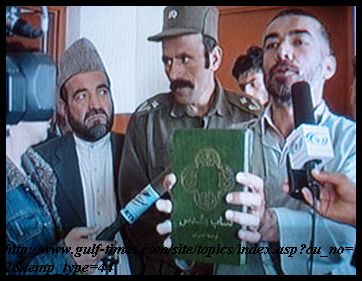
There’s a piece of disconcerting news from Afghanistan. Abdul Rahman, who years ago converted from Islam to Christianity, is being prosecuted as an apostate and faces the death penalty if convicted of the “crime.”

According to a report by ABC News:

“Relatives denounced him as a convert during a custody battle over his children, and he was arrested last month. The prosecutor says Rahman was found with a Bible.”

Shocking indeed!

In response to the international outcry over Rahman’s plight, the judge in the case is now trying to find more amenable solutions. One would be to declare Rahman insane:

“Presiding judge Ansarullah Mawlazezadah tells ABC News a medical team was checking the defendant, since the team suspects insanity caused Rahman to reject Islam.”

“We want to know that the doctors have given him a green light on his mental state, because he is not normal when he talks,” says the judge.”

The other would be to ask Rahman to recant:

“We will ask him if he has changed his mind about being a Christian,” Mawlazezadah says. “If he has, we will forgive him, because Islam is a religion of tolerance. (my emphasis added)”

Oh, the depths of mercy!

I don’t know what the outcome will be, but I do know that what we in the west view as barbaric is seen as normative religion to many in the Muslim world:

“To everyone acquainted with Islamic law it is no secret that according to Islam the punishment for a Muslim who turns to kufr (infidelity, blasphemy) is execution. Doubt about this matter first arose among Muslims during the final portion of the nineteenth century as a result of speculation. Otherwise, for the full twelve centuries prior to that time the total Muslim community remained unanimous about it. The whole of our religious literature clearly testifies that ambiguity about the matter of the apostate's execution never existed among Muslims. The expositions of the Prophet, the Rightly-Guided Caliphs (Khulafa'-i Rashidun), the great Companions (Sahaba) of the Prophet, their Followers (Tabi'un), the leaders among the mujtahids and, following them, the doctors of the shari'ah of every century are available on record. All these collectively will assure you that from the time of the Prophet to the present day one injunction only has been continuously and uninterruptedly operative and that no room whatever remains to suggest that perhaps the punishment of the apostate is not execution.”

This is not what we signed up for when we liberated Afghanistan. We aren’t shedding our blood and expending our treasure so that a re-constituted Taliban can oppress the people we liberated.

I understand that Afghanistan is a Muslim nation, but the religious and political leaders there need to understand that freedom of conscience is not a capital offense. As a Christian, I have no desire to convert to Islam, but if a fellow Christian did so, I would not find it a capital offense. I’ve told Muslim friends many times in the past that the best place for the debate between the two religions to take place is in the great marketplace of ideas. Executing those who convert from one to the other religion is not in keeping with that ideal. In fact, it’s barbaric!

As was noted in this morning’s issue of Spiegel online:

“This is in no way merely a domestic matter -- it is a question of the validity of international human rights. When a Danish newspaper published a few more or less idiotic cartoons, Islamic rage flared up. Now that human lives and basic rights are at issue, we're hearing statements that could just as easily have been made during the Cold War. Back then, the phrase "domestic affairs" was invoked by the Soviet empire every time the West criticized its human rights record. What concerns Abdul Rahman and the women of Afghanistan concerns us too.”

The Muslim world must hear our voices. It’s not enough to be told to stop meddling in the affairs of a Muslim country. The politicians and religious leaders of Afghanistan and other Muslim nations must be held to account for these, and other, violations of basic human rights.

Technorati tags for this post

Christianity

Islam

Sharia law

Spiegel Online

Thursday, March 16, 2006

Happy Saint Patrick's Day From the Dillons

Nancy, Binna, and I will be in Kansas City for the next couple of days. I’ve got basketball on my agenda (the NAIA tournament), Nancy and Binna have museums on theirs. Tomorrow, of course, we all have the Kansas City St. Patrick’s Day parade. I understand it’s one of the grandest in the country.

Happy Saint Patrick’s Day! Until we return, I’ll leave you with the words of Ireland’s patron saint:

“I bind unto myself today
The strong Name of the Trinity,
By invocation of the same
The Three in One and One in Three.”

“I bind this today to me forever
By power of faith, Christ’s incarnation;
His baptism in Jordan river,
His death on Cross for my salvation;
His bursting from the spicèd tomb,
His riding up the heavenly way,
His coming at the day of doom
I bind unto myself today.”

“I bind unto myself the power
Of the great love of cherubim;
The sweet ‘Well done’ in judgment hour,
The service of the seraphim,
Confessors’ faith, Apostles’ word,
The Patriarchs’ prayers, the prophets’ scrolls,
All good deeds done unto the Lord
And purity of virgin souls.”

“I bind unto myself today
The virtues of the star lit heaven,
The glorious sun’s life giving ray,
The whiteness of the moon at even,
The flashing of the lightning free,
The whirling wind’s tempestuous shocks,
The stable earth, the deep salt sea
Around the old eternal rocks.”

“I bind unto myself today
The power of God to hold and lead,
His eye to watch, His might to stay,
His ear to hearken to my need.
The wisdom of my God to teach,
His hand to guide, His shield to ward;
The word of God to give me speech,
His heavenly host to be my guard.”

“Against the demon snares of sin,
The vice that gives temptation force,
The natural lusts that war within,
The hostile men that mar my course;
Or few or many, far or nigh,
In every place and in all hours,
Against their fierce hostility
I bind to me these holy powers.”

“Against all Satan’s spells and wiles,
Against false words of heresy,
Against the knowledge that defiles,
Against the heart’s idolatry,
Against the wizard’s evil craft,
Against the death wound and the burning,
The choking wave, the poisoned shaft,
Protect me, Christ, till Thy returning.”

“Christ be with me,Christ within me,
Christ behind me, Christ before me,
Christ beside me, Christ to win me,
Christ to comfort and restore me.
Christ beneath me, Christ above me,
Christ in quiet, Christ in danger,
Christ in hearts of all that love me,
Christ in mouth of friend and stranger.”

“I bind unto myself the Name,
The strong Name of the Trinity,
By invocation of the same,
The Three in One and One in Three.
By Whom all nature hath creation,
Eternal Father, Spirit, Word:
Praise to the Lord of my salvation,
Salvation is of Christ the Lord.”
Technorati tags for this post