
Tuesday, March 28, 2006

The Need for a Good Faith Effort on Immigration Reform


Deuteronomy 10:17-19 (New Living Translation)

“The LORD your God is the God of gods and Lord of lords. He is the great God, mighty and awesome, who shows no partiality and takes no bribes. He gives justice to orphans and widows. He shows love to the foreigners living among you and gives them food and clothing. You, too, must show love to foreigners, for you yourselves were once foreigners in the land of Egypt.”

Yesterday, in a twelve to six vote, the Senate Judiciary Committee sent a recommendation to the full Senate that would dramatically change our current laws on immigration. This morning’s Kansas City Star published two of the highlights of the proposal, which would:

“Allow undocumented immigrants who were in the United States before 2004 to continue working legally for six years if they pay a $1,000 fine and clear a criminal background check. They would become eligible for permanent residence upon paying another $1,000 fine, any back taxes and having learned English.”

“New immigrants would have to have temporary work visas. They could also earn permanent residence after six years.”

The proposal also includes provisions for doubling the number of Border Patrol agents by the year 2011.

Opponents of the proposal see it as a blanket amnesty which would perpetuate an already festering problem. Senator Jeff Session of Alabama put his objection this way:

“The Judiciary Panel let the American people down by passing out a blanket amnesty bill.”

The proposal will be debated in the full Senate later today and, if passed, will then have to be reconciled with a much tougher House measure, championed in large part by conservative Republicans, particularly Tom Tancredo of Colorado. That bill includes provisions that would make the eleven to twelve million illegal immigrants already here felons. Another cornerstone of the bill is a security fence extending from Texas to California.

When the original bill was passed a few months ago, Tancredo declared victory for the “immigration reform” coalition and then fired a shot across the bow of anyone supporting a plan that would fall short of the House bill:

“Today we savor our victory, but tomorrow we must begin the fight to ensure our victory becomes reality. I am well aware that this is a three-round fight, and while this has been a good round, we haven’t delivered the knockout punch. The open borders lobby and its cronies in the Senate will undoubtedly attempt to attach an amnesty to our reform bill. The American people know what the Senate’s plan is, and they will bring political punishment to any official that favors it. No backdoor amnesty—no matter what you call it—will become law. Americans demand real reform now and, thankfully, they may get it.”

I’m not sure how this is all going to be resolved. I hope and pray that it will be, but I’m not supremely confident that it will.

I do believe this. The problem needs to be fixed. But I don’t like the way fire eaters like Tancredo are going about it. It’s a bit too mean spirited for my tastes. In a recent policy statement, for example, Tancredo went so far as to assert that children of illegal aliens born in the United States should not be considered citizens of the United States:

“Likewise, Congress must declare that the child of an illegal alien inherits the status of his parent; thus, the child, like his parent should be deemed to be an illegal alien. Otherwise, immigration law creates a perverse incentive for people to sneak into our country and give birth.”

I suppose when one has an agenda it becomes easy to overlook the Constitution of the United States, particularly the Fourteenth Amendment, which is very explicit about the matter:

“Section 1. All persons born or naturalized in the United States, and subject to the jurisdiction thereof, are citizens of the United States and of the state wherein they reside. No state shall make or enforce any law which shall abridge the privileges or immunities of citizens of the United States; nor shall any state deprive any person of life, liberty, or property, without due process of law; nor deny to any person within its jurisdiction the equal protection of the laws.”

Living here in Emporia, the issue is of great interest to me, for several reasons. First, statisticians are telling us that in about twenty years this city’s population will about forty percent Hispanic. I’m not sure what percentage of our current population is Hispanic, but it’s sizeable. And, I’d be willing to bet that some Hispanics here in Emporia are here illegally. We have a beef packing plant just a few miles down the road. It’s been said that it’s a place where cows come in, steaks come out, and what happens in between the two is a bloody mess. The work is backbreaking, monotonous, and the wages low. I would never do it, and most “Anglos” I know wouldn’t either. Oh, there are some, but they don’t last long. About the only people who are willing to do this type of work are those at the lowest rungs of our economic ladder and, yes, illegals who have crossed the border.

For better or worse, Tyson Foods now represents a major component of our local economy, and the cows coming into the plant are being cut by a goodly number of illegal immigrants. After all, Americans love beef and they’re going to get what they want.

Second, the issue is of great interest to me because of history. When the Irish came to this country in the mid nineteenth century, they did so to escape famine and persecution. In the same way illegal immigrants come across the Rio Grande today, the Irish came to this country, willing to do whatever job they could find so that they and their families could make their way here. They took the low paying jobs, the same types of jobs many illegals do in America today:

“When the newly arriving Irish immigrants looked for work, they found only the lowest unskilled jobs available to them. Men were hired for low-paying, physically demanding and dangerous work. Wages for unskilled jobs during the 1840s were under 75 cents a day for 10-12 hours of work. The men built canals, railroads, streets, houses and sewer systems. Many others worked on the docks or canals.”

The same stigma that now attaches to illegal immigrants and migrant workers today attached to the Irish in America back in those days:

“There was very deep prejudice against Irish-Americans during the 19th century, especially as more immigrants came into the United States. Many Americans considered the Irish as dirty, stupid and lazy. Newspaper cartoonists often contributed to this image by drawing Irishmen as looking like apes with a jutting jaw and sloping forehead. Newspapers also wrote about Irish people using the derogatory term of “Paddy.”

“Americans also blamed the Irish immigrants for causing economic problems. They felt that the great numbers of Irish workers would put Americans out of work or lower wages. Americans felt that the increased number of people would mean taxes would rise due to additional needs for police, fire, health, sanitation, schools and poorhouses.”

“Consequently, it became acceptable to discriminate against the Irish. Many job posters and newspaper ads ended with “No Irish Need Apply.” Hotels and restaurants may have had signs stating “No Irish Permitted in this Establishment.” In 1851-1852, railroad contractors in New York advertised for workers and promised good pay. When mostly Irish applied, the pay was lowered to fifty-five cents a day. When the workers protested, the militia was called in to force the men to accept.”


Third, I’m very interested in this issue because it comes even closer to home. While my father was a citizen of this country, my mother never was. She got here legally, but she never became a citizen. I remember many times when I feared that my mother was going to be deported. I was especially afraid because my father had died when I was very young. What would that have meant for me, my brother, and sister? Would we have been deported too? Would we have been left behind as wards of the state? If men like Tancredo had their way back then I guess we would have been sent packing.

While my mother never became a citizen of this country, she embraced its ideals and taught us to embrace them as well. She was an uneducated woman, but even after a complete nervous breakdown when my father died, she was still willing to do whatever work was available to her so that her kids could find their place in America. She did! And, so did we! We learned the value of hard work from her. We learned about the value of education and opportunity. We learned to love this country. And, we have contributed a great deal to this nation. We’re proud of what we’ve accomplished. My brother and I both served in this country’s military. I spent a year in Vietnam, defending this country’s ideals. Well, I didn’t do all of that so that men like Tom Tancredo could demagogue. I say, let’s fix the problem, but let’s not penalize the people who cut the cows or pick the onions and other crops. Let’s find a way for them to be the vibrant part of our national life most of them want to be. I believe the Senate is on the right track here and that Tancredo and his allies are way out of line. There is a way to secure our borders and to also make provisions for those currently here illegally to become citizens. America is a big enough country to assimilate those who are now the targets for the demagogues. We just need to find the way.

Technorati tags for this post:

HR 4437

Immigration

The Kansas City Star

Monday, March 27, 2006

Resolution


Luke 21:16-17 (New Living Translation)

“Even those closest to you--your parents, brothers, relatives, and friends--will betray you. And some of you will be killed. And everyone will hate you because of your allegiance to me.”

The Abdul Rahman case has been resolved, at least temporarily. As reported this morning by Fox News:

“A court on Sunday dismissed the case against an Afghan man facing possible execution for converting from Islam to Christianity, officials said, paving the way for his release.”

It now appears that the prosecutors will review his case, focusing on whether or not Rahman was mentally competent when he converted from Islam to Christianity. In other words, prosecutors appear to be willing to extend grace to him because he’s a nut case. Interesting! It assumes that killing people because of their religious convictions is sane social and legal policy. Some loophole, eh?

Since I don’t know Rahman personally, I cannot speak from direct experience about his mental state. But, as an interested observer, it seems to me that Rahman may be the sanest person in this tawdry morality play. Read the following excerpts from what he has had to say over the past couple of weeks and see if you don’t agree:

“I believe in Christianity. I believe in the Holy Spirit. I am a Christian.”

“I am serene. I have full awareness of what I have chosen. If I must die, I will die.”

“Somebody, a long time ago, did it for all of us.”

“I never thought it would end this way. But I am ready to face the consequences.”

If that’s insanity, then I say we need a lot more of it in the world today!

I suspect there are some schools of thought that would say that if Rahman had just kept his mouth shut things would have been okay. He could have “crossed his fingers,” renounced Christianity publicly, and then gone out to practice his religion in private, in secret. The Islamic judges would have been none the wiser, the mullahs could go on chasing women and other apostates with the audacity to show their faces in public, and Rahman could make his way surreptitiously through the pearly gates.

For those who believe that religion is nothing more than a private matter such a solution would make sense. For those being persecuted and attacked it amounts to nothing more than institutionalized insanity.

In North Korea, for example, Christians aren’t allowed to publicly practice their faith. They must practice it in secret. The authorities, not to be content with that, have been attempting to expunge Christianity, to make it non-existent, as the following excerpt from a Bill Buckley op-ed published in November, 2005 makes clear:

“The report tells, among many other accounts, of a woman in her 20s who was washing clothes in a river. A fellow washerwoman saw a small Bible fall out of her basket and reported her to the authorities. She was executed by firing squad.”

“That martyr got off lightly. Nine years ago in South Pyongan province, a unit of the North Korean army was assigned the job of widening a highway connecting Pyongyang to the nearest seaport. Demolition of a house standing in the way revealed, hidden between two bricks, a Bible and a list of 25 names: a Christian pastor, two assistant pastors, two elders and 20 parishioners. The 25 were all detained and, later that month, brought to the road construction site, where spectators had been arranged in neat rows. The parishioners were grouped off to one side while the pastor, the assistant pastors and the elders were bound hand and foot and made to lie down in front of a steamroller. As if following a script written in early Roman history, they were told they could escape death by denying their faith and pledging to serve Dear Leader Kim Jong II and Great Leader Kim Il Sung. They chose death.”

As with Abdul Rahman, I’ll let you be the judge of who and who is not insane in these cases.

This morning I read a piece by Tom Krattenmaker from USA Today. In it he asks the question “Is there a war on Christians in America?” Early on in the piece, Krattenmaker noted:

“Christians are under a constant, relentless attack — from Hollywood, the news media, activist organizations, and the cultural elite,” warned a Web page promoting the “War on Christians and the Values Voter” event, in language typical of the prevailing zeitgeist.”

“Isn’t this more than a bit overblown? And in a time when the country is caught up in a real war with religious overtones, shouldn't the word “war” be tossed around a little less recklessly?”

In the light of recent events in Afghanistan and North Korea I believe these are good questions. Again, as Krattenmaker observed:

“Christians in America are hardly being thrown to the lions. In many ways, the political and social values of conservative Christians are carrying the day. We are in the second term of the most faith-friendly, explicitly Christian presidency in many a decade. Not only has President Bush talked a good game with evangelicals, but his administration has backed it with dollars for faith-based initiatives and abstinence-education programs. Hollywood is producing more Christian-friendly movies while Christian news media, Christian music, Christian novels and other forms of Christian pop culture continue making their strong mark on society.”

One of the interesting things to come out of the ordeal of Abdul Rahman was the international outcry over the attempt by Afghan religious and legal authorities to execute a man for his faith. The whole thing would probably have never amounted to anything if Rahman had renounced Christianity and gone on his way and so would the rest of the world. But, he didn’t, and neither did the rest of the world. With a few words of affirmation he peacefully confronted injustice and intolerance. And, he has won.

I suspect that if we Christians in the United States confronted some of the injustices we face like Abdul Rahman did we’d be much better off.

In the early days of Church history, believers were confronted with the same type of choice as Rahman. Religious authorities tried to stifle the faith of Jesus’ first followers and found that they couldn’t:

Acts 4:16-20 (New Living Translation)

16 “What should we do with these men?” they asked each other. “We can’t deny they have done a miraculous sign, and everybody in Jerusalem knows about it. 17But perhaps we can stop them from spreading their propaganda. We'll warn them not to speak to anyone in Jesus' name again.” 18So they called the apostles back in and told them never again to speak or teach about Jesus.
19But Peter and John replied, “Do you think God wants us to obey you rather than him? 20We cannot stop telling about the wonderful things we have seen and heard.”


I’m not sure what some twenty-first century American Christians make of that approach. It must seem like insanity. In the light of the trial of Abdul Rahman, though, it might just be the type of insanity we need to win our culture over to our side.

Technorati tags for this post

Abdul Rahman

Christianity

Fox News

Islam

USA Today

Sunday, March 26, 2006

A Need for Pure Religion and Sound Theology


James 1:26-27 (New Living Translation)

“If you claim to be religious but don't control your tongue, you are just fooling yourself, and your religion is worthless. Pure and lasting religion in the sight of God our Father means that we must care for orphans and widows in their troubles, and refuse to let the world corrupt us.”


I read a thought provoking piece written by Charles Colson in this month’s Christianity Today. In lamenting the modern Church’s focus on self- realization, self-actualization, stress relief, and retreat from the cares of the day, he noted that:

“The gospel above all else is revealed propositional truth – truth that speaks to all of life. Yes, the gospel is simple enough for a child to understand. Yet if you want to study doctrine and worldview, you need the capacity to think. You need the capacity to engage ideas cognitively.”

“Doctrine and biblical teaching are not – as some “emerging church” advocates believe – dry, dusty, abstract notions. The truth has to be carried into the heart and applied. But there is no escaping that it is truth that must be learned.”

I think there’s a lot of truth in what Colson is saying. Too much contemporary theology focuses on personal need, retreat from the cares of the world, and emotion, and too little focuses on how Christian theology calls believers to think, the engage the world and culture, and to see the needs of others.

Theology is, as Frederick Buechner put it:

“Essentially autobiography. Aquinas, Calvin, Barth, Tillich, working out their own ways and in the own language, are all telling us the stories of their lives, and if you press them far enough, even at their most cerebral and forbidding, you find experience of flesh and blood, a human face smiling or frowning or weeping or covering its eyes before something that happened once.”

What this means to me is that, faith, while it is deeply personal, is not meant to be private. As it was written long ago:

James 2:26 (New International Version)

“As the body without the spirit is dead, so faith without deeds is dead.”


Colson believes, as do I, that Christian theology should “offer comfort and help people confront the culture.” Any theology that emphasizes personal comfort above confronting and transforming the culture in which we have a real stake will only cause us to slowly “slip across the line from worship to entertainment. Evangelicals are in danger of amusing ourselves to death, to borrow the title of the classic Neil Postman book.”

At this time in history the least productive thing the Church should do is retreat. The theology of personal advancement and inner peace must give way to the theology of engagement and service. Otherwise, as Colson and Postman observe, we will find ourselves being amused into irrelevance.

Technorati tags for this post:

Charles Colson

Christian Theology

Thursday, March 23, 2006

Update - The War of Words is Heating Up


Romans 8:35-38 (New Living Translation)

“35Can anything ever separate us from Christ's love? Does it mean he no longer loves us if we have trouble or calamity, or are persecuted, or are hungry or cold or in danger or threatened with death? 36(Even the Scriptures say, “For your sake we are killed every day; we are being slaughtered like sheep.” 37No, despite all these things, overwhelming victory is ours through Christ, who loved us.
38And I am convinced that nothing can ever separate us from his love. Death can't, and life can't. The angels can't, and the demons can’t. Our fears for today, our worries about tomorrow, and even the powers of hell can't keep God's love away.”

Update – The war of words over the life of Abdul Rahman is getting white hot. For the last couple of days government officials have been calling on the government of Afghanistan to find a civilized way out of the crisis they have created in trying Rahman for converting from Islam to Christianity.

Yesterday, Amnesty International issued this pointed statement:

“As a state party to the International Covenant on Civil and Political Rights (ICCPR), the government of Afghanistan is bound to uphold Article 18, which provides that “everyone shall have the right to freedom of thought, conscience and religion” and that “this right shall include freedom to have or to adopt a religion or belief of his choice”. In its General Comment on this Article, the Human Rights Committee, the panel of independent UN experts which examine states’ implementation to the ICCPR, has stated* that “the freedom to ‘have or to adopt’ a religion or belief necessarily entails the freedom to choose a religion or belief, including the right to replace one's current religion or belief with another or to adopt atheistic views, as well as the right to retain one's religion or belief”. It further stated that “the use of threat of physical force or penal sanctions to compel believers or non-believers to adhere to their religious beliefs […], to recant their religion or belief or to convert” is prohibited.”

George Bush, in a speech made in West Virginia yesterday, made the position of the American people clear:

“We expect them to honor the universal principle of freedom,” Bush said during a town hall meeting in Wheeling, W. Va. “It is deeply troubling that a country we helped liberate would hold a person to account because they chose a particular religion over another.”

“I'm troubled when I hear, deeply troubled when I hear, the fact that a person who converted away from Islam may be held to account. That's not the universal application of the values that I talked about. I look forward to working with the government of that country to make sure that people are protected in their capacity to worship,” he continued.”


Today, State Department spokesman Sean McCormack, speaking on behalf of Secretary of State Condoleezza Rice, once again made the American position clear:

“State Department spokesman Sean McCormack reported that Rice underlined to Karzai the “fact that the United States stands forthrightly for principles of freedom of worship, freedom of expression, and that these are bedrock principles of democracy around the world, these are principles that are enshrined in the Afghan constitution and they’re principles that are enshrined in the U.N. Universal Declaration on Human Rights,” he said.”

“We're looking for a favorable resolution at the earliest possible time,” McCormack added.”

In my mind, and the minds of the overwhelming majority of Americans, a “favorable resolution” would be for Abdul Rahman to be released so that he can practice his religious beliefs freely, without fear of having his head lopped off.

The response from religious leaders in Afghanistan has been swift, and just as pointed as the calls for Rahman to be released:

“Senior Muslim clerics said Thursday that an Afghan man who converted from Islam to Christianity must be executed and if the government caves into Western pressure and frees him they will incite people to “pull him into pieces.”

In addition to the threat of being pulled into pieces, the clerics are also calling for Rahman to either be hanged or decapitated:

“He is not crazy. He went in front of the media and confessed to being a Christian,” said Hamidullah, chief cleric at Haji Yacob Mosque.”

“The government is scared of the international community. But the people will kill him if he is freed.”

“Raoulf, who is a member of the country's main Islamic organization, the Afghan Ulama Council, agreed, saying, “The government are playing games. The people will not be fooled.”

“Cut off his head!” he exclaimed, sitting in a courtyard outside
Herati Mosque. "We will call on the people to pull him into pieces so there's nothing left.”

“He said the only way for Rahman to survive would be for him to go into exile outside Afghanistan.”

“But
Said Mirhossain Nasri, the top cleric at Hossainia Mosque, one of the largest Shiite places of worship in Kabul, said Rahman must not be allowed to leave the country.
“If he is allowed to live in the West then others will claim to be Christian so they can too,” he said. “We must set an example. ... He must be hanged.”

As I noted in my earlier post today, this is what some Islamic clerics consider toleration. Since when has having one’s head cut off, or being hung, or torn into pieces been considered proof of moderation, compassion, or tolerance? Orwell must be saying, “See, I told you so,” from his grave.

While it may not be clear to some reading this post, it is to me. Threatening to take a man’s life because of his beliefs and refusal to deny those beliefs, is uncivilized, cruel and barbaric. It’s every bit as offensive as the grisly trade terrorists ply on an almost daily basis in the Muslim world. It is a theological form of terrorism, plain and simple. The civilized world must do all in its power to prevent this injustice from happening.

My prayers, and the prayers of Christians and others of good faith around the world, go out to Abdul Rahman. In this test of faiths, may God’s grace rest upon him. May it also rest upon those who are the victims of this cruel, oppressive, expression of “faith.” And, may the scales of justice tip in the right and true direction for those whose only perceived crime is exercising the freedom of conscience God graciously gives each of us.

Technorati tags for this post

Abdul Rahman

Amnesty International

Christianity

Islam

Religious oppression

This is Not What We Signed Up For


Psalm 86:15 (New Living Translation)

“But you, O Lord, are a merciful and gracious God, slow to get angry, full of unfailing love and truth.”

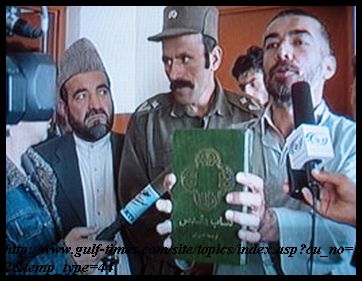
There’s a piece of disconcerting news from Afghanistan. Abdul Rahman, who years ago converted from Islam to Christianity, is being prosecuted as an apostate and faces the death penalty if convicted of the “crime.”

According to a report by ABC News:

“Relatives denounced him as a convert during a custody battle over his children, and he was arrested last month. The prosecutor says Rahman was found with a Bible.”

Shocking indeed!

In response to the international outcry over Rahman’s plight, the judge in the case is now trying to find more amenable solutions. One would be to declare Rahman insane:

“Presiding judge Ansarullah Mawlazezadah tells ABC News a medical team was checking the defendant, since the team suspects insanity caused Rahman to reject Islam.”

“We want to know that the doctors have given him a green light on his mental state, because he is not normal when he talks,” says the judge.”

The other would be to ask Rahman to recant:

“We will ask him if he has changed his mind about being a Christian,” Mawlazezadah says. “If he has, we will forgive him, because Islam is a religion of tolerance. (my emphasis added)”

Oh, the depths of mercy!

I don’t know what the outcome will be, but I do know that what we in the west view as barbaric is seen as normative religion to many in the Muslim world:

“To everyone acquainted with Islamic law it is no secret that according to Islam the punishment for a Muslim who turns to kufr (infidelity, blasphemy) is execution. Doubt about this matter first arose among Muslims during the final portion of the nineteenth century as a result of speculation. Otherwise, for the full twelve centuries prior to that time the total Muslim community remained unanimous about it. The whole of our religious literature clearly testifies that ambiguity about the matter of the apostate's execution never existed among Muslims. The expositions of the Prophet, the Rightly-Guided Caliphs (Khulafa'-i Rashidun), the great Companions (Sahaba) of the Prophet, their Followers (Tabi'un), the leaders among the mujtahids and, following them, the doctors of the shari'ah of every century are available on record. All these collectively will assure you that from the time of the Prophet to the present day one injunction only has been continuously and uninterruptedly operative and that no room whatever remains to suggest that perhaps the punishment of the apostate is not execution.”

This is not what we signed up for when we liberated Afghanistan. We aren’t shedding our blood and expending our treasure so that a re-constituted Taliban can oppress the people we liberated.

I understand that Afghanistan is a Muslim nation, but the religious and political leaders there need to understand that freedom of conscience is not a capital offense. As a Christian, I have no desire to convert to Islam, but if a fellow Christian did so, I would not find it a capital offense. I’ve told Muslim friends many times in the past that the best place for the debate between the two religions to take place is in the great marketplace of ideas. Executing those who convert from one to the other religion is not in keeping with that ideal. In fact, it’s barbaric!

As was noted in this morning’s issue of Spiegel online:

“This is in no way merely a domestic matter -- it is a question of the validity of international human rights. When a Danish newspaper published a few more or less idiotic cartoons, Islamic rage flared up. Now that human lives and basic rights are at issue, we're hearing statements that could just as easily have been made during the Cold War. Back then, the phrase "domestic affairs" was invoked by the Soviet empire every time the West criticized its human rights record. What concerns Abdul Rahman and the women of Afghanistan concerns us too.”

The Muslim world must hear our voices. It’s not enough to be told to stop meddling in the affairs of a Muslim country. The politicians and religious leaders of Afghanistan and other Muslim nations must be held to account for these, and other, violations of basic human rights.

Technorati tags for this post

Christianity

Islam

Sharia law

Spiegel Online

Thursday, March 16, 2006

Happy Saint Patrick's Day From the Dillons

Nancy, Binna, and I will be in Kansas City for the next couple of days. I’ve got basketball on my agenda (the NAIA tournament), Nancy and Binna have museums on theirs. Tomorrow, of course, we all have the Kansas City St. Patrick’s Day parade. I understand it’s one of the grandest in the country.

Happy Saint Patrick’s Day! Until we return, I’ll leave you with the words of Ireland’s patron saint:

“I bind unto myself today
The strong Name of the Trinity,
By invocation of the same
The Three in One and One in Three.”

“I bind this today to me forever
By power of faith, Christ’s incarnation;
His baptism in Jordan river,
His death on Cross for my salvation;
His bursting from the spicèd tomb,
His riding up the heavenly way,
His coming at the day of doom
I bind unto myself today.”

“I bind unto myself the power
Of the great love of cherubim;
The sweet ‘Well done’ in judgment hour,
The service of the seraphim,
Confessors’ faith, Apostles’ word,
The Patriarchs’ prayers, the prophets’ scrolls,
All good deeds done unto the Lord
And purity of virgin souls.”

“I bind unto myself today
The virtues of the star lit heaven,
The glorious sun’s life giving ray,
The whiteness of the moon at even,
The flashing of the lightning free,
The whirling wind’s tempestuous shocks,
The stable earth, the deep salt sea
Around the old eternal rocks.”

“I bind unto myself today
The power of God to hold and lead,
His eye to watch, His might to stay,
His ear to hearken to my need.
The wisdom of my God to teach,
His hand to guide, His shield to ward;
The word of God to give me speech,
His heavenly host to be my guard.”

“Against the demon snares of sin,
The vice that gives temptation force,
The natural lusts that war within,
The hostile men that mar my course;
Or few or many, far or nigh,
In every place and in all hours,
Against their fierce hostility
I bind to me these holy powers.”

“Against all Satan’s spells and wiles,
Against false words of heresy,
Against the knowledge that defiles,
Against the heart’s idolatry,
Against the wizard’s evil craft,
Against the death wound and the burning,
The choking wave, the poisoned shaft,
Protect me, Christ, till Thy returning.”

“Christ be with me,Christ within me,
Christ behind me, Christ before me,
Christ beside me, Christ to win me,
Christ to comfort and restore me.
Christ beneath me, Christ above me,
Christ in quiet, Christ in danger,
Christ in hearts of all that love me,
Christ in mouth of friend and stranger.”

“I bind unto myself the Name,
The strong Name of the Trinity,
By invocation of the same,
The Three in One and One in Three.
By Whom all nature hath creation,
Eternal Father, Spirit, Word:
Praise to the Lord of my salvation,
Salvation is of Christ the Lord.”
Technorati tags for this post

Tuesday, March 14, 2006

The Plumb Line


Amos 7:7 (New Living Translation)

“Then he showed me another vision. I saw the Lord standing beside a wall that had been built using a plumb line. He was checking it with a plumb line to see if it was straight.”

Kansas is making national news again. In late February, columnist Ellen Goodman took Phill Kline, Kansas’ Attorney General, to task, calling him a “racketeer.”

What was it that made Kline a racketeer? Goodman said it was Kline’s unique legal theory:

“The Kline Theory goes something like this: if sexual activity between teens is illegal, there's no such thing as consensual sex, and thus every act is harmful. These acts, by the way, include “any lewd fondling or touching of the person ... with the intent to arouse or satisfy the sexual desires.” In short, health care workers have to rat on 15-year-old sexual criminals who are lustily and mutually “abusing'” each other in the back seat of a Toyota.”

Kline responded in an op-ed piece in today’s Kansas City Star. Goodman, he said, didn’t understand the nature of the lawsuit:

“Goodman fails to understand the true nature of this lawsuit and the danger posed to children by adult sexual predatory behavior directed at children.”

Kline then further clarified:

“Kansas has, as do all states in the nation, statutory rape laws making it illegal to have intercourse with children. Although states have varying ages of consent, all states have such limitations.”

“In Kansas, sexual interaction with children is by law called “sexual abuse,” and all medical professionals are required to report such abuse.”

“As attorney general I was asked whether abortion providers must report the rape of an underage child to state welfare officials when the child presents to receive an abortion. I concluded that since the rape of a child harms a child and is a felony crime in Kansas that the report must be issued.”

In response to Goodman’s claim that Kline, and Kansans, believe that there is no such thing as consensual sex, Kline had this to say:

“This case is not about, as Goodman would contend, criminalizing necking in the back seat of a car. No one prosecutes truly voluntary activity between two teens or children of a similar age.”

“What does happen, however, is that while the 11-year-old is seeking an abortion, stating that she “necked” with her boyfriend, the 37-year-old abuser is out in the car, having told her that if she doesn't say that she won't be allowed to come home.”

What do I think this is all about? I believe there is a clash of agendas. The Kansas Attorney General wants to prosecute child rapists who are using privacy to cloak their evil deeds. Ellen Goodman wants to get the word out that abortion must be protected at all costs. That’s what this argument is all about.

Goodman claims that Kansans are backward, only one of twelve states in which “underage sex -- under 16 in this case -- is a crime even when it involves teenage peers.” Kline has said that the Kansas statute on statutory rape isn’t being used to prosecute consenting teens of “similar age.”

I checked Massachusetts’ criminal law today and according to it, the commonwealth must be among the twelve unenlightened states. Chapter 265, section 23 of the Massachusetts criminal code is explicit about the matter of statutory rape:

“Whoever unlawfully has sexual intercourse or unnatural sexual intercourse, and abuses a child under sixteen years of age shall, for the first offense, be punished by imprisonment in the state prison for life or for any term of years, or, except as otherwise provided, for any term in a jail or house of correction, and for the second or subsequent offense by imprisonment in the state prison for life or for any term of years, but not less than five years; provided, however, that a prosecution commenced under the provisions of this section shall not be placed on file or continued without a finding.”

Further, Massachusetts law has a law criminalizing adultery (chapter 272, section 14), incest (chapter 272, section 17), bigamy (chapter 272, section 15), and bestiality (chapter 272, section 34).

Even further, the Massachusetts Family Institute has noted the devastating effects statutory rape by adult men preying on young girls:

“It is impossible to calculate fully the damage done to both children and society by the crisis of statutory rape in Massachusetts and around the nation. The following are just some of the devastating human and social consequences of adults committing statutory rape:
Sexual coercion and abuse of the child involved
Increased rates of teenage pregnancy
Increased rates of fatherlessness
Higher rates of child poverty and welfare dependency.”


Does any of this law and social commentary make the Commonwealth of Massachusetts a Stone Age throwback? Of course not! Are the Commonwealth’s prosecutors and lawyers chasing down teenagers, philandering spouses, and gays? No! Their goal, as they said is to “stop adult men from preying sexually on young girls and, increasingly, young boys.”

Well, the same holds true here in Kansas!

To be honest, the manner in which the legal authorities in Massachusetts conduct themselves is not a major concern to me now. I left Massachusetts many years ago. But, as a citizen of Kansas I do have concerns about the manner in which legal authorities conduct themselves. While I don’t want our Attorney General to chase teenagers, I do support his effort to bring criminals who have preyed on under-age children to justice.

Is there room for any compromise? I wish there were, but there doesn’t seem to be. Why? Because abortion supporters here in Kansas, and other places, don’t want to compromise. It seems they would rather young girls, victims of heinous crimes, be relegated to even more abuse. To ensure that abortion is protected above all else, they’re fighting Phill Kline tooth and nail.

Yes, there is a clash of agendas. Ellen Goodman sees things differently than Phill Kline. Some people in Massachusetts see things differently than a lot of us here in Kansas.

As a citizen of Kansas I have this to say to Ellen Goodman and her supporters in Massachusetts. If you want to protect your agendas, if you feel comfortable with the notion that abortion rights trump all others, feel free to do so. If you don’t mind adult predators preying on children, feel free to do so. Massachusetts isn’t Kansas and Kansas isn’t Massachusetts. You’re free moral agents, responsible for your behavior. Just remember that you’re every bit as responsible for your sins of omission and commission as we here in Kansas are responsible for ours. Also, keep in mind that there’s a plumb line against which our actions will one day be measured.

I was tempted to close this essay with a warning about the dangerous ground Ellen Goodman is standing on, but I decided against it. She wouldn’t listen. Her mind is made up. Her agenda is fixed. Therefore, I’ll simply close with these words from Holy Writ:

“He that is unjust, let him be unjust still: and he which is filthy, let him be filthy still: and he that is righteous, let him be righteous still: and he that is holy, let him be holy still.”

Friday, March 10, 2006

Starstruck With Their Own Stardom


Romans 12:3 (New International Version)

“For by the grace given me I say to every one of you: Do not think of yourself more highly than you ought, but rather think of yourself with sober judgment, in accordance with the measure of faith God has given you.”


I didn’t watch the Academy Awards this year. That makes it five years in a row now.

After reading some of the media reports yesterday I decided it might not be a bad idea to take a casual look at all the hype and pitch. It took me all of ten minutes to see that it was nothing but pure Hollywood, or as we’d put it out here in the Kansas Flint Hills, three or four hours of crap masquerading as glamour.

Here’s what some of the honorees had to say:

Ethan Van der Ryn (Sound editing for King Kong) – “We are so proud to stand here and accept this award on behalf of our whole crew who continue to prove that with unconditional creative collaboration, the impossible becomes possible (my emphasis added).”

Colleen Atwood (Costume design for Memoirs of a Geisha) – “Thanks to Sony Pictures who were brave enough to make a movie about a woman (my emphasis added).”

There you have it. Hollywood is all about making the impossible possible and the courage to make a movie about a woman.

But wait, there’s more. George Clooney, who won the Oscar for best supporting actor, chided those of us who believe Hollywood is seriously out of touch with the rest of America’s mere mortals:

“I would say that, you know, you are a little bit out of touch in Hollywood every once in a while. I think it’s probably a good thing. We’re the ones who talk about AIDS when it was just being whispered, and we talked about civil rights when it wasn’t really popular. And, we, you know, we bring up subjects. This Academy, this group of people gave Hattie McDaniel and Oscar in 1939 when blacks were still sitting in the backs of theaters. I’m proud to be part of this Academy, proud to be part of this community, and proud to be out of touch.”

What can we say? The shot’s been fired across our collective bows. If George Clooney is to be believed, Hollywood is the only American entity that cares about really important things.

Well, pardon me if I find myself at odds with these paragons of virtue, decency, and citizenship. I must have missed something along the way. I somehow have convinced myself that a lone woman moving to the front of a bus was an act of courage. According to Hollywood I must be wrong. Courage, they say, is making a film about a woman. And, fool that I am, I thought that working in a hospice with dying AIDS patients was more courageous and in touch with humanity than making a multi-million dollar film for thirty-five percent or more of the box office receipts.

Hollywood really doesn’t get it. The promos in this morning’s Kansas City Star are vivid testimonials to that reality. One reads, “The kind of movie for which Saturday nights were made.” Another proclaims, “One of the great love stories ever filmed.” As you read them they begin to develop a monotonous tone. “The first great American film of the year.” “A once in a lifetime event.” “A miracle!”

The more I read and see, the less I like. It seems to me that too much adoration and adulation is expected with the price of admission. Now, like anyone else I enjoy an occasional movie, but I don’t buy my ticket so that I can genuflect to some self-absorbed bevy of smaller-than-life stars and starlets. I like to sit in a theater to have a laugh or two, to shed a tear, or to even be enlightened. But the seven or eight bucks I pay to get in doesn’t entitle them to my worship and adoration. That I reserve for Someone who’s really in touch.

How out of touch is Hollywood? Very! Read the following description from Jonah Goldberg and you’ll see what I mean:

“One of my favorite tidbits about Hollywood that I’ve gleaned from the starstruck press is that a great many of its most accomplished stars don’t allow their staffs to look them in the eye. I’m not making this up.”

“It has been reported that Barbra Streisand not only discourages eye contact among staff but that she required hotel workers to leave her presence only by walking backward. Jennifer Lopez – who had 75 attendants help her prepare for a cameo on “Will and Grace – is also reported to forbid her subalterns to look into the window of her soul.”


About the only things missing are the Old Testament salutations – “Oh king, live forever!” “Oh, great queen, may you never die!” Come to think of it, they’ve just been modernized – “He’s the sexiest man alive.” “She’s the most stunningly beautiful woman in the universe.” Yes, Hollywood is badly out of touch!

I think I understand, in part, why Hollywood is so out of touch with the rest of us. With the flocks of attendants and reams of media attention telling them they are what they aren’t, all the adulation was bound to go to their heads.

I also think there’s another piece to this puzzle. We’re as much out of touch with them as they are with us. As Lazarus said to the rich man being tormented in the fires of hell, “There is a great gulf fixed between us.” Hollywood is equating courage with making million dollar films and self-promotion and the rest of us are working eight, ten, twelve hours a day, forty, fifty, or sixty hours a week so that we can make economic ends meet. Golfer Lee Trevino was once asked how much pressure he felt at those times he was lining up a putt, knowing that if he missed it he would only come in second in the tournament. “None,” he said. “If I miss it I’m going to go home with second place money, a half a million dollars or so. That’s not pressure. Pressure is eight hours a day, forty hours a week, ten bucks an hour, and four hungry mouths to feed.” Now that’s what courage and intestinal fortitude are all about!

Hollywood just doesn’t get it! Some of the stars, many of whom won’t even allow eye contact from us ham and eggers, need to come out and play in the traffic with us. They need to get in touch, and maybe if they do they’ll gain some respect from us in return.

A couple of days ago Peggy Noonan put it this way::

“But Mr. Clooney's remarks were also part of the tinniness of the age, and of modern Hollywood. I don't think he was being disingenuous in suggesting he was himself somewhat heroic. He doesn't even know he's not heroic. He thinks making a movie in 2005 that said McCarthyism was bad is heroic.”

“How could he think this? Maybe part of the answer is in this: The Clooney generation in Hollywood is not writing and directing movies about life as if they've experienced it, with all its mysteries and complexity and variety. In an odd way they haven't experienced life; they've experienced media. Most Americans aren't leading media, they're leading lives. It would be nice to see a new respect in Hollywood for the lives they live.”

Hollywood really is out of touch and it appears that it wants to stay that way.
It would be nice, indeed, to see a change for the better, but I’m not holding my breath at the ticket booth waiting for that to happen.

Technorati tags for this post:

George Clooney

Jonah Goldberg

Hollywood

Peggy Noonan

The Academy Awards

Thursday, March 09, 2006

Happiness?


“He who dies with the most toys wins”

- Late twentieth century proverb


I just finished reading a short essay from ChristianityToday.com. According to a February, 2006 Pew Research survey, “Evangelicals are 26 percent more likely to describe themselves as “very happy” than Americans as a whole.”

Why does the poll seem to reveal such a significant gap between Evangelical Christians and the rest of America? Christianity Today asked Christian Smith, a sociologist at the University of North Carolina, who concluded that there are probably many reasons:

“Religion, especially Christianity, emphasizes forgiveness, reduction of anxiety through prayer, gratitude, and other virtues, Smith said. In addition to this, evangelical churches provide various tools, teachings, beliefs, and practices that tend to increase happiness.”

I did a bit of digging into the nuts and bolts of the survey and saw some things that didn’t surprise me and some that did. Married people, for example, are more likely than unmarried people to describe themselves as being happy. African-Americans seem to be less happy than whites or Hispanics. Retirees and those currently employed are about equally happy, while the unemployed are significantly less likely to consider themselves happy. Church goers are happier than those who don’t attend church. People who are rushed are less happy than those who don’t feel rushed. Healthier people are happier than their opposites, as are those with more education. Republicans, at least in February, tended to feel happier than Democrats and Independents. I suspect that survey trend might change if Pew conducts a survey after November’s mid-term elections.

There was one interesting finding that seems to refute the old adage that money can’t buy happiness. According to Pew:

“Our survey shows that nearly half (49%) of those with an annual family income of more than $100,000 say they're very happy. By contrast, just 24% of those with an annual family income of less than $30,000 say they're very happy.”

How did this finding affect Evangelicals and church goers? Christianity Today noted:

“The study also found that the happiness achieved by attending church could be modified by personal income. In some ways, the survey found, money can seem to buy happiness. Half of those who attended church weekly and had an income of $50,000 or more said they were very happy. But only 37 percent of weekly attendees earning less than $50,000 reported they were very happy.”

Is the data about income and happiness accurate? I’m not sure. But it does pose some other interesting questions. Have historic and Biblical Christianity included material wealth in their formulas to happiness? Is happiness a Christian virtue? Just what constitutes happiness anyway?

Florida State University professor Darrin McMahon sees a rift of sorts between modern Christianity’s views on happiness than those of the historic Church:

“Christians in the early church, he said, did not expect to have happiness before death. Much of Augustine's City of God, he notes, criticizes those who seek perfect happiness in this world. Original sin, Augustine wrote, made earthly happiness impossible.”

Early this morning I dusted off my copy of Augustine's masterpiece. There, page 112, I found this interesting comparison between a poor man and a rich man:

“Of these two men let us suppose that one is poor, or rather middling of circumstances; the other very rich. But the rich man is anxious with fears, pining with discontent, burning with covetousness, never secure, always uneasy, panting from the perpetual strife of his enemies, adding to his patrimony indeed by these miseries to an immense degree, and by these additions also heaping up most bitter cares. But the other man of moderate wealth is contented with a small and compact estate, most dear to his own family, enjoying the sweetest peace with his kindred neighbours and friends, in piety religious, benignant in mind, healthy in body, in life frugal, in manners chaste, in conscience secure. I know not whether any one can be such a fool, that he dare hesitate which to prefer. As, therefore, in the case of these two men, so in two families, in two nations, in two kingdoms, this test of tranquility holds good; and if we apply it vigilantly and without prejudice, we shall quite easily see where the mere show of happiness dwells, and where real felicity.”

One of the problems I see with this issue of happiness is that we often define it solely in material terms. When I was young, for example, happiness meant the Boston Celtics winning another world championship or my winning a game of stickball. As I made my way out of the poverty of my youth my definition of happiness changed. A refrigerator full of my favorite foods became my delight. Once the fridge was full, happiness meant getting my candidate elected to high office. I don’t think I ever defined happiness at any of those points in my life. My thinking just seemed to evolve in direct proportion to my perceived needs, almost all of which were material.

Therein, I think, lies the problem. When happiness is viewed in solely in material terms it eludes us. Something makes us happy one day, then unhappy the next. The old adage of the boat-owner is oh so true. He’s only happy on the day he buys the boat and the day he sells it. One day the boat is floating his worldview to some pinnacle of human happiness. The next, the dreaded thing is sinking it to the depths of despair.

No one has ever defined happiness better than Jesus. And, nowhere was that definition outlined more clearly than in the Sermon on the Mount:

Matthew 5:3-9 (New International Version)

“Blessed are the poor in spirit,
For theirs is the kingdom of heaven.
Blessed are those who mourn,
For they will be comforted.
Blessed are the meek,
For they will inherit the earth.
Blessed are those who hunger and thirst for righteousness,
For they will be filled.
Blessed are the merciful,
For they will be shown mercy.
Blessed are the pure in heart,
For they will see God.
Blessed are the peacemakers,
For they will be called sons of God.”

The Greek word used in this section of Holy Writ to define these states of blessedness is “makarios.” In each case the Greek word can be translated to mean “happy.” In other words, Jesus seemed to be telling us that the path to happiness is paved with virtues like mercy, purity of heart, hunger for righteousness, peacemaking, empathy, meekness, and a clear understanding of what a right relationship with God looks like.

Jesus’ earliest followers learned this lesson well:

1 Timothy 6:9-11 (New Living Translation)

“But people who long to be rich fall into temptation and are trapped by many foolish and harmful desires that plunge them into ruin and destruction. For the love of money is at the root of all kinds of evil. And some people, craving money, have wandered from the faith and pierced themselves with many sorrows. But you, Timothy, belong to God; so run from all these evil things, and follow what is right and good. Pursue a godly life, along with faith, love, perseverance, and gentleness.”

Jesus, the Church fathers, and the earliest Christian disciples had a much healthier view of what it meant, or should mean, to be happy than many of us living in the unparalleled wealth of the twenty-first century. It’s no wonder, then, that so few of us seem to be really happy. After seeing the results of the Pew survey, then, I think it might be time for all of us to re-examine our definition of what constitutes happiness.

Technorati tags for this post:

Augustine

Christianity Today

Happiness

Jesus of Nazareth

Pew Research Center

Wednesday, March 08, 2006

Community, Opportunity, Responsibility


“One way or another community is at a turning point. I think change is coming. We just need to be careful how it’s managed.”

- Brian Comer – Senior Planner for
HNTB Corporation – Commenting on the creation of a comprehensive plan for Emporia, Kansas

Last night’s Gazette featured some of the facts and figures gathered by HNTB Corporation, the consulting firm the city of Emporia has hired to help create a comprehensive plan, to “Put together a statistical package to show Emporia where it is before the city settles on where it’s going.”

Not all the numbers released by HNTB are really all that startling. They reveal what I and others have seen as we’ve trudged this wonderful city’s streets. They reveal, among other things, that Emporia is a true blue collar town right now. Twenty-four percent of Emporia’s workforce is employed in the manufacturing sector. That’s a very high number, especially when less than ten percent of Emporians are working in professional or white collar trades. According to Comer, “You usually want to see about 20 percent in the “white collar” jobs. With Emporia at half that level the findings are telling us that our economy is not diversified enough to sustain the kind of economic growth we all want. As Comer put it, “Your tax base is not sustainable if you’re relying on three major employers. The major struggle of the community is to try to diversify its commercial-industrial base, so there’s not too much reliance on one or the other.”

While I believe in the importance of the blue collar tradesmen and women of this city, I also believe it’s critical to our development as a city to improve the level of white collar participation in this city’s economy. Last week when I announced my candidacy for city commission I noted that Emporia needs to find ways to retain graduates from Emporia State University and Flint Hills Technical College. The report confirmed what I believe.

Further, I also said the city also needs to find ways to attract the growing number of younger retirees who are ready to sink their roots down in a community and contribute to its well being. The numbers released show us why that’s happening. The report is telling us that we have an urgent need to diversify and re-vitalize Emporia’s economy. There simply aren’t enough opportunities being made. That must change if Emporia is to become the city we all want it to be.

The report also showed us that, given our current demographics, attracting retailers or small, professional type businesses is going to continue to be difficult unless something changes. At a median household income level of “$30, 809 (calendar year 2000) Emporia is at the low end of the Kansas income ladder. As Comer noted, “Reasonable or not, that can make recruiting a retailer more difficult – money tends to go where the money is.”

Once again, the report is telling us we must diversify and revitalize.

The statistics on dwelling units are showing us the same thing. Forty-three percent of Emporia’s dwelling units are rentals, fifty percent are owner-occupied, and seven percent are vacant. Comer noted that in the current economic environment “it’s not unusual for a city to be 60 percent to 70 percent owner-occupied, a level that makes growth a little easier to come by.” We need to change our rental to owner-occupied mix to a number more in keeping with sound economic growth. A twenty percent swing might seem high right now, but we must start moving in the right direction. In addition, we need to start work on eliminating the high vacancy rate as well.

There was one eye-popping number from the report. Since 1985, the city has issued less residential building permits at any time since the 1960’s. While the numbers during those years spike, they never dipped below fifty, and in some years they reached levels as high as three hundred or more.

Why the dramatic decline? Was the completion of the work on Wolf Creek the only reason for this? I don’t believe so. As I’ve walked the streets and talked to neighbors I’ve learned that most would like to make improvements on their homes. But, they’ve found it extremely difficult to deal with the city’s building codes. While there is no doubt that sound building codes are critical to good development, there is also no doubt in my mind that our building codes and administration of them should be more user friendly. They should foster development, especially in the refurbishing and retro-fitting of Emporia’s older homes near the core of the city. Unfortunately, the numbers here in Emporia are telling us it’s not happening. That must change.

In addition, I’ve found that far too many properties, particularly rentals, are not held to decent standards of livability. To put it bluntly, too many slum-lords here in Emporia are getting a free ride. While codes here are difficult, code enforcement is, paradoxically, too low. I see this when I take my morning walks, particularly around the core of the city. There’s too much ramshackle and too little being done about it. That must change.

While the report does offer some solutions to the problems, it doesn’t answer them. That’s up to us. This is our city. It’s ours to live in and the problems are ours to solve.

When I announced my candidacy for Emporia’s city commission I said I believed that “together we can do better.” How can we do this? In three words – COMMUNITY, OPPORTUNITY, RESPONSIBILITY! We need to make Emporia a community that’s attractive to a diverse group of citizens. We need to find ways to convert unoccupied and sub-standard rental properties into owner-occupied and maintained homes in keeping with a vibrant community. We need to provide opportunity for economic growth, particularly Emporia’s college graduates, baby-boomers retiring from the workforce, and minorities. We need city government that is responsive and responsible, willing to work harder to make Emporia a great city.

The commission elections are a year off. I intend during that time to make my case. I intend to do my part to make Emporia all that it should be. It can be done. As my campaign progresses I’ll be outlining ways that “together we can do better.” To that end, I’ll be out and about in the community, listening to ideas, gathering concerns, and offering myself as a conduit for positive change here in Emporia.

Technorati tags for this post:

Emporia, Kansas

Monday, March 06, 2006

The Whirlwind in the Thorn Tree

“There's a man goin’ 'round takin’ names. An’ he decides who to free and who to blame. Everybody won't be treated all the same. There'll be a golden ladder reaching down. When the man comes around.”

- Johnny Cash – “The Man Comes Around” (From “American IV – The Man Comes Around” - 2002)

I just got back from a couple of hours of walking around the Recreation Center track like a gerbil, trying my best to stave off the “ravages” of age. I’m having modest success.

Yesterday I drove Nancy up to Kansas City. We spent a couple of hours rearranging the furniture in our loft, then went over to her mother’s place. Her mother is having cataract surgery today, so Nancy wanted to spend last night and tonight with her; to be sure everything goes well. This will be the second round for Velma. The procedure on her left eye was done about a month ago and was quite successful, so successful in fact that we’re thinking that the second surgery might mean that she won’t need glasses any more. Velma got the idea to have the surgery when her brother-in-law, Arthur, had the same procedure done near the end of last year. He was a hundred and two when he had it and he came through it with flying colors. Velma must have figured since she was only eighty-six the surgery would be a breeze. She seems to have been right so far. Modern science and old fashioned faith have partnered to produce some amazing results.

I think Nancy was a bit discouraged when we left. I couldn’t ask her about it, but I think it stemmed from her volunteer work as a Court Appointed Special Advocate. The work carries with it a heavy premium on confidentiality, which Nancy and I must honor scrupulously. So, I can only read her discouragement through the lines. I picked up on it Friday when she came home from some sort of meeting. She’d left that morning looking forward to cooking a nice meal when she returned. But plans changed. As soon as she opened the door she asked, “Would it be alright if we ate out tonight? I’ve kinda’ got the blues.” There was a look in her eyes that said more than the fatigue of the day was weighing heavy on her. “You alright?” I asked. “Just a bit discouraged,” she said. I left it at that.

We spent some time Saturday morning talking about how difficult it is to fix broken things. As we passed the sections of the newspaper back and forth we would comment in unison. “Another murder in KC.” “Iraq’s on the brink.” “Weathermen are predicting a protracted drought here.” I tried breaking the ice. “Things seem pretty quiet here in Emporia,” I intoned hopefully. I think it half worked. Nancy smiled a bit and suggested, “Why don’t we just give this mess to the bad guys. They seem to want it so badly…let’s give them the mess and see if they can fix it.”
“Coach,” I pleaded. “We can’t do that.”
“I know…I know. But things just seem beyond repair.”

From that point on just sat and listened. I figured that was the best thing to do.

I think Nancy might have been experiencing a bit of do-good fatigue. She’s taken this volunteer work seriously and wants to do all she can to make a positive difference. That’s just the way she’s made. There are no half measures with her. The problem, I suspect, lies in her having seen the workings of the social welfare system and the damage it all too often inflicts on its beneficiaries. Having lived my formative years in the clutches of the system, I understand why she might have been more than a bit discouraged about things. I have a negative bias about it all, based on those years of experience in my youth. It’s a man-made system in which power is exerted from the top down, ending up with a massive squeeze of rules, regulations, and stereotypes. They’re all lumped together in the name of compassion, then heaped on, like bags of bricks, to the backs of the intended points of compassion. The end result is that the children bear the brunt of all the mistakes and posturing that make welfare the damnable institution it is.

In spite of what my experience told me, though, I know I needed to encourage Nancy. After all, she didn’t create the mess.

As we left for Kansas City yesterday morning Nancy decided to listen to some Johnny Cash. For her, that’s quite unusual. Her tastes are more classical. But, on this warm Sunday she wanted something more introspective, something in keeping with what she was feeling. As we passed the Lebo exit the mournful sounds and lyrics struck me. The tension of what she wanted to see happen was bumping up against the reality of the world and its systems. She wanted what’s right and just, but the system doesn’t have an ounce of justice or compassion in it. That, I think, has created tension between what she could see in her heart, the hundred million angels singing and children living lives of joy, and the “measured hundredweight and penny pound” of the institution grinding vulnerable children into nothing more than useless powder.

I listened and felt Nancy’s sense of helplessness. Somewhere between Lebo and Beto Junction I took my right hand off the steering wheel and patted her left. It was the best I could do, just a small act of compassion and understanding for my gentle soul mate. In the temporal scheme of things it was something very insignificant. In the Grand scheme of things, however, it was an other-worldly act of power.

As I think on it now I see that Nancy’s work acting as an advocate for “system” children also has this glow of other-worldly power to it.

Sometimes it’s difficult to see the good that will one day triumph over all the systems of this fallen world. It’s at those times we have to keep on trying, knowing that while we cannot fix all things, we must also mirror the age to come when all things will be made right. That’s our task on this earth. The little acts of kindness and compassion will be rewarded. The day is coming when the chaff will be separated from the wheat, when sorrow will be removed. As it is written:

“Then I saw a new heaven and a new earth, for the old heaven and the old earth had disappeared. And the sea was also gone. And I saw the holy city, the new Jerusalem, coming down from God out of heaven like a beautiful bride prepared for her husband.
“I heard a loud shout from the throne, saying, “Look, the home of God is now among his people! He will live with them, and they will be his people. God himself will be with them. He will remove all of their sorrows, and there will be no more death or sorrow or crying or pain. For the old world and its evils are gone forever.”

Technorati tags for this post:

Johnny Cash

The Welfare System

Sunday, March 05, 2006

The Mystery and the Agony of Human Freedom


1 Peter 2:16 (New International Version)

“Live as free men, but do not use your freedom as a cover-up for evil; live as servants of God.”

I’m occasionally asked by skeptics why God doesn’t seem to often intervene in the affairs of men. It’s a loaded question, one that’s rarely asked honestly. It’s usually framed in this manner – “If God is all powerful, then why does He allow evil things to happen?” I used to ask believers this question years ago when I was a devout atheist. I remember hearing them tell me they believed because of all the beauty they saw in the world. I always responded, “How could you possibly believe? “Look at all the mangled babies.” “Look at the greed.” “Look at the murder all around you.”

While it’s rarely asked honestly, it still is a good question. “Why?” I often ask the question myself when I read the newspaper accounts of the latest evils. This world sometimes seems like it’s ruled by violence. Children are being abused. Thousands, if not millions are being murdered as each violence ridden year passes. Millions eat sumptuously while millions of their fellows starve. Why indeed?

I have an answer. It’s freedom. The Almighty, for purposes that are so often mysterious and agonizing to me, has given mankind freedom. We are free moral agents, free to decide between two choices, to either do good or to do evil.

I doubt that the answer will satisfy the skeptics. They would insist that God has a moral obligation to intervene. The problem with their point of view is that what they mean by it is that God should deny everyone but them the freedom of choice they would cling to with their dying breath. That is, someone should intervene, but that someone isn’t the skeptic. It’s a kind of moral isolationism that puts him at the center of good and everyone else on the periphery of evil in the world.

I have to confess that I don’t really understand freedom. I embrace it and I love it, but I also find that it’s very mysterious. It’s a door that leads to choices that are ours alone to make. All too often, when the time of choosing comes, we misappropriate the freedom we’ve been given. We choose, often knowingly, to do what is evil rather than what is good.

I gave thought to these things this morning as I read the apostle’s words. “Live as free men. Don’t use freedom as a cover-up for evil!”

In spite of all the evil I see in the world I still believe.

Frederick Buechner gave thought to this age old question one morning after he’d left church, glowing with a sense of everlasting life. Then the question occurred to him as he listened to the morning news. How can one believe when evil seems so pervasive in this world? His answer follows this morning for your edification:

“Driving home from church one morning full of Christ, I thought, giddy in the head almost and if not speaking in tongues some kind of witless, wordless psalm. I turned on the radio for the twelve o’clock news and heard how a four year old had died that morning somewhere. The child had kept its parents awake all night with his crying and carrying on, and the parents to punish him filled the tub with scalding water and put him in. These parents filled the scalding water with their child to punish him and, scalding and scalded, he died crying out in tongues as I heard it reported on the radio on my way back from of all places church and prayed to Almighty God to kick to pieces such a world or to kick to pieces Himself and His Son and His Holy Ghost world without end standing by the side of the screaming tub and doing nothing while his scrawny little buttocks bare, the hopeless little four-year old whistle, the child was lowered in his mother’s arms. I am acquainted with the reasons that theologians give and that I have given myself for why God does not, in the name of human freedom must not, by the very nature of things as he has himself established that nature cannot and will not, interfere in these sordid matters, but I prayed nonetheless for his interference.”

“You were going to explain why you believe,” the interlocutor says, not unkindly.”

“I believe without the miracles I have prayed for then; that is what I am explaining. I believe because certain uncertain things have happened, dim half-miracles, sermons and silences and what not. Perhaps it is my believing that is the miracle I believe by. Perhaps it is the miracle of my own life: that I, who might so easily not have been, am; who might so easily at any moment, even now, give the whole thing up, nonetheless by God’s grace do not give it up and am not given up by it. There is maybe no such thing, old friend and adversary, as genuine, self-authenticating experience of anything, let alone God. Maybe at the latter day my redeemer shall stand upon the earth and mine eyes shall behold him and not as a stranger, but in the meantime I behold him on the earth as a name which when I write it wakes me up weeping, as a joke too rich to tell on certain silent faces, occasionally even on my own face; as a hand which I am able sometimes to believe that only the thin glove of night I wear keeps me from touching.”

Technorati tags for this post:

Good versus evil

Thursday, March 02, 2006

Throwing My Hat Into the Political Ring


“We have plenty of Confidence in this country, but we are a little short of good men to place our Confidence in.”

-
Will Rogers

I’m starting my day with a couple of clichés. I live in a city that’s as wholesome as Mom’s apple pie. That’s cliché number one.

Emporia, my home town, is a good place to live. Nancy and I sank our roots down here almost seven years ago now. We’re glad we did. Unless something we can’t see now happens we’ll one day be planted in the cemetery ground a couple of miles west of us. All that is to say that we’re here and we’re rooted.

We’ve sunk our roots down in our home and this community. We’ve put a lot of effort into reclaiming and refurbishing the old Prairie Victorian we bought back in April of ninety-nine. Our house near the corner of Ninth and Neosho represents a lot of sweat and a bit of equity. My guess is that the sweat, if it could be measured, constitutes the greater of the two numbers. But that’s alright. Nancy and I knew that when we started. 919 Neosho Street, Emporia, Kansas is our home.

We’ve also sunk our roots down in the people of Emporia. They’re good, hearty stock. Some cut cows over at Tyson foods for a living. It’s back-breaking work. Some cut hair. Some leave home in the morning to work their magic on the breakfast griddles at our cafés. Some get up before dawn to stock the shelves at the Wal-Mart on the west side of town. Some walk from their homes here on the east side of the city to teach classes at Emporia State University. The air here is often busy with the sound of saws and sanders, signs that some construction worker is cutting a two by four or a cabinet maker is busy putting the finishing touches on his latest masterpiece. The police are patrolling the streets, keeping the rest of us safe. Lawyers are arguing cases and judges are hearing them. Over to the west, on Sixth Avenue, car salesmen are already trying to convince prospective buyers that their car is perfect for them.

Emporia is a city that works. It’s not sculpted on the grand scale of Chicago, but its people work every bit as hard. Nancy and I have come to know many of them in our time here and we’ve grown to like many, disagree politely with a few, and love them all.

Outsiders tend to miss this, particularly those only passing through. A couple of years ago author Thomas Frank spent about fifteen minutes or a half an hour here and decided that Emporia was another symptom of everything that’s wrong with Kansas. He saw us in much the same way as he sees many Kansans:

“Out here the gravity of discontent pulls in only one direction, to the right, to the right, further to the right. Strip today’s Kansans of their job security and they head out and become registered Republicans. Push them off the land and the next thing you know they’re protesting in front of abortion clinics. Squander their life savings and there’s a good change they’ll join the Join Birch Society.”

Most of us didn’t have much to say about Frank’s comments. We went right on working. We were too busy to pay much attention to someone who spent less than an hour here and then drew inaccurate conclusions about what he’d seen.

All of this brings me to clichés two and three. Our work on the house is just about complete. Now it’s time for me to roll up my sleeves and start working for this community. I’m throwing my hat into the political ring. Two days ago I announced that I will be a candidate for the Emporia City Commission which will be held in February, 2007.

One of the hurdles I had to overcome in making the decision was that life is going quite well for Nancy and me right now. Why rock a boat cruising on water that’s as smooth as glass. Like William Allen White once said, I was “torn between a desire to improve the world, and a desire to enjoy the world.” With that said, though, I believe it’s time for me to help improve my little corner of the world.

While men like Frank totally misrepresent life here in Middle America, a guy would have to be a Pollyanna to think that even here in idyllic Emporia we don’t have problems that need to be solved. Currently, there’s a three quarter of a million dollar budget over-run. A while a go it was “only” half a million. That may not seem like much to those of you from big cities, but here in Emporia it’s big. The current City Commission is telling us not to worry about it, that the city can make up the lost dollars by taking the money from the water utilities fund, which seems to be pretty flush right now. No one I’ve talked to about this believes that sliding funds from one city account to others is a good solution. It’s not a good way to run a home; it’s not a good way to run a city. The problem needs to be fixed, not allowed to grow and fester!

Over the past few years I’ve occasionally written about some of the rental properties here and the way in which too many slumlords have been allowed to continue to rake in profits at the expense of those Emporians living on the lower rungs of the economic ladder. It’s been a disgrace and not enough has been done to stop it! The problem needs to be fixed!

In a generation or less Emporia is going to be forty percent Hispanic. They have a great stake in Emporia’s future. Unfortunately, little political attention is being paid to the needs, hopes, and dreams of this wonderful part of our community. That needs to change!

No, Emporia isn’t Camelot. We’ve got our problems, three of which I’ve already outlined. In the past seven years I’ve written letters to the editor about the problems I see here. I’ve done my share of complaining. Now it’s time for me to do my part to help fix the problems that have been created. They won’t go away by themselves. It’s going to take hard work to fix things. The folks here in Emporia work hard to make their livings and raise their families. Now it’s time for city government to work as hard as they do to fix the problems and make Emporia the best city it can be.

I’m embarking on a walking campaign. I’m in pretty good shape, doing about three or four miles a day right now. So, for the next year I intend to talk with, and listen to, the good people of this city. I’m going out there to let the folks of Emporia know that “together we can do better.” I intend to win, I intend to work hard, and I intend to represent them to the best of my ability.

From time to time I’ll use this blog to let you know how things are progressing.

Technorati tags for this post: